Everything You Should Include In Your Ultralight Backpacking Gear List
We may earn a commission for purchases made using our links. Please see our disclosure to learn more.
A lighter pack can make long climbs, rough descents, and consecutive trail days more manageable. However, an Ultralight Backpacking Gear List is not a contest to remove the most ounces. You still need shelter, warmth, safe water, navigation, food, and an emergency plan.
This guide covers the “big three,” clothing, cooking, hydration, safety essentials, small accessories, and selected products. You will learn where weight savings matter most and how to adapt your kit to the weather, terrain, skills, and budget involved in each trip.
Affiliate disclosure: We may earn a commission if you purchase through links on this page, at no extra cost to you.
What an Ultralight Backpacking Gear List Really Means
Ultralight backpacking has no enforced weight limit. Many hikers use a base weight near 10 pounds, excluding food, water, and fuel, but efficiency matters more than a magic number. REI also emphasizes carrying only what you need while understanding the trade-offs involving comfort, durability, and skill.
A safe 13-pound wet-weather kit beats a fragile 9-pound spreadsheet build. Your body, route, and experience determine what counts as appropriately light.
Start With Trip Conditions, Not a Target Number
List the expected overnight low, rain risk, water availability, exposure, fire restrictions, wildlife rules, and distance from help. Then account for your experience, physical needs, and essential medications.
This prevents “stupid light” choices such as leaving rain protection behind to reach an arbitrary number. The National Park Service recommends carrying the Ten Essentials and adapting equipment to the activity, season, location, and trip length.
An Ultralight Backpacking Gear List removes unnecessary duplication, not essential protection.
Build the Big Three Around Your Route
Your shelter, sleep system, and backpack usually offer the largest opportunities for meaningful weight savings. Choose the shelter and sleeping equipment before buying a pack because their combined bulk determines how much volume and support you need.
A tent, tarp, trekking-pole shelter, or bivy can work depending on insects, exposure, weather, privacy preferences, and skill. Your Ultralight Backpacking Gear List also needs an appropriate sleeping bag or quilt, an insulated pad, and dry sleep layers.
A tiny tarp may look wonderfully efficient at home. It feels considerably less clever during wind-driven rain on an exposed campsite.
Choose a Backpack After the Rest of Your Kit
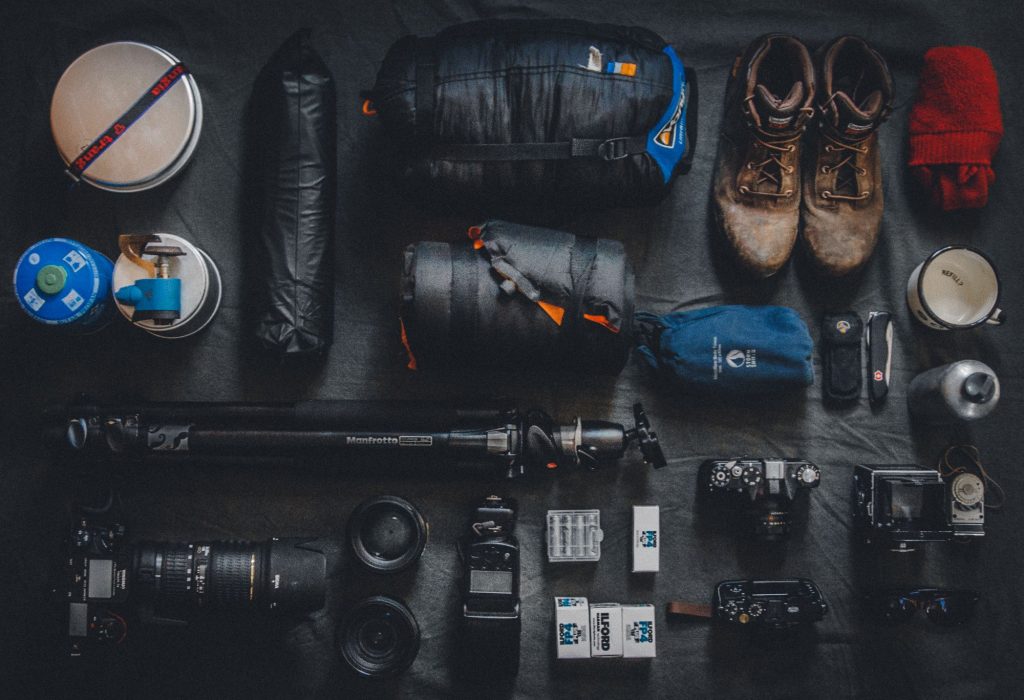
Buying the lightest backpack first may leave you with a finished load that it cannot carry comfortably. Measure your torso and test potential packs with realistic food, water, and equipment rather than a few soft display weights.
Frameless designs suit compact, carefully refined loads. Meanwhile, a lightweight internal frame gives beginners, heavier water carriers, and hikers with sensitive shoulders more support. Well-designed exterior pockets and compression straps may also replace several organizers.
The pack must support your Ultralight Backpacking Gear List, not force necessary equipment out of it.
Create a Sleep System That Protects Recovery
Choose a sleeping bag or quilt using the expected low temperature, whether you sleep warm or cold, and the type of rating provided. ISO ratings improve comparisons, although clothing, humidity, shelter, metabolism, and pad insulation still affect real-world warmth.
Compare sleeping pads through ASTM F3340 R-values rather than vague seasonal labels. Higher tested values indicate greater resistance to heat loss into the ground.
A few saved ounces rarely justify spending the night shivering. Good sleep supports clearer decisions, steadier movement, and a more enjoyable second day.
Pack Clothing as a Layering System
Bring clothing that works together instead of packing a fresh outfit for every day. A practical system may include hiking layers, underwear, socks, insulation, rain protection, dry sleep layers, and climate-specific protection for your head or hands.
Remove pieces that perform essentially the same job, but preserve one dry sleep set during wet trips. For an Ultralight Backpacking Gear List, quick-drying synthetic fabrics and wool generally suit cool, damp conditions better than cotton. In exposed heat, breathable coverage and sun protection become higher priorities.
Check the forecast, but pack for plausible changes rather than the most convenient prediction.
Plan Water, Food, and a Minimal Cook Kit
Water capacity should reflect source reliability and the longest dry stretch on your route. Carry enough for that section, along with a primary treatment method and a lightweight backup. The CDC states that boiling is the most reliable way to kill germs; when boiling is impractical, filtering followed by disinfection provides broader protection than filtering alone.
Choose calorie-dense food that you will actually want to eat after a tiring day. Then calculate fuel from the number of planned boils rather than carrying a full canister automatically.
A solo cook kit may need only a stove, fuel, lighter, pot, and spoon. However, never position a windscreen in a way that could overheat a fuel canister.
Keep Navigation, First Aid, and Emergency Gear
Every Ultralight Backpacking Gear List needs navigation, illumination, sun protection, first aid, repairs, extra food, water treatment, insulation, and emergency shelter. The individual objects can change, but each function should remain covered.
Carry offline route data or a suitable map, a usable compass, and a charged phone or GPS device. Remote routes may also justify satellite communication, particularly where mobile service is unreliable.
Customize first aid supplies for blisters, wounds, medications, allergies, and route hazards. Campnestle’s guide to camping first aid kit essentials helps trim bulk without forgetting core supplies.
Small Items Worth Their Weight
Small items often provide more practical value than costly upgrades. Consider a headlamp, whistle, repair tape, needle, mini tool, backup treatment tablets, toilet supplies, sunscreen, insect protection, and a compact power bank.
Trekking poles can earn their place when they support your shelter, improve stability, or reduce strain during steep descents. Leave No Trace guidance also emphasizes planning ahead, traveling on durable surfaces, disposing of waste properly, and respecting wildlife and other visitors.
For each Ultralight Backpacking Gear List addition, ask whether it solves a likely problem that another item cannot handle.
Research-Backed Guidance for Lighter, Safer Packing
Research involving long-distance hikers has linked heavier packs with lower daily mileage and more pack-related injury reports, although field studies cannot control every variable affecting performance or discomfort.
Use established technical guidance where it exists. ASTM’s camping-mattress test method improves the consistency of R-value comparisons. The National Park Service Ten Essentials offers a safety baseline, while CDC water-treatment guidance explains how different treatment methods address backcountry water risks.
Similarly, the Leave No Trace Seven Principles connect gear decisions with lower-impact campsite selection, waste disposal, wildlife practices, and fire planning.
Evidence does not identify one perfect base weight for every hiker. Therefore, build your Ultralight Backpacking Gear List by lightening heavy systems while preserving realistic risk management.
Recommended Products for Your Ultralight Backpacking Gear List
These six products cover different parts of a backpacking system rather than repeating one category.
| Product | Category | Best fit |
| Osprey Exos 58 | Backpack | Supportive lightweight carrying |
| NeoAir XLite NXT | Sleeping pad | Warmth-to-weight priority |
| Sawyer Squeeze | Water filter | Flexible hydration setups |
| Nitecore NU25 MCT UL | Headlamp | Rechargeable lighting |
| BRS 3000T | Stove | Budget minimalism |
| TOAKS 750ml | Cookware | Solo cooking |
Osprey Exos 58 Men’s Ultralight Backpacking Backpack
Best for: Hikers wanting low weight with framed support
The Exos 58 has adjustable AirSpeed suspension, hip-belt pockets, a hydration sleeve, and a removable lid. The listed S/M model weighs about 2.84 pounds, bridging minimalist and traditional designs. It suits longer food carries, although experienced ultralight hikers with compact kits may prefer a smaller pack.
Therm-a-Rest NeoAir Xlite NXT Ultralight Camping and Backpacking Sleeping Pad
Best for: Three-season hikers prioritizing warmth per ounce
The regular XLite NXT is listed at 13 ounces, three inches thick, and R-value 4.5, with a compact packed size and WingLock valve. It provides substantial insulation for its weight. The main considerations are cost and the need to protect, maintain, and occasionally repair an inflatable pad.
Sawyer Squeeze Water Filtration System
Best for: Backpackers wanting adaptable water treatment
This two-ounce hollow-fiber filter works with squeeze pouches, compatible bottles, hydration adapters, or a gravity setup. Its flexibility suits both solo hikers and shared camps. However, it does not remove every possible contaminant, so follow destination guidance and add disinfection where viruses or other risks may be present.
Nitecore NU25 MCT UL 400 Lumen Ultralight USB-C Rechargeble Outdoor Headlamp with Multiple Color Temperatures Warm Natural, Cold Lights and Red Light (Elastic Cord, Black)
Best for: Night hikers wanting minimal rechargeable lighting
This model is listed at 1.65 ounces with 400-lumen maximum output, USB-C charging, red light, and selectable white-light temperatures. Its cord headband saves weight and packed space. Because the battery is internal, longer trips require a careful charging plan or an appropriately sized power bank.
BRS Stove BRS 3000T Stove Titanium Ultralight Backpacking Stove Portable Propane Camping Stove Gas Burner Camp Stove only 26g with Extra O Ring
Best for: Budget solo hikers boiling small pots
At approximately 25 to 26 grams, this titanium canister stove packs extremely small and nests inside compact cookware. It suits simple boil-only meals. Its short pot supports and exposed burner make it less forgiving with broad cookware, strong wind, or uneven placement, so stable and sheltered operation matters.
TOAKS Titanium 750ml Pot
Best for: Solo hikers using a compact cook system
The pot is listed at three ounces without its lid and 3.6 ounces with it. It holds a small fuel canister and includes measurement markings, folding handles, and a storage sack. Its narrow 750ml capacity suits drinks and simple meals, but not elaborate cooking or two generous portions.
How to Cut Weight Without Spending a Fortune
Weigh everything and mark what went unused after each trip, excluding safety equipment retained for emergencies. Removing duplicate clothing, retail packaging, excess stuff sacks, and unnecessary cookware costs nothing.
Replace the heaviest item only when it wears out or clearly limits your trips. Borrow, rent, or buy used before committing to an expensive category, and inspect secondhand coatings, seams, zippers, insulation loft, and pad valves carefully.
Compare the cost per ounce saved. A lighter spoon changes very little, whereas a shelter that removes two pounds may transform the entire carry. Let your Ultralight Backpacking Gear List evolve through actual trips instead of one expensive shopping spree.
A Practical Ultralight Backpacking Gear List Checklist
Use this starting checklist, then adapt it to your destination:
- Carry: Fitted backpack, waterproof pack liner, and trekking poles if useful
- Shelter: Shelter body, stakes, guylines, and a groundsheet when required
- Sleep: Quilt or sleeping bag, insulated pad, and optional pillow
- Clothing: Hiking layers, insulation, rainwear, dry sleep layers, and socks
- Water: Containers, filter, backup treatment, and dry-section capacity
- Food: Meals, snacks, stove if needed, fuel, lighter, pot, and spoon
- Safety: Map, compass, headlamp, first aid, repair kit, whistle, and emergency shelter
- Personal: Toilet kit, sun protection, insect protection, and medication
- Electronics: Phone, cables, power bank, and communication device when warranted
Finally, weigh the finished pack with the expected food and maximum water load. Walk several miles with it before the trip. An Ultralight Backpacking Gear List must feel stable in motion, not merely look elegant on a screen.
Frequently Asked Questions About an Ultralight Backpacking Gear List
What is the minimum weight required for ultralight backpacking?
Many hikers use roughly 10 pounds as a benchmark, excluding food, water, and fuel. However, no universal rule exists. Climate, regulations, health needs, trip length, and personal comfort can justify additional weight. Remove unnecessary items while preserving reliable shelter, sleep, water, navigation, and emergency systems.
Is ultralight backpacking safe for beginners?
Yes, when beginners reduce weight gradually and understand each item’s purpose. Start with short trips in forgiving weather, retain the Ten Essentials, and avoid copying a specialist’s list without context. Experience can eventually replace some equipment through better judgment, but new hikers should maintain a sensible safety margin.
Should I choose a quilt or sleeping bag?
A quilt often saves weight by removing insulation that would otherwise remain compressed beneath the body. A sleeping bag provides familiar enclosure and may control drafts more easily. Choose according to temperature, sleeping style, pad attachment, and nighttime movement. Cold sleepers should prioritize tested ratings, pad insulation, and dependable draft control.
How much water capacity belongs on an Ultralight Backpacking Gear List?
Carry enough capacity for the longest reliable gap between water sources, plus a reasonable margin for heat, delays, or an unexpectedly dry source. You do not need to keep every container full throughout the day. Research current source reports, understand seasonal reliability, and use treatment suited to the likely contaminants.
What should I never remove just to save weight?
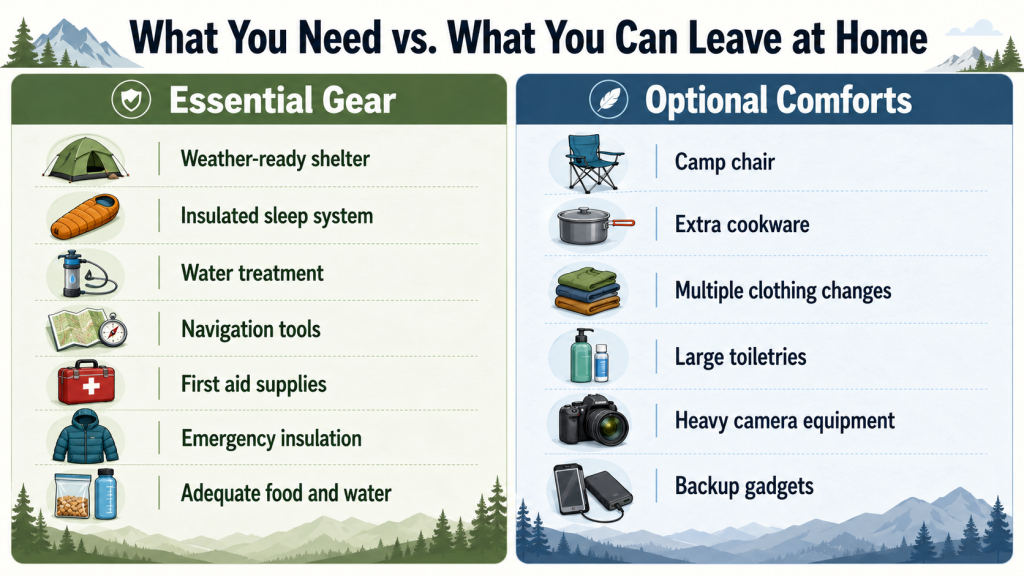
Do not remove necessary weather protection, navigation, illumination, medication, suitable water treatment, first aid, emergency insulation or shelter, and enough food and water for foreseeable delays. The individual objects can become lighter or multipurpose, but each essential function must remain. Ounces matter only when the system still handles realistic risks.
Final Recommendation: Build Your List by Testing, Not Guessing
A dependable Ultralight Backpacking Gear List starts with conditions, skills, and personal needs—not somebody else’s base-weight screenshot. Reduce the big systems first, choose a pack that supports the completed load, compare tested insulation ratings, and preserve navigation, water treatment, first aid, and emergency protection.
The Osprey Exos 58 suits hikers who value supportive carrying, while the Therm-a-Rest NeoAir XLite NXT favors sleep-system efficiency. Budget hikers can begin with simpler improvements such as the BRS 3000T and careful repackaging.
Test the complete setup on short trips, record what you used, and change one thing at a time. The right kit is light enough to carry comfortably and complete enough to trust when conditions become difficult.