How To Wash Dishes While Camping
We may earn a commission for purchases made using our links. Please see our disclosure to learn more.
A good camp meal can turn awkward fast when the last bite disappears and a greasy pile of cookware remains. You may have limited water, no sink, curious wildlife nearby, and campground rules that differ from place to place. Learning how to Wash Dishes While Camping solves more than a cleanliness problem: it protects your food supply, keeps odors under control, and reduces your impact on the area.
This guide explains a practical wash-rinse-dry routine for car camping and backcountry trips. You will learn what to pack, where to set up, how to handle grease and raw-meat utensils, how to dispose of wastewater, and which compact products suit different campers. The goal is a repeatable system that keeps dish duty from becoming the evening’s main event.
Why Camp Dishwashing Needs a Plan
At camp, every cup of water must be carried, heated, used, and disposed of correctly. A rushed cleanup can waste drinking water, leave food on cookware, or spread odors near the sleeping area.
Before cooking, choose a wash location, reserve water, and open a trash bag. That setup makes it easier to Wash Dishes While Camping before food dries onto the pots.
What You Need for an Efficient Camp Dish Station
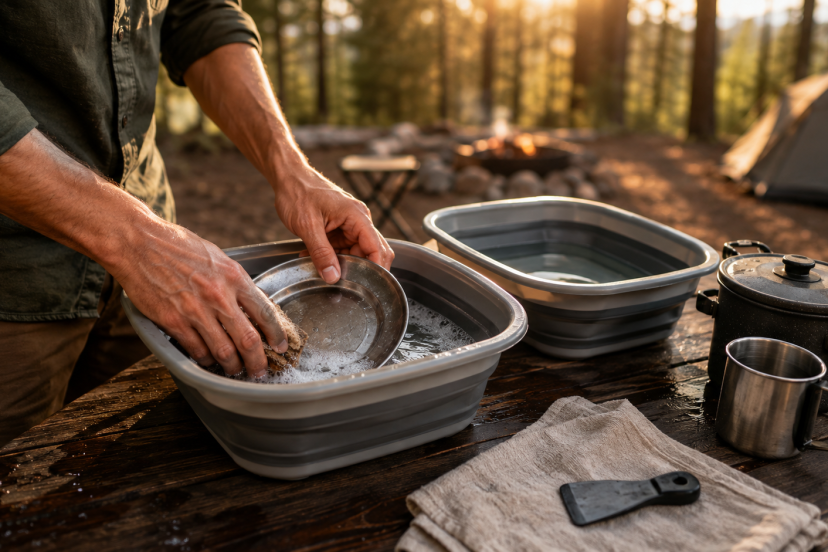
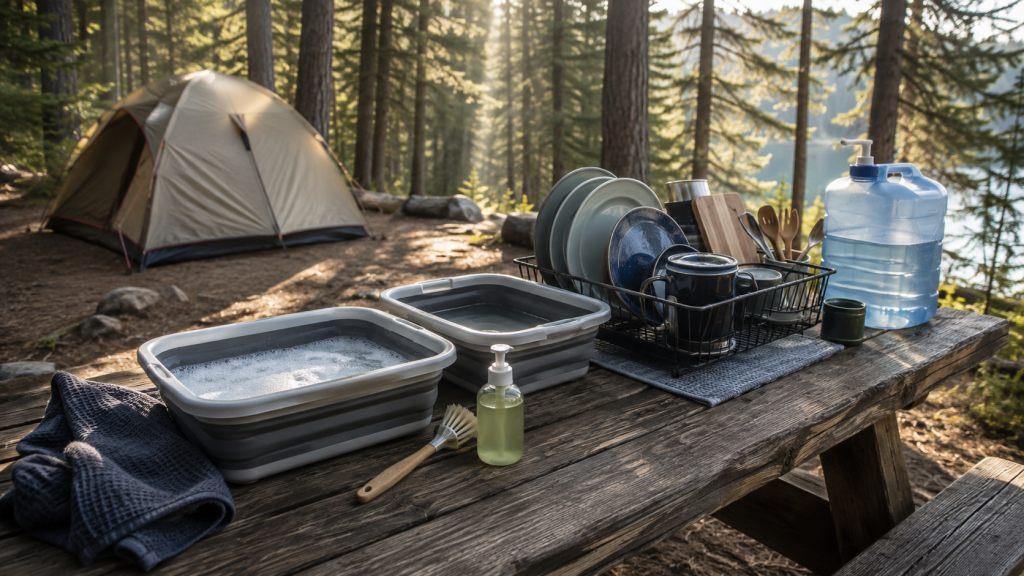
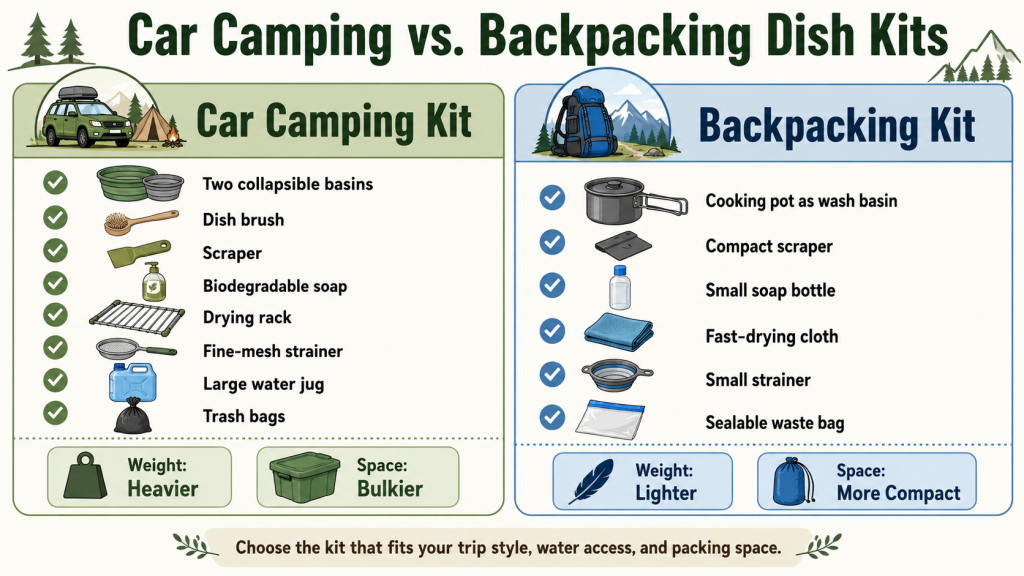
Pack a wash basin, a rinse basin or clean pot, a scraper, a brush or cloth, minimal unscented biodegradable soap, a fine-mesh strainer, a drying surface, and sealable trash bags.
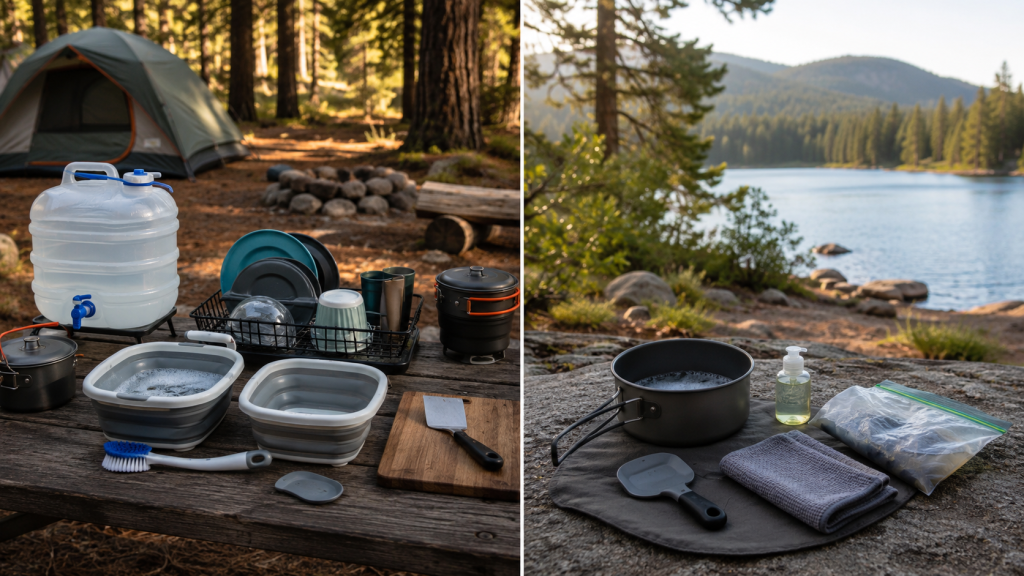
Groups may add a compatible sanitizing basin. Backpackers can use their cooking pot, a scraper, a few drops of soap, and a fast-drying cloth reserved for kitchen use. This lean kit is enough to Wash Dishes While Camping without carrying a household sink.
Choose the Right Washing Location
Use a designated utility sink or gray-water drain whenever one is provided. Never wash at a drinking-water spigot, in a lake or stream, or beside the shoreline.
If facilities are unavailable and dispersed disposal is allowed, move at least 200 feet from water, trails, and sleeping areas. Choose durable ground where scattered water cannot flow into a creek or another campsite. Local rules always come first.
Step 1: Scrape and Pre-Clean Every Dish
Finish edible portions, then scrape leftovers, grease, and stuck food into a trash bag. Never bury scraps or toss them into the fire.
Wash the cleanest cups and utensils first, then move to dirtier cookware. This keeps water usable longer. Let a burned pot soak in a little warm water while you clean the rest; a short soak usually beats extra soap and frantic scrubbing.
Step 2: Wash Dishes While Camping With Less Water
Heat only what you need, then mix hot and cool water for a comfortably warm basin. Add a small amount of soap; more foam does not mean cleaner dishes.
Wash cups and cutlery first, followed by plates, tools, and pots. Scrape before brushing. To Wash Dishes While Camping efficiently, keep the basin shallow and work in batches rather than filling a large tub.
Step 3: Rinse, Sanitize, and Air-Dry
Rinse items in a second basin or pour clean water over them above the wash tub. Keep greasy cookware out of the rinse until it is properly washed.
Small backcountry groups may rely on thorough washing, rinsing, and complete air-drying. Organized groups or developed campgrounds may require sanitizing. Follow the sanitizer label and local instructions, using only a chemically compatible basin. Dry dishes on a clean rack or mesh bag rather than with a damp communal towel.
Dispose of Dishwater Without Leaving a Mess
Strain wastewater and seal captured crumbs with your trash. Then use the site’s gray-water station, utility sink, or approved drain when available.
Where dispersed disposal is allowed, carry strained water away from water sources and camp, then scatter it broadly over durable ground. Never create one concentrated puddle. Biodegradable soap still stays out of lakes and streams. Clean promptly, and store dry cookware, soap, sponges, and trash as scented items where wildlife rules require it.
Car Camping and Backcountry Cleanup Need Different Systems
Car campers can carry rigid basins, a drying rack, and enough water for a wash-rinse routine. Families can divide jobs among scraping, washing, rinsing, and storing.
Backpackers should prevent mess with one-pot meals and minimal tableware. When you Wash Dishes While Camping far from facilities, a scraper often saves more water than a larger soap bottle.
Handle Grease, Burned Food, and Raw-Meat Tools Carefully
Let grease cool, wipe it into trash, and store it with other scented items. For burned food, soak, scrape, and repeat. Avoid sand, which can damage coated cookware and return organic material to the pot.
Keep raw-meat tools away from ready-to-eat food. Wash hands after handling raw ingredients, clean those tools last, and use potable water. When safe cleanup is difficult, choose meals that avoid raw-meat preparation.
Save Water Before the Meal Is Over
One-pot meals, wraps, and pre-chopped ingredients create fewer dirty surfaces than multi-pan cooking. Measure ingredients at home and pack them in reusable containers.
Start heating wash water as dinner finishes, keeping the pot covered and stable. A dependable camping water jug for outdoor adventures makes it easier to reserve clean water for drinking, cooking, handwashing, and cleanup—and to Wash Dishes While Camping without draining tomorrow’s supply.
Common Camping Dishwashing Mistakes
Avoid washing beside water, overusing soap, dumping unstrained wastewater, leaving grease in a fire ring, or using a dirty towel.
Do not assume every campground has the same gray-water policy; some prohibit ground disposal. Also, do not postpone cleanup until morning. Dried food takes more water to remove, while overnight odors attract insects and wildlife. A consistent routine helps everyone Wash Dishes While Camping correctly.
Research-Backed Guidance for Safer Cleanup
The Leave No Trace wastewater guidance, accessed in 2026, recommends carrying water 200 feet from lakes or streams, minimizing soap, straining dishwater, packing out crumbs, and scattering permitted wastewater broadly. It also warns that biodegradable soap can affect water quality, so never wash at the shoreline.
For developed sites, the National Park Service camp-cooking guidance describes separate wash, rinse, and sanitize bins plus air-drying. Its 2022 example uses two teaspoons of bleach per gallon in the third bin. Still, follow current site instructions, sanitizer labels, and basin-care limits rather than treating that formula as universal.
The USDA camping food-safety guidance emphasizes potable water, clean hands, and separation of raw and cooked foods. The 2026 North Cascades food-storage rules also treat dirty cookware as a scented item that must be washed or secured. These principles make it safer to Wash Dishes While Camping while protecting wildlife.
Recommended Products to Wash Dishes While Camping
Choose a complete kit for convenience or combine lighter components with your existing cookware. Each option fills a distinct role when you Wash Dishes While Camping.
| Product | Best fit | Key consideration |
| Sea to Summit Clean-Up Kit | Complete car-camp station | Higher upfront cost |
| ust FlexWare Sink | Stable collapsible basin | Bulkier than fabric sinks |
| GSI Compact Scraper | Ultralight pre-cleaning | No brush included |
| MSR Dish Brush/Scraper | Stubborn residue | Small for group loads |
| Coghlan’s Camp Soap | Budget multi-use cleaning | Must stay out of waterways |
Sea to Summit Camp Kitchen 6-Piece Clean-Up Kit
Best for: Campers who want one organized system
This kit combines a 10-liter collapsible sink, scrubber, concentrated soap, cleaning cloth, drying towel, and zip pouch. It suits car campers and paddlers who prefer one organized package. Minimalist hikers may not need every component, and the fabric sink should not be used with bleach.
ust FlexWare Collapsible Sink with 2.25 Gal Wash Basin for Washing Dishes and Person During Camping, Hiking and Home
Best for: Families wanting a stable, budget-friendly basin
This 8.5-liter collapsible basin has a rigid rim, stable base, and dual handles. It works well for families and car campers who dislike floppy fabric sinks, while storing flatter than a bucket. Its extra weight and packed bulk make it less appealing for backpacking.
GSI Outdoors 74125 Compact Scraper, Grey, 3.4 inch
Best for: Backpackers focused on saving water
This dual-sided tool pairs a soft rubber blade with a firmer nylon edge for nonstick cookware. It removes sauce and softened food before washing, keeping limited water cleaner longer. The tiny scraper fits almost any cook kit, but it does not replace proper washing and rinsing.
MSR Alpine Dish Brush / Scraper, Red
Best for: Camp cooks dealing with textured or stubborn residue
This compact tool combines stiff bristles with a handle that doubles as a scraper. Its rubber grip and curved edge suit many camp pots, while the brush reaches residue a flat scraper misses. The small head works neatly on individual cookware but can slow a large group cleanup.
Coghlan’s Biodegradable Camp Soap, 4 oz – Compact and Concentrated for Camping, Hiking, Backpacking, Travel, and Outdoor Adventures – Eco-Friendly, Unscented, Versatile Cleaning Solution
Best for: Budget campers who want one multi-use soap
This concentrated, unscented soap comes in a four-ounce bottle and can clean dishes, clothing, and travel items. It suits budget campers who want one multi-use cleaner. Use only a small amount, pack the bottle against leaks, and remember that biodegradable soap still does not belong in lakes or streams.
Frequently Asked Questions: How to Wash Dishes While Camping
Can I wash camping dishes with cold water?
Yes, especially when fuel is limited, but warm water loosens grease and dried food more easily. Scrape first, use a small amount of soap, and rinse with potable water. If utensils contacted raw meat or your group follows a sanitizing protocol, cold-water washing alone may not meet that protocol. Follow the campsite’s current food-safety instructions.
Is biodegradable soap safe to use in a lake?
No. “Biodegradable” describes how a product breaks down under suitable conditions; it does not mean the soap disappears instantly or cannot affect aquatic water quality. Carry wash water away from the shoreline, use the smallest practical amount, and dispose of strained wastewater according to local rules. Never lather dishes directly in a lake, river, or spring.
How much water do I need for camp dishes?
It depends on the meal, group size, and method. A well-scraped one-pot meal may need only a shallow wash and rinse, while a family meal with several pans needs more. Rather than relying on one fixed amount, reserve water before cooking, scrape thoroughly, wash cleanest items first, and stop basins from becoming unnecessarily deep.
What should I do with food scraps and greasy paper towels?
Seal them with your other trash and store the bag as a scented food item. Do not bury scraps, scatter them, leave them in a fire ring, or assume they will safely burn. In wildlife areas, follow the same locker, canister, vehicle, or hanging requirements that apply to food and scented cooking equipment.
When camping with kids, what is the simplest way to wash dishes?
Give children one clear, age-appropriate job, such as scraping plates, placing clean utensils on a drying rack, or checking the ground for crumbs. Keep hot water, knives, sanitizer, and raw-meat tools under adult control. A simple assembly line reduces spills and turns cleanup into shared camp responsibility instead of one person’s long chore.
Final Recommendation: Wash Dishes While Camping With a Simple System
The best routine is one your group can repeat: scrape food into trash, wash with minimal soap, rinse with potable water, air-dry, strain the wastewater, and follow the site’s disposal rules. Car campers may appreciate the organized Sea to Summit kit or stable ust FlexWare basin, while backpackers can pair a cooking pot with the GSI scraper and a tiny soap bottle.
Plan water and storage before dinner, keep the wash area away from sleeping spaces and waterways, and clean immediately after eating. When you Wash Dishes While Camping with this straightforward system, you conserve water, reduce wildlife attractants, and leave the campsite ready for the next meal—and the next visitor.