Best Camping Water Jug for Outdoor Adventures
We may earn a commission for purchases made using our links. Please see our disclosure to learn more.
You can pack a warm sleeping bag, a clever camp stove, and enough snacks to prevent a family mutiny. Yet when drinking water runs low, the trip quickly loses its charm. A dependable camping water jug keeps water ready for drinking, cooking, handwashing, and cleanup without repeated walks to the campground faucet.
This guide explains how to choose the right size, material, insulation, and spout. You will also find five Amazon options, research-backed safety advice, and simple care tips.
Why a Camping Water Jug Belongs in Your Gear Kit
A reusable water carrier for camping turns an awkward chore into an easy routine. Instead of balancing several bottles against your chest, you can make one refill trip and bring back enough water for breakfast, coffee, and dishes.
It also shows how much water remains. That matters at dispersed sites, busy campgrounds, and trailheads where the nearest potable source may be farther away than expected.
How Much Water Should You Carry?
Your ideal supply depends on group size, weather, activity, meals, pets, and access to safe water. A quiet overnight stay near a maintained faucet requires less stored water than a hot weekend at a remote site.
Remember to plan for:
- Drinking and refilling bottles
- Cooking and hot drinks
- Handwashing and hygiene
- Dishes and campsite cleanup
- Pets and a modest emergency reserve
Avoid treating one hydration number as perfect for everyone. The Wilderness Medical Society explains that fluid and salt needs vary by person, environment, and exercise conditions. Build in extra water for heat, delays, or an unexpected night.
What Size Camping Water Jug Is Best?
A 2- to 3-gallon jug works well for solo campers, couples, day trips, and smaller cars. It stays manageable when full and fits beside coolers and storage bins.
A 5-gallon water container suits many families and base camps. However, five gallons of water weighs more than 40 pounds before adding the container. That is not a casual one-handed stroll unless carrying kettlebells is your idea of fun.
Larger models reduce refill trips but become harder to lift. For groups, two medium jugs are often easier to handle than one enormous container.
Rigid vs. Collapsible Water Containers
A rigid portable water container offers better structure, easier stacking, and stronger puncture resistance. It suits car camping, overlanding, and frequent use.
A collapsible water jug folds or rolls down after the trip. That is helpful for apartment storage, compact cars, and campers already playing luggage Tetris.
The tradeoff is durability. Flexible seams and creases can wear over time, while rigid containers last longer but occupy space even when empty.
Should You Buy an Insulated Water Jug?
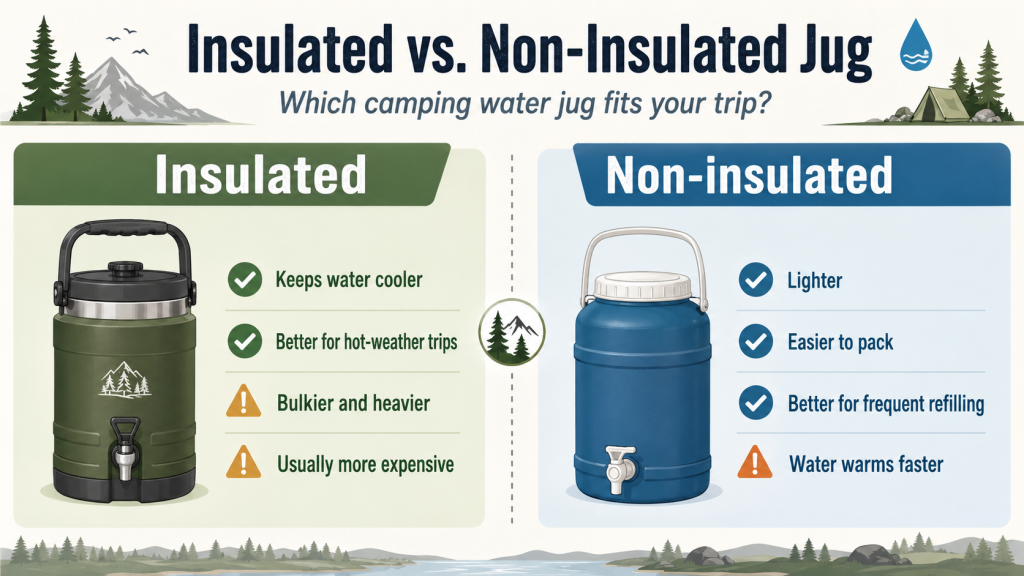
Choose an insulated water jug when cold drinking water matters. It is especially useful for summer camping, sports weekends, festivals, and sunny base camps.
Non-insulated jugs are lighter, simpler, and usually easier to pack. They work well when you refill often, store the container in shade, or mainly need water for cooking and washing.
Insulation adds bulk, so decide whether compact storage or chilled water matters more.
Features That Make a Water Jug Easier to Use
Small design choices determine whether a jug becomes a camp favorite or something that dribbles onto your shoes.
Look for:
- A leak-resistant cap and replaceable gasket
- A comfortable handle
- A stable base
- A controlled spout or spigot
- A wide cleaning opening
- A vent for smoother flow
- Food-grade construction
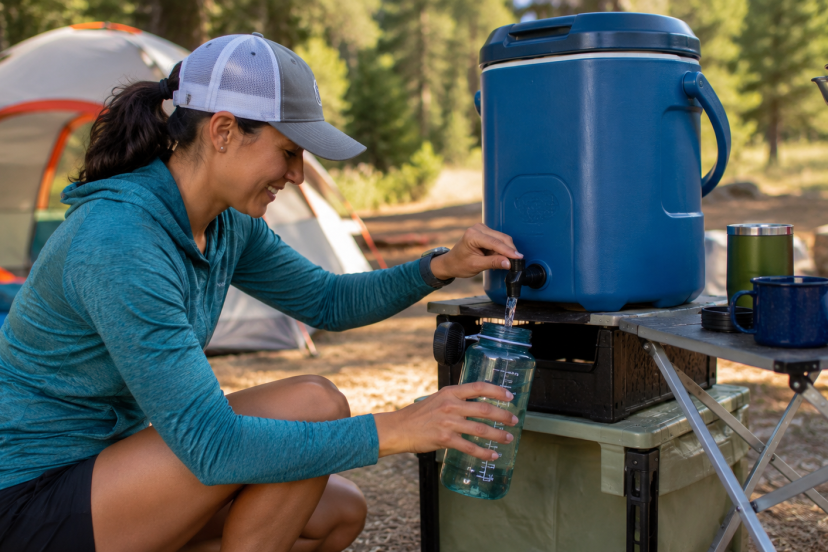
A camping water dispenser with a spigot works well for handwashing and bottle filling. A pour spout may be faster for cooking pots.
Food-Grade Materials and Safe Water Storage
Use a container made specifically for drinking water. The CDC recommends FDA-approved food-grade storage containers because they should not transfer toxic substances into the water. It also favors tightly closing designs that let users pour without placing hands or utensils inside.
Never repurpose a container that held fuel, pesticides, cleaners, or other chemicals. Inspect your jug before each trip and replace it if you notice deep cracks, stubborn odors, damaged threads, mold, or an unreliable seal.
Five Camping Water Jugs Available on Amazon
These products suit different camping styles rather than pretending one design works for everybody. Availability and specifications may change, so check the current Amazon listing before ordering.
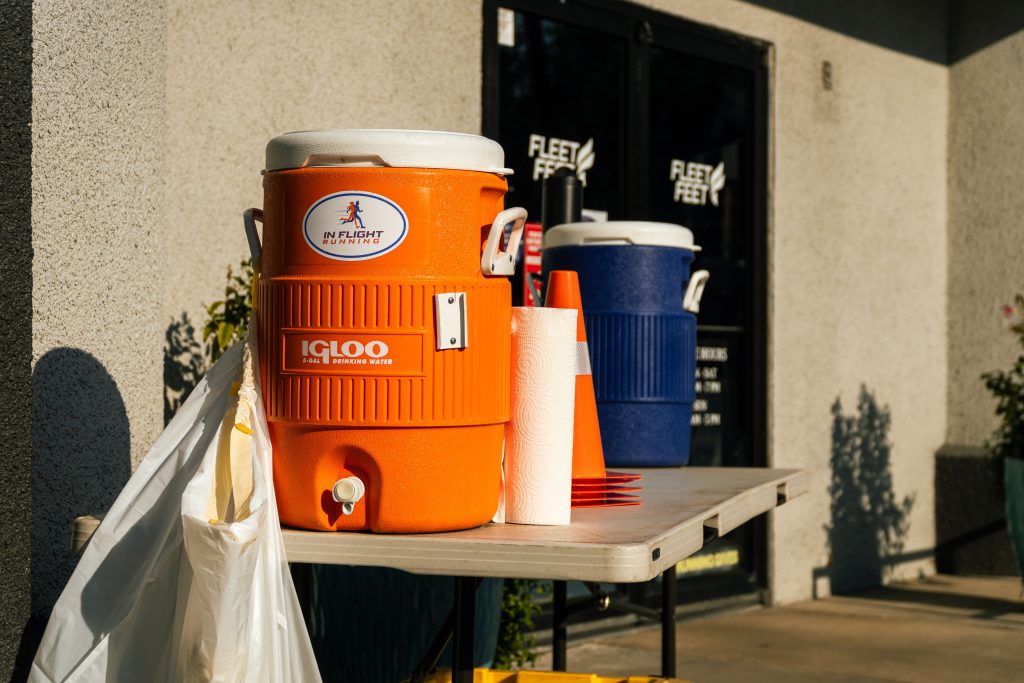
Igloo 6-Gallon Camping Water Container
This tall rigid container offers generous capacity without the wide footprint of a cooler-style jug. Outdoor Life praised its two-handle design, durability, and controlled spout during testing.
Features: Six-gallon capacity, BPA-free plastic, two handles, and a stored spout.
Best for: Family car camping, RV travel, and fewer refill trips.
GSI Outdoors Folding Water Cube
This collapsible cube saves storage space and includes a useful spigot. Outdoor Life reported good water flow, although repeated folding may eventually stress the material.
Features: Folding polyethylene body, handle, spigot, and several capacity choices.
Best for: Small vehicles, occasional trips, and crowded gear closets.
Dometic GO Hydration Water Jug
This premium rigid jug balances durability with a compact profile. Its spigot and pouring option help with bottle filling, cooking, and cleanup.
Features: Approximately 2.9-gallon capacity, LDPE body, webbing handles, spout, and tap.
Best for: Overlanders, organized car campers, and modular camp kitchens.
UST Roll-Up Water Carrier 10L
The UST carrier rolls down much smaller than a rigid jug. Its soft body can be harder to fill, and it works best when hung or supported above the dispensing point.
Features: Ten-liter capacity, roll-up construction, two handles, and a spigot.
Best for: Tight trunks, camping boxes, and backup water storage.
Stanley Adventure Fast Flow Water Jug
This insulated two-gallon dispenser is designed for cold drinks and frequent use. Its Amazon listing highlights foam insulation, a latched lid, an ice-catching high-flow spigot, and BPA-free construction.
Features: Two-gallon capacity, insulation, carry handle, removable spigot, and secure latches.
Best for: Hot-weather camping, sports, and campers who prioritize cold water.
How to Match a Jug to Your Camping Style
For solo weekends, a 2- or 3-gallon jug keeps weight reasonable. Couples and small families may prefer 3 to 5 gallons, while larger groups benefit from two separate containers.
Choose rigid construction for rough roads and frequent trips. Pick a collapsible model when storage matters most. Go insulated when the jug will sit in heat for hours.
Also consider who will carry it. Children, older campers, and anyone with limited grip strength may handle smaller containers more comfortably. Good gear should make camp easier, not create a strength contest beside the pump.
Research-Backed Hydration and Storage Advice
The Wilderness Medical Society hydration guidance supports individualized hydration instead of one universal drinking schedule. Weather, effort, acclimatization, food, and personal health all affect fluid needs. Carrying a flexible reserve is wiser than planning down to the final cup.
The CDC guidance for food-grade water storage recommends clean, tightly closing containers intended for potable water. Together, these sources suggest a simple approach: carry enough for your actual conditions and protect it from contamination.
How to Pack and Transport a Full Jug
Fill the jug near departure when practical, then test the cap and spigot. Load it upright in a stable section of the vehicle, ideally inside a waterproof tray or secured bin.
Keep sharp tent stakes and tools away from flexible walls. Use straps or surrounding gear to stop rigid jugs from sliding on rough roads.
At camp, place the container on a firm, shaded surface. Raise a spigot jug on a table or crate so cups and pots fit underneath.
How to Clean and Store Your Water Container
Wash the jug before first use and after trips. Follow the manufacturer’s directions because not every model is dishwasher safe.
Use mild soap, warm water, and a bottle brush where possible. Clean caps, vents, gaskets, and spigots separately. Rinse thoroughly and air-dry every part before storage.
Never seal a damp jug in a hot garage. That is less “prepared camper” and more “tiny portable swamp.” Store it uncapped or loosely capped in a clean, dry place.
Using a Water Jug in Hot or Cold Weather
In hot weather, keep the jug shaded and refill personal bottles before hikes. Even a non-insulated container stays cooler when kept out of a closed vehicle.
In freezing conditions, leave expansion space and protect the spigot from ice. Store the jug in a sheltered or insulated area overnight because frozen valves can crack.
Water is only one piece of winter planning. Use this practical cold-weather camping checklist to coordinate hydration with clothing, sleep systems, cooking gear, and emergency supplies.
Camping Water Jug FAQs
What Is the Best Camping Water Jug Size for Two People?
A 2- to 3-gallon jug is convenient for two people on a short trip with nearby potable water. Carry more for heat, remote camping, pets, or water-heavy meals.
Is a 5-Gallon Camping Water Jug Too Heavy?
Some campers may find it uncomfortable because a full 5-gallon jug weighs more than 40 pounds. Two smaller containers distribute the load and provide backup storage.
Can I Put Drinking Water in Any Plastic Container?
No. Use a food-grade container made for potable water. Never use one that previously held fuel, pesticides, cleaners, or other chemicals.
Is a Collapsible Water Jug Good for Camping?
Yes, especially when packing space is limited. Protect it from sharp objects, inspect seams regularly, and replace it when the material cracks or leaks.
How Do I Reduce a Plastic Taste in Stored Water?
Wash and air-dry the jug before use, follow its cleaning instructions, and avoid leaving water in direct heat. Return or replace a container with a persistent chemical odor or taste.
Final Thoughts on Choosing a Camping Water Jug
The best camping water jug fits your trip, group, vehicle, and carrying ability. A collapsible cube may be perfect for a couple in a hatchback, while a rigid 6-gallon model makes sense for a family base camp. An insulated dispenser earns its space when cold water keeps everyone happier.
Prioritize food-grade materials, dependable closures, comfortable handling, and a dispensing system that wastes little water. Choose thoughtfully, clean it well, and pack a reasonable reserve. Then you can spend less time visiting the campground faucet and more time enjoying the trail, campfire, and first quiet cup of coffee outdoors.