
Best Self Inflating Air Mattress for Comfortable Camping
We may earn a commission for purchases made using our links. Please see our disclosure to learn more.
A thin sleeping pad can turn a peaceful campsite into a long night of shifting hips, cold shoulders, and counting the hours until sunrise. A self inflating air mattress offers a useful middle ground: supportive foam, adjustable air pressure, easier setup, and better insulation than many basic air beds. Models vary in warmth, packed size, thickness, and price, so the thickest is not always smartest.
This guide explains how a self inflating air mattress works, which specifications matter, and where the main trade-offs appear. You will also find six carefully selected products for different campers, from occasional festival-goers to couples and cold-weather car campers.
Affiliate disclosure: We may earn a commission from qualifying purchases made through links in this article, at no additional cost to you.
What a Self Inflating Air Mattress Actually Does
A self inflating air mattress combines open-cell foam with an airtight shell. Open the valve and the compressed foam expands, drawing air inside. Most still need a few breaths or a pump sack for final firmness.
The foam creates a steadier feel than a simple air chamber and provides some cushioning if pressure drops overnight. The compromise is extra weight and a larger packed roll.
Who Gets the Most Value From This Design
A self inflating air mattress suits car campers, overlanders, families, and basecamp users who favor stable support over ultralight packing. Thicker versions help side sleepers avoid bottoming out.
Long-distance backpackers may find most models too bulky. Decide how you will transport it before choosing extra thickness, width, or a double size.
Where It Works—and Where It Does Not
A self inflating air mattress works best in tents, vehicle awnings, cabins, and sheltered camps where packed bulk matters less. It is less practical for flights, motorcycle luggage, or multi-day hikes.
Compare the packed roll with your cargo space, then measure your tent floor. If you are still weighing pad types, CampNestle’s comparison of inflatable and self-inflating camping pads explains where each design fits.

How Much Thickness Do You Really Need?
Thickness affects pressure relief, but it does not guarantee comfort. A supportive 2.5-inch pad may feel better than a soft 4-inch model inflated until it becomes rigid. Back sleepers often need less depth, while side sleepers and larger campers may prefer three to four inches.
Inflate the pad firmly, lie in your normal position, and release air gradually. This method usually creates better support than starting with an underfilled mattress.
Why R-Value Matters More Than a Season Label
R-value measures resistance to heat transfer through the mattress. A higher number generally indicates stronger insulation from cold ground and offers a clearer comparison than vague labels such as “three-season.”
Your needs depend on ground temperature, weather, clothing, metabolism, and the rest of your sleep system. A sleeping bag cannot fully replace insulation underneath because your body compresses its fill against the pad.
Size, Shape, and Tent-Floor Fit
A wide self inflating air mattress offers more room for restless sleepers but occupies additional tent space. Double mattresses remove the gap between two pads, although movement can travel across the shared surface.
Measure usable floor space rather than relying only on the tent’s advertised capacity. For couples with different firmness preferences, two linkable single pads may pack more easily and provide better individual adjustment.
Weight and Packed Size: The Trade-Off Nobody Escapes
More foam, width, and thickness usually create a heavier, bulkier roll. That may be manageable in an SUV but frustrating in a compact car already filled with coolers, chairs, and family gear.
Check packed dimensions as carefully as sleeping dimensions. Choose the lightest option that still meets your warmth and comfort needs, rather than paying for a low weight that leaves you under-supported.
Valves, Foam, and Fabrics Worth Checking
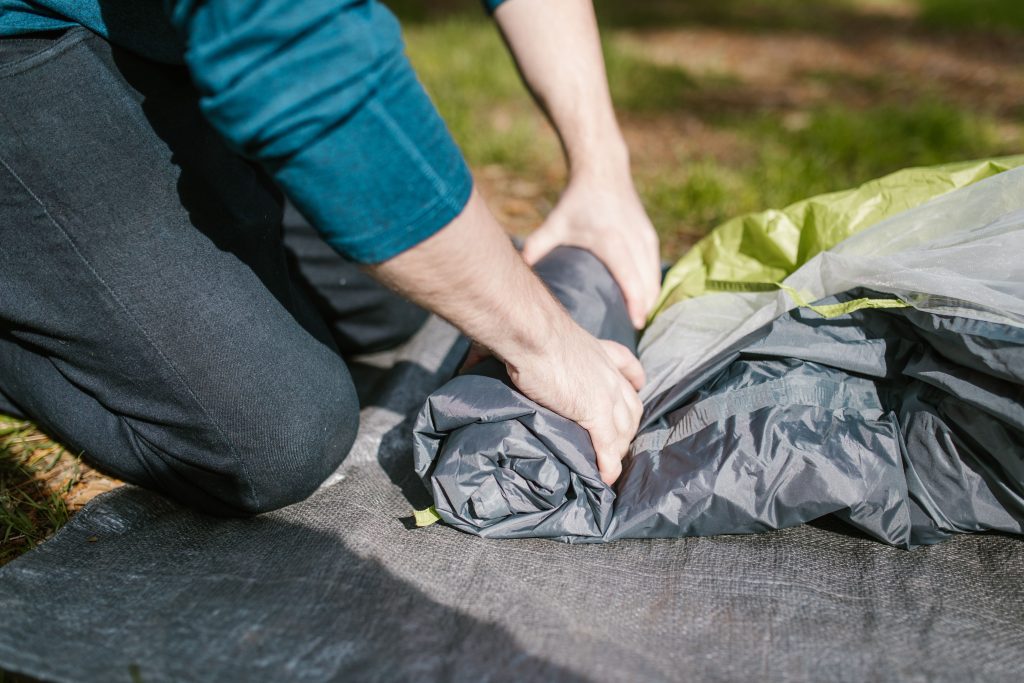
High-flow valves speed inflation and let air escape during packing. Separate inflation and deflation valves can stop expanding foam from pulling air back inside, while micro-adjust controls make firmness changes easier.
Look for a durable bottom, a comfortable non-slippery top, and an included repair kit. A pump sack also reduces effort and moisture from breath. These features matter, but fit, R-value, and packed size should still lead the decision.
Recommended Self Inflating Air Mattress Options
These six choices serve different budgets, sleep styles, and camping routines. Specifications can vary by size or model year, so confirm the selected variation before ordering.
| Product | Thickness | Capacity | Best fit | Main consideration |
| Therm-a-Rest MondoKing 3D | 4.25 in. | One | Cold-weather comfort | Large packed roll |
| NEMO Roamer Single Wide | 4 in. | One | Premium car camping | Higher cost |
| Sea to Summit Camp Plus Large | 2.6 in. | One | Balanced portability | Less plush |
| Teton Regular Sleeping Pad | 2 in. | One | Budget beginners | Heavy for hiking |
| KingCamp Premium Double | 3 in. | Two | Couples and families | Shared movement |
| Coleman Pad with Pillow | 2.5 in. | One | Occasional camping | Basic pillow |
Therm-a-Rest MondoKing 3D Self-Inflating Camping Sleeping Pad
Best for: Cold-weather car campers who prioritize maximum solo comfort
The MondoKing 3D uses 4.25 inches of foam and has an R-value of 7.0. Vertical sidewalls preserve usable sleeping room, while separate one-way valves support faster setup and packing. It suits roomy tents and cold trips, although its weight and packed dimensions make it a vehicle-camping choice rather than a hiking pad.
NEMO Equipment Roamer Sleeping Pad, Single Wide
Best for: Frequent car campers who want plush support in a single size
The Roamer provides four inches of cushioning, a stretch-knit top, and Flow Core channels designed to speed inflation and deflation. Its low-profile valve allows small firmness adjustments, and single pads can connect through toggles and loops. The refined construction suits regular campers, but its premium price may be hard to justify for occasional weekends.
Sea to Summit Camp Plus Self-Inflating Foam Sleeping Mat, Tapered Large
Best for: Campers balancing comfort, durability, and packed size
This 2.6-inch mat uses body-mapped foam coring to trim bulk while maintaining support in key areas. A reversible valve handles inflation, deflation, and pressure adjustment, while the 75-denier polyester shell suits regular campsite use. It packs more efficiently than many luxury mattresses, though side sleepers may prefer a deeper four-inch model.
Teton Regular Sleeping Pad; Sleeping Mat for Camping and Backpacking, Orange
Best for: First-time campers wanting an affordable, straightforward pad
The Teton pad measures 75 by 24 inches and offers two inches of cushioning. Its valve lets the foam draw in air, while side attachment strips can connect compatible pads. It provides simple, stable support at an approachable price level, but its 3.6-pound weight makes it less attractive for long-distance backpacking.
KingCamp Premium Double Camping Mattress, 2 Person
Best for: Couples or parents sharing a roomy tent or vehicle platform
KingCamp combines a three-inch air-and-foam core with a full-size surface for two sleepers. The included pump sack helps with top-offs, and adjustable pressure lets couples tune the feel before bed. It removes the gap between separate pads, but movement may disturb a light sleeper and the double size demands generous cargo space.
Coleman Self-Inflating Sleeping Pad with Pillow
Best for: Festivals, family campgrounds, and occasional campers
Coleman pairs a free-flow valve with a built-in pillow and compression straps for storage. Its 76-by-25-inch footprint gives one sleeper reasonable room, while the polyester shell suits casual camps. The integrated pillow removes one packing item, although its fixed shape will not suit every neck position and the pad is too bulky for serious backpacking.
How to Compare Value Instead of Chasing the Lowest Price
Think about cost per use rather than the checkout total. A premium self inflating air mattress makes sense when you camp frequently, sleep cold, or need deeper cushioning. A simpler model may be wiser for one festival or an annual family weekend.
Compare included accessories, warranty support, valve design, and repair options. Do not pay for winter insulation you will never need or thickness you cannot transport.
Research-Backed Facts That Improve Your Buying Decision
The active ASTM F3340-22 camping-mattress test method, published in 2022, measures thermal resistance under controlled compression between hot and cold plates. ASTM describes it as a repeatable comparison, while noting that posture, compression, and exposed edges can change real-world heat loss. Use standardized R-values, but consider your entire sleep system.
A 2021 systematic review of mattress firmness and sleep quality found that medium-firm home mattresses often supported comfort and spinal alignment. This evidence does not directly test camping pads, so it cannot identify one ideal outdoor firmness. It does support choosing adjustable pressure rather than assuming harder always means better.
Finally, REI’s 2026 sleeping-pad guide emphasizes the unavoidable trade-offs among cushioning, warmth, weight, packability, durability, and price.
Setup and Firmness Tips for Better Sleep
Unroll the self inflating air mattress early and open the valve while you finish camp. Cold temperatures and long compression can slow foam expansion, so wait before adding air.
Then lie in your normal sleep position and release air gradually until your hips and shoulders settle without touching the ground. Overinflation can create pressure points and an unstable feel. Keep the pad on a clean tent floor and away from sharp objects.
Cleaning, Storage, and Simple Field Repairs
Wipe dirt away with mild soap and water, then dry the mattress fully. At home, many manufacturers recommend storing foam pads unrolled or loosely expanded with the valve open to protect loft.
Carry the compatible repair kit. To locate a small leak, inflate the pad and apply soapy water, watching for bubbles. Mark the spot, dry it, and follow the patch instructions, including the required curing time.
Frequently Asked Questions About a Self Inflating Air Mattress
Does a self inflating air mattress inflate completely on its own?
Usually not. Opening the valve lets expanding foam draw air inside, but the final firmness often requires a few breaths or a pump sack. Inflation can take longer after the pad has remained tightly rolled or when temperatures are low. Allow time for expansion before assuming the valve or foam has failed.
Is a self inflating air mattress warmer than a regular air mattress?
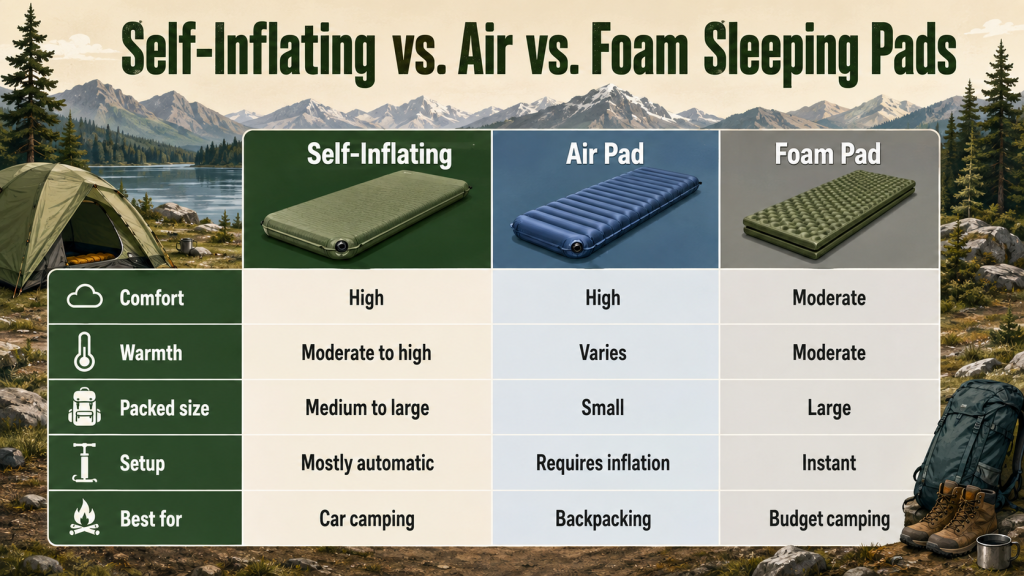
It can be because the foam core may reduce heat transfer, while an uninsulated air chamber offers little protection from cold ground. However, construction matters more than category. Compare standardized R-values whenever available. A well-insulated air pad can be warmer than a lightly insulated self-inflating model.
Can side sleepers use a two-inch self-inflating pad?
Some can, especially lighter sleepers who prefer a firm surface. However, many side sleepers need more depth to prevent hips and shoulders from pressing through. Test the pad in your normal position when possible. A thicker model, wider shape, or slightly softer pressure may improve comfort.
Can I use one on a camping cot?
Yes, provided the pad fits the cot and no sharp hardware rubs its fabric. A mattress adds cushioning and insulation, but it may slide unless the cot or pad includes straps or a textured surface. Check the cot’s weight rating separately because adding a mattress does not increase structural capacity.
How long should a self inflating air mattress last?
There is no universal lifespan. Frequency of use, abrasion, valve quality, moisture, storage, and repair history all matter. Reduce early wear by clearing the tent floor, avoiding overinflation in heat, drying the pad before storage, and keeping foam models loosely expanded when the manufacturer recommends it.
Final Recommendation: Choosing the Right Self Inflating Air Mattress
The right self inflating air mattress should fit your tent, vehicle, body, and camping season before it impresses you with extra features. Prioritize a standardized R-value for cold trips, enough thickness for your sleep position, efficient valves, and a packed roll you will willingly transport.
For maximum solo comfort, the Therm-a-Rest MondoKing 3D offers deep cushioning and strong insulation. The Sea to Summit Camp Plus gives space-conscious car campers a balanced package, while the Coleman model suits occasional trips. Couples can consider the KingCamp double if their tent has room.
Choose the least bulky mattress that meets your genuine warmth and support needs, then practice inflating, adjusting, rolling, and repairing it before your first overnight.