Emergency First Aid Kit Essentials for Camping
We may earn a commission for purchases made using our links. Please see our disclosure to learn more.
A camping trip can go from “best weekend ever” to “where did we put the bandages?” very quickly. One scraped knee, one surprise blister, one campfire burn, or one dramatic mosquito attack can turn your peaceful outdoor escape into a tiny survival episode.
That is why an emergency first aid kit belongs in every camping setup. Not because you expect disaster, but because being prepared lets you relax. Think of it like bringing a rain jacket. You hope you will not need it, but when the clouds roll in, you feel like a genius.
Why an Emergency First Aid Kit Matters on Camping Trips
Camping adds distance between you and quick help. Even at a family-friendly campground, you may still be several minutes from a store, ranger station, or urgent care clinic.
A good camping first aid kit helps you handle common outdoor problems such as:
- Cuts and scrapes
- Blisters
- Bug bites
- Minor burns
- Sprains
- Allergic reactions
- Dehydration
- Headaches or stomach trouble
It is not about packing a mini hospital. It is about having the right outdoor first aid supplies when small problems pop up.
Build Your Kit Around Your Camping Style
Not every camper needs the same setup. A weekend car camper with kids needs a different kit than someone backpacking deep into the woods.
Ask yourself:
- How far away from help will I be?
- How many people are coming?
- Are there kids, older adults, or pets?
- Will we hike, swim, cook over fire, or use tools?
- Does anyone have allergies, asthma, diabetes, or regular medication?
For a short campground stay, a compact travel first aid kit may be enough. For remote camping, you will want a more complete wilderness first aid kit with extra medications, emergency tools, and backup communication.
Emergency First Aid Kit Checklist: The Core Supplies
Start with the basics. These are the items you will probably reach for most often:
- Adhesive bandages in different sizes
- Sterile gauze pads
- Medical tape
- Antiseptic wipes
- Antibiotic ointment
- Disposable gloves
- Tweezers
- Small scissors
- Elastic wrap bandage
- Instant cold pack
- Burn gel
- Hydrocortisone cream
- Hand sanitizer
- Emergency blanket
- First aid guide
This is your “don’t leave home without it” list. It covers the little injuries that love to show up right after someone says, “We’re fine.”
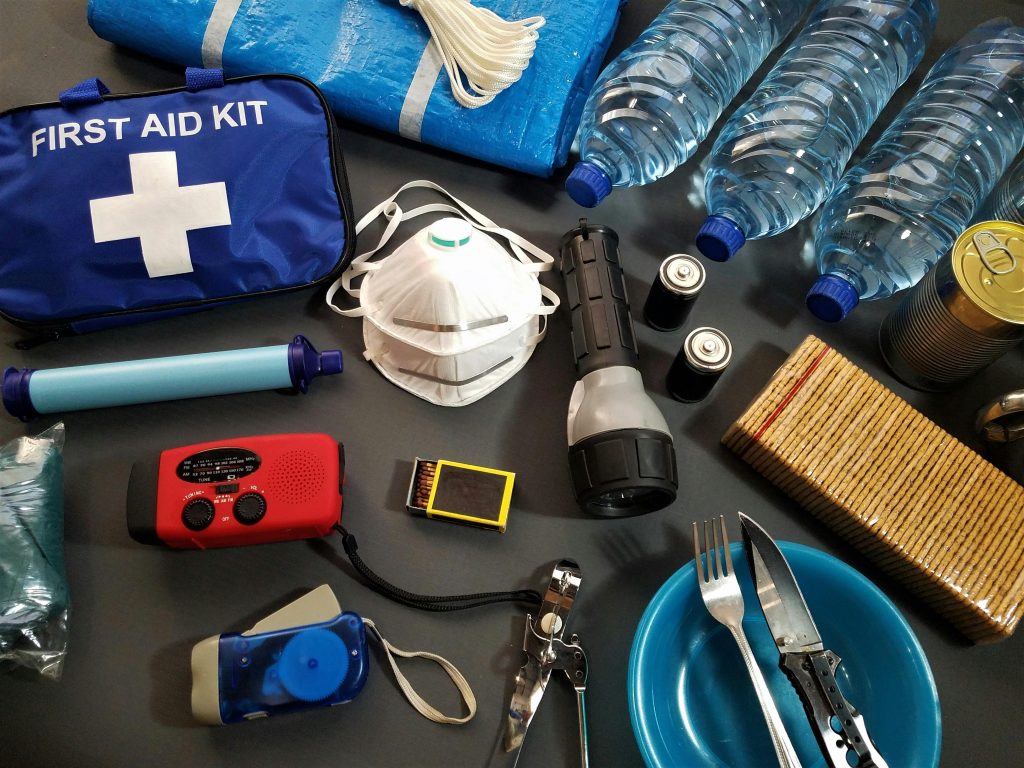
Wound Care Items You’ll Actually Use
Cuts and scrapes are camping classics. Someone trips over a tent stake, brushes against a rough branch, or gets too confident with the camp knife.
For wound care, pack:
- Antiseptic wipes for cleaning
- Gauze pads for covering larger cuts
- Medical tape for securing dressings
- Nonstick pads for sensitive wounds
- Antibiotic ointment for minor cuts
- Disposable gloves for safer care
A simple tip: keep wound care items together in one labeled pouch. When someone is bleeding and everyone is suddenly giving opinions, you do not want to dig through sunscreen, snacks, and mystery cables.
Blister, Burn, Bite, and Rash Care
Camping is basically a group project between your feet, skin, and the weather. Sometimes everyone cooperates. Sometimes your hiking boots choose violence.
Add these to your emergency medical supplies:
- Blister pads or moleskin
- Burn gel or burn dressing
- Insect sting relief wipes
- Anti-itch cream
- Aloe gel for sun irritation
- Sunscreen
- Insect repellent
- Lip balm with SPF
For hikers, blister care is non-negotiable. One small hot spot on your heel can turn a beautiful trail into a slow, limping negotiation with your shoes.
Medications and Personal Health Supplies
Your kit should also reflect the people coming with you. A generic store-bought kit frequently fails in this situation.
Consider packing:
- Pain reliever
- Antihistamine
- Anti-diarrheal medicine
- Antacid tablets
- Oral rehydration salts
- Motion sickness tablets
- Personal prescriptions
- Extra inhaler, if needed
- EpiPen, if prescribed
- Glucose tablets, if needed
Keep medications in original packaging when possible. Also, check expiration dates before every trip. Nothing ruins the “prepared camper” mood like discovering your medicine expired three summers ago.
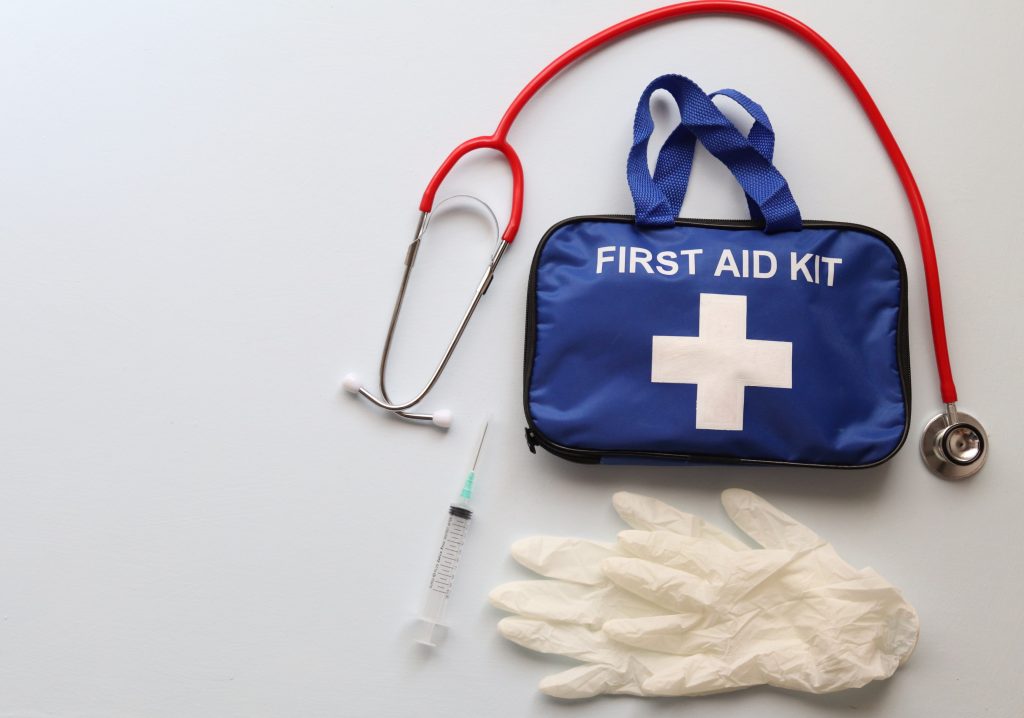
First Aid Tools That Save Time and Stress
A first aid kit is not only about bandages. Tools matter too.
Helpful tools include:
- Tweezers for splinters or ticks
- Small scissors or trauma shears
- Digital thermometer
- Safety pins
- CPR face shield
- Waterproof notebook and pencil
- Small flashlight or headlamp
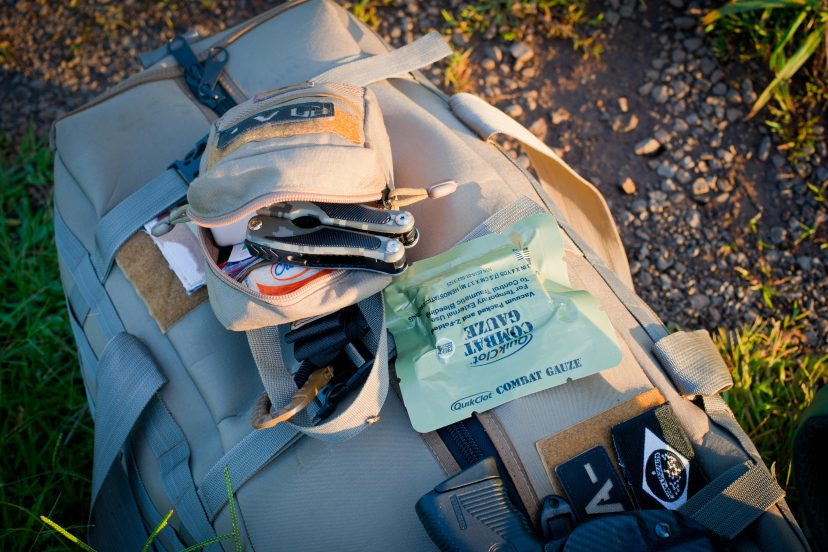
- Multi-tool
- Duct tape
Duct tape deserves its own tiny applause. It can help repair gear, secure a temporary wrap, or patch a tent. Is it elegant? No. Is it useful? Absolutely.
Emergency Extras That Support Your First Aid Kit
Some safety items may live outside your kit, but they still support emergency care.
Pack:
- Extra water
- Water purification tablets or filter
- Emergency blanket
- Whistle
- Headlamp with batteries
- Backup phone charger
- Power bank
- Printed emergency contacts
- Map of the area
- Satellite messenger for remote trips
If you rely on phones, lights, GPS, or small medical devices, backup power matters. A guide to portable power stations for camping can help you choose a power setup that keeps essential devices ready at camp.
How to Organize Your Camping First Aid Kit
The best kit is the one you can use quickly. A messy pouch full of loose bandages and old ointments is basically a junk drawer with ambition.
Try this simple layout:
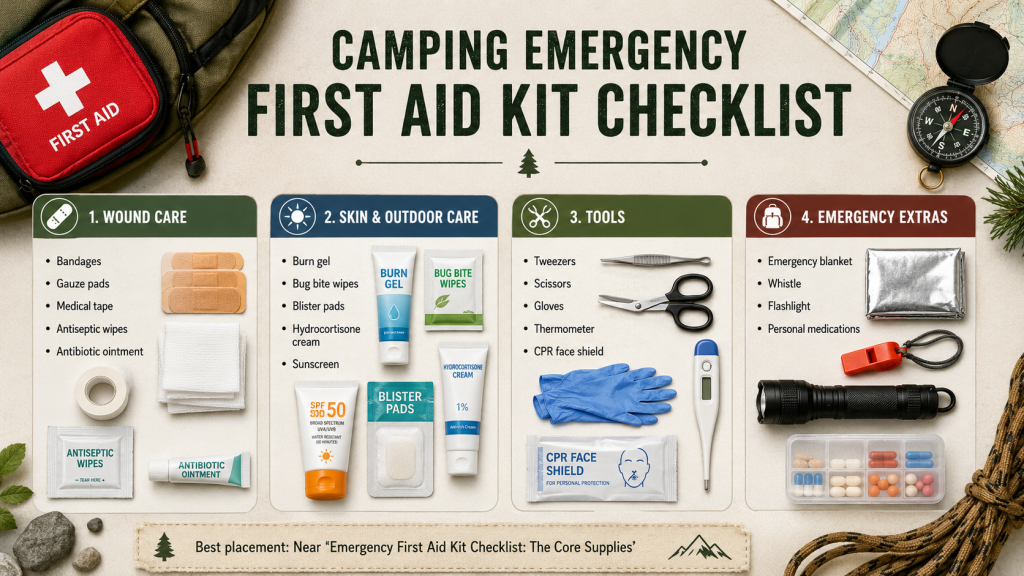
- Cuts and wounds: bandages, gauze, tape, ointment
- Skin care: bug bite wipes, burn gel, sunscreen
- Medications: pain relief, antihistamine, personal meds
- Tools: scissors, tweezers, gloves, thermometer
- Emergency items: blanket, whistle, CPR shield
Use clear pouches or labeled compartments. Also, tell everyone where the kit is. A first aid kit hidden under six sleeping bags is not a first aid kit. It is a treasure hunt.
Emergency First Aid Kit Options for Campers
Here are five relevant Amazon first aid kit options for different camping styles. Always compare the contents with your trip needs before buying.
Surviveware 238 Pcs Comprehensive Premium Survival First Aid Kit
This is a larger survival medicine kit designed for home, outdoor, travel, and camping situations. It suits families, group camping, and car campers who want a fuller setup. Amazon lists it as a 238-piece kit from Surviveware with strong customer ratings.
Features:
- Large 238-piece setup
- Designed for camping, travel, and emergencies
- Good for home-to-camp use
Best for: families, longer trips, and campers who want one main base-camp kit.
Adventure Medical Kits Sportsman Series Medical Kit – 300
This kit is designed for camping, hiking, hunting, and fishing. Amazon describes it as suitable for up to 6 people for up to 7 days, with organized access and a detachable field trauma kit.
Features:
- Built for outdoor use
- Organized medical compartments
- Includes trauma-focused supplies
Best for: group trips, hunting camps, and campers who go farther from town.
Coleman All Purpose Mini First Aid Kit – 27 Pieces, Small
This compact kit includes common supplies like latex-free bandages, antibiotic ointment, and antiseptic wipes. It is small and travel-friendly, so it works well as a backup kit.
Features:
- 27-piece mini kit
- Pocket-sized tin
- Useful for minor cuts and scrapes
Best for: day hikes, glove boxes, picnic bags, and backup camping gear.
330 Piece First Aid Kit, Premium Waterproof Compact Trauma Medical Kit
This THRIAID kit is listed as a 330-piece waterproof compact trauma medical kit for home, car, travel, outdoor, camping, hiking, and boating.
Features:
- 330-piece kit
- Waterproof-style compact case
- Designed for multiple settings
Best for: campers who want a larger kit that can also stay in the car or RV.
Adventure Medical Kits Sportsman Series Medical Kit – 100
This smaller Sportsman kit is listed for up to 2 people for up to 4 days. It has a compact storage bag and trauma supplies for bleeding control.
Features:
- Compact outdoor kit
- Good for 2 people
- Includes field trauma supplies
Best for: couples, solo campers, anglers, and short outdoor trips.
Research-Backed First Aid Notes for Campers
The American Red Cross recommends that a camping first aid kit include supplies such as adhesive bandages, antibacterial ointment, antiseptic wipes, burn gel, gloves, gauze pads, instant cold packs, scissors, a splint, sterile saline, tweezers, and an emergency blanket. Its camping first aid kit checklist is a helpful starting point for building your own kit.
A CDC-published outdoor recreation injury report from 2008 found that nearly 213,000 people were treated each year in emergency departments for outdoor recreational injuries during 2004–2005. The most common injuries included fractures and sprains, which is a strong reminder to prepare for falls, ankle twists, and impact injuries outdoors.
Wilderness medicine guidance published in Extreme Physiology & Medicine in 2015 also stresses planning around remoteness, medical risk, group needs, and available skills. In plain camper language: the farther you are from help, the more thoughtful your kit needs to be. See the wilderness medicine planning guidance for the deeper expert view.
How to Use Your Kit Calmly in the Moment
When something happens, pause first. Take one breath. Then act.
A simple flow helps:
- Check if the area is safe.
- Put on gloves if blood or fluids are involved.
- Clean the wound or assess the injury.
- Treat the issue with the right supplies.
- Monitor the person.
- Get professional help if symptoms are serious.
For severe bleeding, trouble breathing, chest pain, allergic reactions, head injuries, deep wounds, or suspected broken bones, seek emergency help right away.
Family and Group Camping First Aid Add-Ons
If you camp with kids, older relatives, or a big group, add a few extras:
- Children’s pain reliever
- Kid-safe insect bite treatment
- Extra bandages with fun designs
- Copies of allergy information
- Extra prescription medications
- Larger cold packs
- More gloves and gauze
- Emergency contact cards
For multicultural or multi-family camping groups, ask about health needs before the trip. Some people may have dietary restrictions, medication routines, religious considerations, or privacy preferences around health. A little care before camp makes everyone feel safer.
Common Mistakes to Avoid With Camping First Aid Kits
The biggest mistake is buying a kit and never opening it. You need to know what is inside before someone gets hurt.
Avoid these common errors:
- Forgetting personal medications
- Not checking expiration dates
- Packing only bandages and no tools
- Leaving the kit in the car during a hike
- Not waterproofing supplies
- Assuming someone else packed one
- Carrying supplies you do not know how to use
Also, restock your kit after every trip. If you used the blister pads, replace them. If the gloves tore, replace them. Your future self will want to high-five you.
FAQs About Emergency First Aid Kits for Camping
What should be in an emergency first aid kit for camping?
A camping kit should include bandages, gauze, medical tape, antiseptic wipes, antibiotic ointment, gloves, tweezers, scissors, pain reliever, antihistamine, blister care, burn gel, hydrocortisone cream, emergency blanket, and personal medications.
Is a small first aid kit enough for camping?
A small kit may work for short campground trips or day hikes. For remote camping, larger groups, kids, or multi-day trips, choose a more complete outdoor first aid kit with extra wound care, medications, and emergency tools.
How often should I replace my camping first aid kit?
Check your kit before every trip and do a full review at least once a year. Replace expired medicine, dried-out wipes, damaged packaging, used bandages, and anything exposed to moisture.
Do I need first aid training before camping?
You can camp without formal training, but basic first aid knowledge helps a lot. Learning wound care, CPR basics, allergic reaction response, and sprain care can make you calmer and more useful during emergencies.
Where should I keep my emergency first aid kit at camp?
Keep it somewhere easy to reach, dry, and known to everyone. At camp, store it near the cooking or common area. On hikes, carry a smaller backpacking first aid kit instead of leaving everything behind.