Coffee Sock for Camping: Best Reusable Cloth Filters for Outdoor Brewing
We may earn a commission for purchases made using our links. Please see our disclosure to learn more.
A good campsite coffee setup should pack easily, work before sunrise, and clean up without creating a pile of trash. A coffee sock for camping checks many of those boxes. This reusable cloth filter can work with a cone dripper, basket brewer, jar, or simple pot-and-strain routine, depending on the design.
The catch is that “coffee sock” describes several shapes and sizes, not one universal filter. Some fit compact pour-over cones; others are built for cold brew or full-size drip machines. This guide compares practical options, explains what matters before you buy, and covers brewing, cleaning, packing, and disposal so you can choose a filter that fits the way you actually camp.
What a Coffee Sock for Camping Actually Is
A coffee sock for camping is a reusable cloth filter that holds grounds while brewed coffee passes through. Some resemble fabric bags; others fit cone or basket brewers. That difference matters outdoors: a fitted filter requires a compatible brewer, while a framed or drawstring sock may work directly with a mug, pot, or jar.
Why Campers Choose Cloth Over Paper or Metal
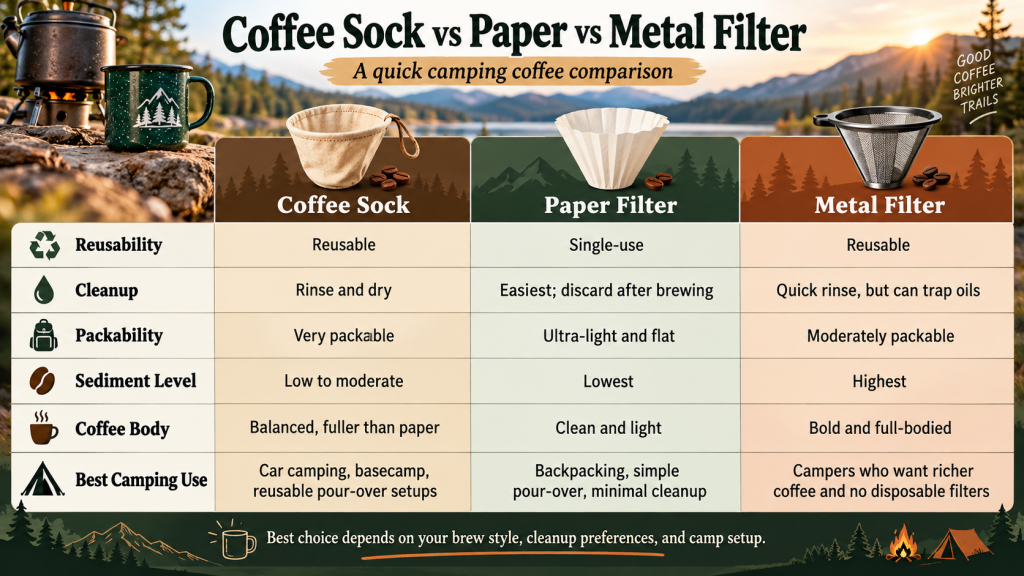
Cloth sits between paper and metal. It eliminates disposable filters, folds small, and can produce a different cup profile from either paper or coarse metal mesh. The tradeoff is maintenance: you must rinse and dry it. If you want fresh-ground coffee with less disposable waste, that can be worthwhile.
Where Cloth Filters Make the Most Sense Outdoors
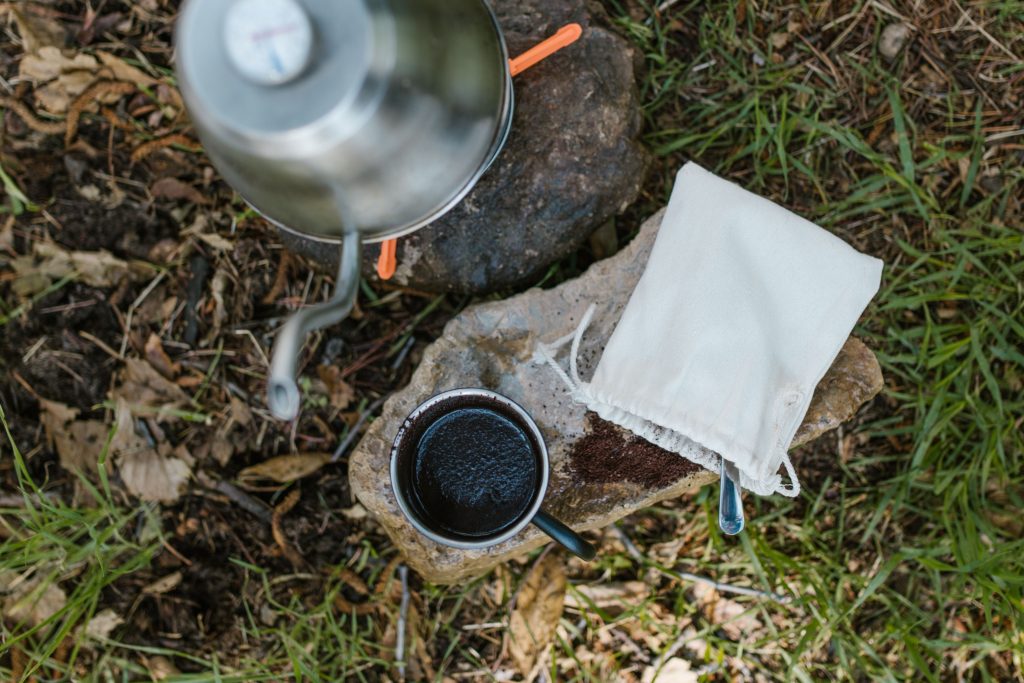
Cloth works especially well for car camping, van trips, RV stays, cabins, and basecamps where rinse water is available. Lightweight cone versions can suit backpackers who already carry a dripper. Cold-brew socks favor settled camps with a cooler, while basket filters make sense mainly with a powered-site or RV drip machine.
How to Choose the Right Coffee Sock for Camping
Start with the brewer or container you plan to carry. A coffee sock for camping should fit it securely without improvised clips or awkward balancing. Then choose a batch size: a #2 cone suits smaller brews, while families may prefer #4, basket, or large cold-brew filters. Finally, favor a wide opening or sturdy rim if easy cleanup matters.
Size, Shape, and Brewer Compatibility
Filter labels are not interchangeable. #2 and #4 cones fit different brewer sizes; basket filters use another shape; cold-brew bags are often matched to a jar or vessel capacity. Before ordering, compare stated dimensions and compatibility with your equipment. If you want fewer parts, consider a framed or suspended sock rather than a fitted cone liner.
Materials and Construction Worth Paying For
Cotton is common because it is flexible and washable; some framed filters use cotton-poly flannel for structure. More important than the fiber name is solid construction: even stitching, a secure rim, and enough room to wet grounds without overflow. For a coffee sock for camping, a drawstring, sewn edge, or frame can also simplify handling when wet.
Best Coffee Sock for Camping: 6 Recommended Products
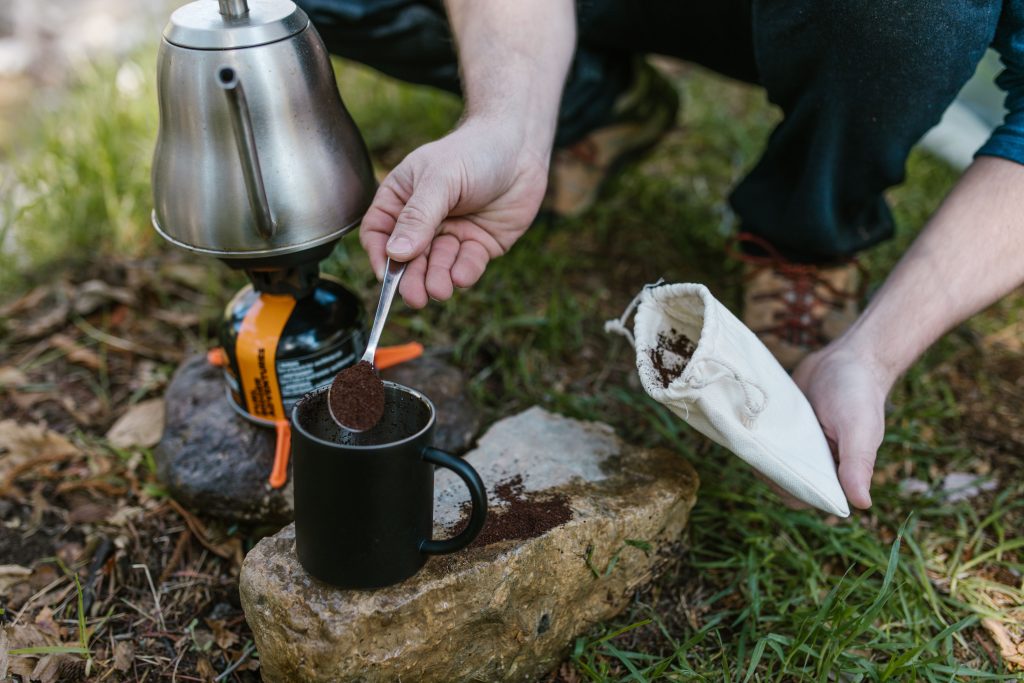
These six options suit different brewing styles, group sizes, and camp setups. The right coffee sock for camping is less about popularity than whether its shape and capacity fit the equipment you already intend to bring.
CoffeeSock ’The Original’ Reusable 100% Organic Cotton Coffee Filters – 2 pk Cone #2 Filters | Coffee Sock Cloth Drip 2 Coffee Filter | Organic Cotton Alternative – Zero-Waste & Eco-Friendly – C2
Best for: Solo campers and couples using a #2 cone brewer
This two-pack uses reusable organic cotton filters sized for #2 cone drip and pour-over brewers. The compact format makes sense when your brewing kit already includes a small cone. It packs flat and replaces disposable paper filters, but it is not a stand-alone brewer, so confirm that your dripper accepts the #2 shape before buying.
CoffeeSock ’The Original’ Reusable 100% Organic Cotton Coffee Filters – 2 pk Cone #4 Filters | Coffee Sock Cloth Drip 4 Coffee Filter | Organic Cotton Alternative – Zero-Waste & Eco-Friendly – C4
Best for: Car campers brewing several cups at once
This organic-cotton two-pack is shaped for larger #4 cone drip and pour-over brewers. It is a better match for couples or groups who want more capacity than a small cone offers while keeping the filter reusable. The tradeoff is that the larger brewer it fits will generally occupy more room than a minimalist single-cup setup.
CoffeeSock ’The Original’ Reusable 100% Organic Cotton Coffee Filters – 2 pack Basket Filters 6-12 cup fit | Coffee Sock Cloth Coffee Filter | Organic Cotton Alternative – Zero-waste & Eco-Friendly
Best for: RV kitchens and campsites with a standard drip machine
These reusable organic-cotton basket filters are designed for 6- to 12-cup basket-style coffee makers. They make the most sense in an RV, camper, cabin, or powered campsite where a conventional drip machine is already part of the setup. They fold down easily, but backpackers gain little from carrying a filter that depends on a full-size brewer.
CoffeeSock Cold Brew Coffee Filter for 64 oz Mason Jar – Reusable Organic Cotton Cold Brew Filter Bag, GOTS Certified, Bleach Free, Eco-Friendly Zero Waste Cold Brew Maker – Half Gallon
Best for: Warm-weather basecamps and make-ahead cold brew
This reusable 100% organic-cotton bag is designed for a 64-ounce wide-mouth mason jar and is GOTS certified. It suits campers who prefer to steep a larger batch overnight and pour coffee in the morning. The simple jar-based format is convenient at basecamp, although the glass vessel and long steep time make it less practical for lightweight backcountry trips.
(2-Pack, Large 12in x 12in) Organic Cotton Cold Brew Coffee Bag – Designed in California – Reusable Coffee Filter with EasyOpen Drawstring Cold Brew Maker for Pitchers, Mason Jars, & Toddy Systems
Best for: Groups using different cold-brew containers
Doppeltree’s 12-by-12-inch organic-cotton bags have a wide opening and drawstring closure, and the maker lists compatibility with pitchers, mason jars, and Toddy-style systems. That flexibility helps when your camp kitchen changes from trip to trip. The large size is useful for batch brewing, but it is more fabric than a solo camper needs for a single morning cup.
Fino Reusable Cloth Coffee Filter, Cotton-Poly Flannel Fabric with Stainless Steel Frame
Best for: Campers who brew in a pot and want a simple straining step
Fino pairs cotton-poly flannel with a stainless-steel frame and a long cloth sock, so it can strain brewed coffee without a separate cone dripper. The frame gives you a defined opening while the fabric lays flat for storage. It is especially relevant to pot-brewed coffee, though campers who specifically want an all-cotton filter should choose another option.
How to Brew Better Coffee at Camp With Cloth
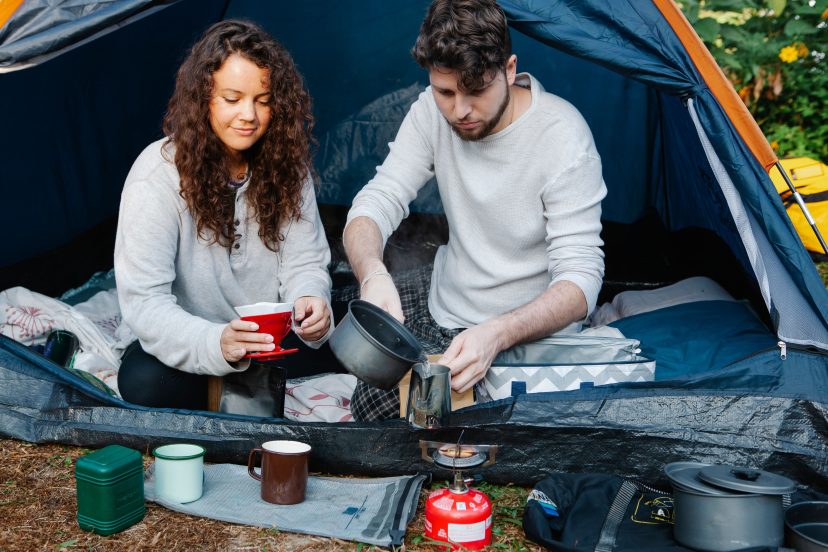
Seat the filter securely, add medium-ground coffee for pour-over, and wet the grounds evenly. Pour slowly enough to avoid overflow. A coffee sock for camping may drain more slowly as oils accumulate; if that happens, clean it thoroughly or try a slightly coarser grind. For cold brew, follow the maker’s grind and steeping directions.
Cleaning and Drying a Coffee Sock in the Backcountry
First shake or scrape grounds into your trash bag, then rinse the cloth with clean water. Hang it where moving air can reach both sides. If you must pack a damp coffee sock for camping, isolate it temporarily in a washable container and clean it properly at the next opportunity. Never store it damp between trips.
What Research and Outdoor Guidance Say About Cloth-Filtered Coffee
Cloth filtration is not identical to paper. A 2025 peer-reviewed study indexed by PubMed found 939 mg/L cafestol and 678 mg/L kahweol in boiled coffee; passing that brew through one fabric filter reduced them to 28 and 21 mg/L. Paper-filtered coffee in the same study was lower still, so the result does not support a universal health claim for cloth. A 2018 paper-filter study indexed by PubMed likewise found that filter porosity and ground-coffee particle size influenced cafestol levels.
For care, CoffeeSock’s official brew-and-care instructions say to boil a new filter for 10 minutes, rinse it after brewing, and let it dry thoroughly.
Outdoors, REI’s camp-coffee guidance and National Park Service guidance for Denali support packing out coffee grounds rather than scattering or burying them. Always follow the rules for the land you are visiting.
Coffee Sock vs. Paper Pour-Over, French Press, and Instant Coffee
A coffee sock for camping offers reusable filtration without a bulky brewer. Paper pour-over keeps cleanup simple but creates a used filter to pack out. A French press avoids disposable filters but is bulkier and leaves wet grounds. Instant coffee remains the easiest ultralight option.
If you are comparing several brewing styles, this guide to portable coffee makers for camping covers presses, drippers, and other formats before you commit.
Common Buying Mistakes to Avoid
The biggest mistake is buying the wrong shape: #2 and #4 cones are not interchangeable, and basket filters are not trail brewers. Another is ignoring drying needs. In constant rain or where rinse water is scarce, cloth may be inconvenient. Finally, choose a batch size that matches your normal morning routine rather than the largest coffee sock for camping available.
Packing and Leave No Trace Tips
Pack the dry filter inside your cook kit or a breathable pouch, away from fuel and strongly scented food. Carry a dedicated waste bag for spent grounds; biodegradable material still should not be scattered around camp. Keep coffee and rinse water out of lakes and streams, and follow local waste rules. On longer trips, a second filter can help while the first dries.
Coffee Sock for Camping FAQ
Is a coffee sock for camping good for backpacking?
Yes, if it fits a lightweight dripper you already carry or can suspend over a mug. The cloth itself packs small, but you still need water for rinsing and a way to dry it. Where water is scarce or conditions stay wet, instant coffee or disposable paper filters may be simpler.
Does using a cloth coffee filter affect the flavor of the coffee?
It can. Cloth generally allows more coffee oils through than paper while catching much of the fine sediment that can pass through coarse metal mesh. That can give the cup more body than paper-filtered coffee. Beans, grind size, water, ratio, and pouring technique still have a large role in the final flavor.
How often should I replace a coffee sock?
There is no universal schedule. Follow the manufacturer’s care guidance and replace it when the fabric tears, seams fail, persistent odors or off-flavors remain after proper cleaning, or normal flow cannot be restored. Thorough cleaning and drying between trips help avoid replacing a usable filter simply because it was stored wet.
Can I use a coffee sock without a coffee maker?
Some designs allow it. A framed sock or drawstring bag can work with a pot, mug, or jar, while cone-shaped cloth filters usually need a compatible dripper for support. Check the intended setup before leaving home so you are not improvising a holder while handling hot water at camp.
What coffee grind size is best for using a coffee sock while camping?
For cone-style cloth filters, start with a medium grind and adjust to drainage and taste. If water stalls, go slightly coarser; if it rushes through and tastes weak, try finer. Cold-brew bags generally pair with coarse grounds, but follow the maker’s instructions because weave, bag size, and steeping method vary.
Final Recommendation: Choosing a Coffee Sock for Camping
The best coffee sock for camping matches your brewer, group size, water access, and willingness to rinse and dry fabric. For a compact pour-over kit, the CoffeeSock Cone #2 is a straightforward choice for a compatible small dripper. Groups brewing more at once may prefer the Cone #4, while the 64-ounce CoffeeSock cold-brew filter suits make-ahead coffee at a settled basecamp.
Before buying, verify the filter shape and vessel size, decide where used grounds will go, and be realistic about cleanup. If those pieces fit your routine, a reusable cloth filter can be a simple, packable way to keep fresh-ground coffee in your camping setup.