Camping Heaters for Tents: How to Stay Warm Safely
We may earn a commission for purchases made using our links. Please see our disclosure to learn more.
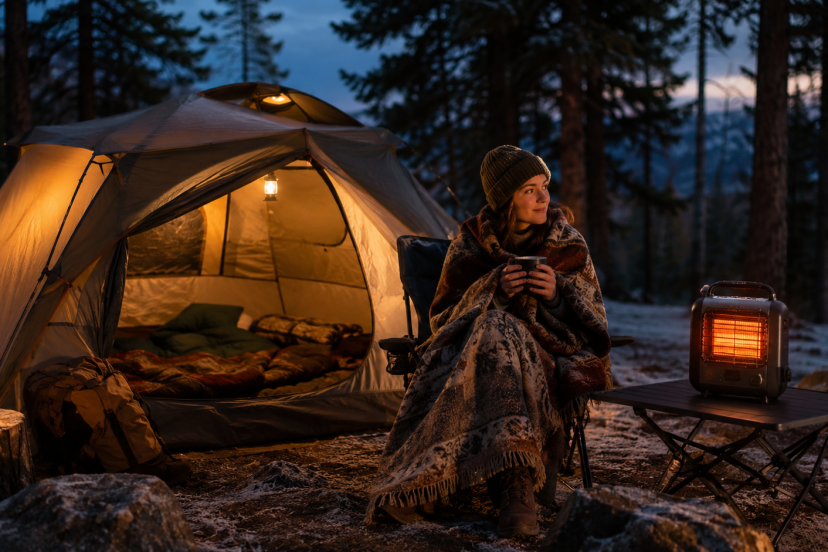
Cold-weather camping sounds magical until your toes start filing a formal complaint at 2 a.m. One minute you’re enjoying crisp air, stars, and that quiet forest feeling. Next, you’re bundled like a burrito wondering if camping heaters for tents are a smart idea or a shortcut to trouble.
In the middle is where the truth lies. A tent heater can make chilly nights more comfortable, but only when you understand fuel types, airflow, carbon monoxide risks, fire safety, and when to turn the heater off. In this guide, you’ll learn how camping heaters work, which options fit different campers, what safety rules matter most, and which Amazon products are worth considering.
Why Campers Use Camping Heaters for Tents
A heater is not about turning your tent into a hotel room. It is about taking the sharp edge off the cold.
You might want one if you camp in:
- Early spring or late fall
- Mountain areas
- Damp forests
- Desert campsites with cold nights
- Family tents where kids need extra comfort
- Hunting, fishing, or basecamp setups
A portable camping heater can be especially helpful when the temperature drops after sunset. Still, it should support your sleep system, not replace it. Think of it like hot coffee on a cold morning. Lovely? Yes. A full breakfast? Not quite.
Your sleeping bag, sleeping pad, clothing layers, and tent ventilation still do the heavy lifting.
Are Camping Heaters for Tents Safe?
Camping heaters for tents can be safe only when you choose the right type and use it exactly as directed. The biggest risks are carbon monoxide poisoning, fire, burns, and poor ventilation.
The U.S. Consumer Product Safety Commission warns campers not to use fuel-burning heaters or lanterns while sleeping in enclosed areas like tents, campers, or vehicles. It also notes that carbon monoxide symptoms can feel like the flu, which makes the danger easy to miss.
So, the simple rule is this: never treat any tent heater like a “set it and forget it” appliance.
Use it while awake. Ventilate the tent. Keep it away from gear. Turn it off before sleep.
Types of Tent Heaters You Should Know
Not all tent heaters work the same way. Some use fuel. Some need electricity. Some are better for car camping than backpacking.
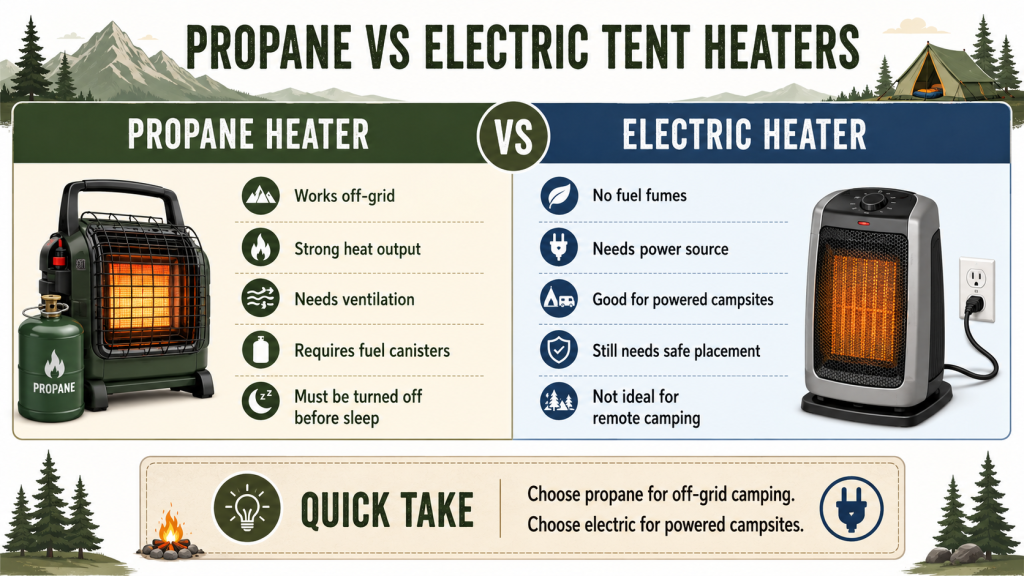
Propane tent heaters
A propane tent heater uses small propane cylinders or larger tanks with approved hoses. These are common for cold-weather camping because they do not need an electrical hookup.
They produce strong heat, but they also burn fuel. That means ventilation and carbon monoxide awareness matter every single time.
Electric tent heaters
An electric tent heater is cleaner because it does not burn propane inside the tent. However, it requires a safe power source, such as a campground electrical hookup or a properly rated power station.
Do not run random extension cords across wet ground like spaghetti at a campsite. Use outdoor-rated cords and follow the heater’s instructions.
Wood stoves for hot tents
Some winter campers use canvas “hot tents” with stove jacks and small wood stoves. These are specialized setups, not regular nylon tent setups.
If your tent does not have a stove jack and heat-safe design, do not improvise one. Camping is fun. DIY chimney disasters are not.
Propane Camping Heaters: Pros and Cons
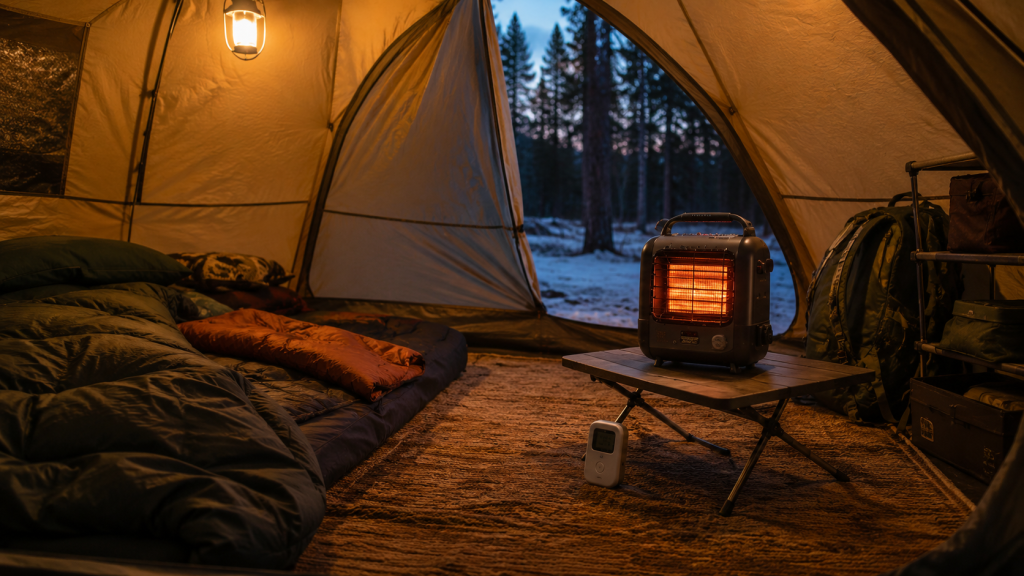
Propane heaters are popular because they are portable, powerful, and useful in places without electricity.
Pros
- Strong heat output
- Good for larger tents or basecamps
- Works off-grid
- Easy fuel availability
- Useful for hunting, ice fishing, and car camping
Cons
- Requires ventilation
- Produces combustion byproducts
- Adds fire and burn risks
- Fuel canisters add weight
- Not safe to run while sleeping
The CDC explains that carbon monoxide comes from burning fuel, including stoves, lanterns, grills, fireplaces, and furnaces. Because CO has no smell or color, you cannot rely on your senses to detect it.
That is why propane heaters demand respect. Cozy is good. Casual is risky.
Electric Tent Heaters: Pros and Cons
Electric heaters are often a better choice when you have reliable power. They avoid the carbon monoxide issue that comes with burning fuel inside a tent.
Pros
- No propane fumes
- No open flame
- Often includes tip-over protection
- Good for powered campsites
- Simple to operate
Cons
- Needs electricity
- Can overload weak power setups
- Still creates fire risk if placed near fabric
- Not ideal for backpacking
- Some models are too powerful for small tent spaces
Electric heaters work best for car campers staying at developed campgrounds. They are not great for remote backcountry camping unless you have a serious power station setup.
The Myth of Battery-Powered Tent Heaters
Many campers search for battery-powered camping heaters for tents. It sounds perfect, right? No flame, no fuel, no cord.
Sadly, heat takes a lot of energy. Most small battery-powered “heaters” either provide weak warmth or drain power quickly. A battery fan is easy. A battery heater is a hungry little beast.
For real warmth, you are usually choosing between propane, electric hookup, a hot tent stove system, or non-heater insulation methods.
Ventilation Is Not Optional
Ventilation may sound odd when you are trying to stay warm, but it is one of the most important tent heater safety habits.
A sealed tent traps moisture and can allow dangerous gases to build up. Even when using a heater approved for indoor use, follow the manufacturer’s airflow instructions.
Good ventilation may include:
- Cracking a window or vent
- Keeping roof vents open
- Avoiding snow-blocked vents
- Not sealing every gap
- Using a carbon monoxide detector
Yes, you may lose a little warmth. But safe warmth beats risky warmth every time.
Carbon Monoxide: The Silent Camping Risk
Carbon monoxide is often called a silent killer because you cannot see, smell, or taste it. The CDC states that more than 400 Americans die each year from unintentional, non-fire-related CO poisoning, while more than 100,000 visit emergency departments and over 14,000 are hospitalized.
Symptoms may include:
- Headache
- Dizziness
- Weakness
- Nausea
- Vomiting
- Confusion
- Sleepiness
That last one is especially scary while camping. If someone feels unusually sleepy, confused, or sick while a fuel-burning heater is running, turn it off, get fresh air immediately, and seek medical help.
A portable carbon monoxide detector is small, affordable, and absolutely worth packing.
How to Use a Tent Heater Safely
Here is the practical checklist I would give a friend before a cold camping trip.
- Read the heater manual before the trip.
- Use only heaters approved for the space and purpose.
- Vents should remain open.
- Set the heater down on a level, stable surface.
- Keep it away from sleeping bags, clothing, backpacks, and tent walls.
- Never cover the heater.
- Keep kids and pets away from it.
- Use a battery-powered carbon monoxide detector.
- Turn the heater off before sleeping.
- Never use a stove, grill, or charcoal inside your tent.
The CPSC specifically advises campers to shut off camping heaters and lanterns before going to sleep, even when using newer models with safety features.
That one rule can save lives.
What Size Heater Do You Need for a Tent?
Bigger is not always better. A heater that is too powerful can make a small tent hot, dry, and uncomfortable fast.
Consider:
- Tent size
- Outside temperature
- Tent material
- Ventilation
- Number of people inside
- Whether you are awake or preparing for sleep
For a small two-person tent, a compact heater or no heater may be enough. For a family cabin tent, you may need more output. Still, do not chase maximum BTUs just because the number looks impressive.
A tent is a small space. It warms quickly, like a parked car in the sun.
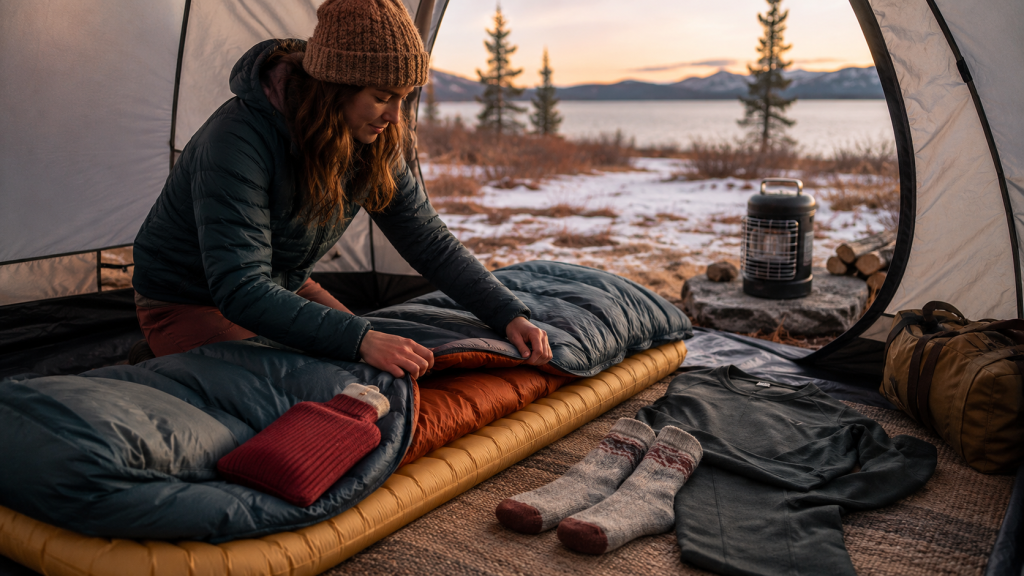
Stay Warm Without Relying Only on a Heater
A heater should be your backup singer, not the lead vocalist.
To stay warmer naturally, use:
- A cold-rated sleeping bag
- An insulated sleeping pad
- Wool socks
- A warm hat
- Base layers
- Dry clothes for sleeping
- A tent footprint
- A hot water bottle
- Wind protection around camp
Also, eat well. To stay warm, your body expends energy. A warm dinner before bed helps more than people realize. For easy planning, check out this guide to camping meal prep for a week so your cold-weather trip feels organized instead of chaotic.
Best Amazon Camping Heaters for Tents
Below are five relevant Amazon products to consider. Always check the latest listing details, safety instructions, and manufacturer guidance before use.
1. Mr. Heater F232000 MH9BX Buddy Portable Propane Radiant Heater
One of the most popular propane heaters for campers is the Mr. Heater Buddy. It offers 4,000 and 9,000 BTU heat settings, is designed for indoor and outdoor use, and heats up to about 225 square feet according to the Amazon listing.
Features:
- 4,000–9,000 BTU output
- Low-oxygen safety shutoff
- Tip-over safety shutoff
- Runs on 1 lb propane cylinders
- Portable radiant heat
Best for: Car campers, hunters, ice-fishing shelters, and larger tent setups where ventilation is managed carefully.
2. Mr. Heater Little Buddy 95 sq. ft. Propane Portable Heater
The Mr. Heater Little Buddy is a smaller propane option with 3,800 BTU output and heating coverage listed around 95 square feet.
Features:
- 3,800 BTU heat output
- Compact dish-style form
- Indoor/outdoor usage
- Radiant heat
- Small-space design
Best for: Solo campers or small tent users who want short, supervised warm-up periods before bed.
3. Mr. Heater Portable Big Buddy Propane Heater
The Big Buddy is made for larger spaces, with 4,000, 9,000, and 18,000 BTU settings and coverage listed up to 450 square feet.
Features:
- Three heat settings
- Higher BTU output
- Portable propane design
- Suitable for larger enclosed spaces when used correctly
- Strong radiant warmth
Best for: Large family tents, basecamps, workshops, or big shelters where a smaller heater may not keep up.
4. Campy Gear Chubby 2 in 1 Portable Propane Heater & Stove
The Campy Gear Chubby combines a portable propane heater and stove-style function. Amazon listings describe it as an outdoor camping gas stove and camp tent heater for activities like ice fishing, hiking, hunting, and emergency use.
Features:
- 2-in-1 heater and stove concept
- Portable propane design
- Outdoor camping use
- Compact form
- Useful for multipurpose camp setups
Best for: Campers who want a compact backup heat source and outdoor cooking support. Use cooking functions outside the tent and follow all safety instructions.
5. GiveBest Portable Electric Space Heater with Thermostat
The GiveBest Portable Electric Space Heater offers 1500W and 750W heat settings, a thermostat, and overheat/tip-over protection according to its Amazon listing.
Features:
- 1500W/750W settings
- Ceramic heating
- Thermostat control
- Cool air fan mode
- Tip-over and overheat protection
Best for: Campers at powered campsites who want an electric tent heater without using propane inside the tent.
Research-Backed Safety: What Experts Say
A 2004 wilderness medicine review on carbon monoxide poisoning in tents examined case reports, toxicity, and practical prevention advice. The review highlights that small tents can become dangerous when combustion devices are used inside enclosed spaces.
Another 2004 study on camping stove carbon monoxide exposure inside tents found that kerosene camping stoves produced enough CO in a small tent to cause significant carbon monoxide levels in the blood of participants.
These studies focus heavily on stoves, but the lesson carries over to tent heating: burning fuel in a small shelter deserves serious caution.
Common Mistakes to Avoid
Even experienced campers make mistakes when they are cold and tired. That is when shortcuts feel tempting.
Avoid these:
- Using a camp stove as a heater
- Burning charcoal inside a tent
- Sleeping with a propane heater running
- Blocking vents to “save heat”
- Placing a heater near fabric
- Ignoring headaches or nausea
- Skipping the CO detector
- Using indoor cords outdoors
- Letting kids adjust the heater
The CDC specifically says never to burn charcoal indoors and never to use a portable gas camp stove indoors.
A tent may feel outdoorsy, but once you zip it shut, it becomes an enclosed space.
Best Setup for Cold-Weather Camping
A safer warm-camping setup looks like this:
- Cold-rated sleeping bag
- Insulated sleeping pad
- Dry base layers
- Warm socks and hat
- Ventilated tent
- Heater used only while awake
- CO detector placed inside
- Fire-safe heater zone
- Extra blankets stored away from heat
- Warm food and drinks before bed
This setup gives you layers of protection. If the heater fails, you are still okay. If the temperature drops, your sleep system still works.
That is the real goal: comfort without depending on one gadget.
FAQs About Camping Heaters for Tents
Are camping heaters for tents safe to use overnight?
No, you should not run fuel-burning camping heaters overnight while sleeping. Use them only while awake, keep ventilation open, and turn them off before bed. A warm sleeping bag and insulated pad should handle overnight warmth.
Is it possible to use a propane heater inside a tent?
You can use some propane heaters in tent-like spaces only if the product is approved for indoor use and you follow the manufacturer’s ventilation instructions. Still, never sleep with it running and always use a carbon monoxide detector.
Which heater is the safest when camping in a tent?
For powered campsites, an electric heater with tip-over and overheat protection is often the safer choice because it does not burn fuel inside the tent. For off-grid camping, use a properly rated propane heater with strict ventilation and supervision.
Do I need a carbon monoxide detector when using a tent heater?
Yes. If you use any fuel-burning heater, pack a battery-powered carbon monoxide detector. CO is invisible and odorless, so a detector gives you an extra layer of protection.
How can I heat a tent without a heater?
Use an insulated sleeping pad, cold-rated sleeping bag, dry base layers, wool socks, a warm hat, a hot water bottle, and a wind-protected campsite. Eat a warm meal before bed and change out of damp clothes.