Large Camping Tents: How to Choose the Right One
We may earn a commission for purchases made using our links. Please see our disclosure to learn more.
A tent can look enormous in product photos and still feel crowded once everyone unrolls a sleeping bag. Air mattresses, backpacks, and shoes quickly consume floor space. That is why choosing large camping tents takes more than checking the number printed on the bag.
Your shelter needs sleep and storage space without exhausting setup. It also needs to fit your campsite and the weather you expect. This guide compares practical layouts, explains which construction details deserve attention, and highlights five tent options for different camping styles. Use these details to make a more confident purchase.
How Many Campers Can a Large Tent Really Hold?
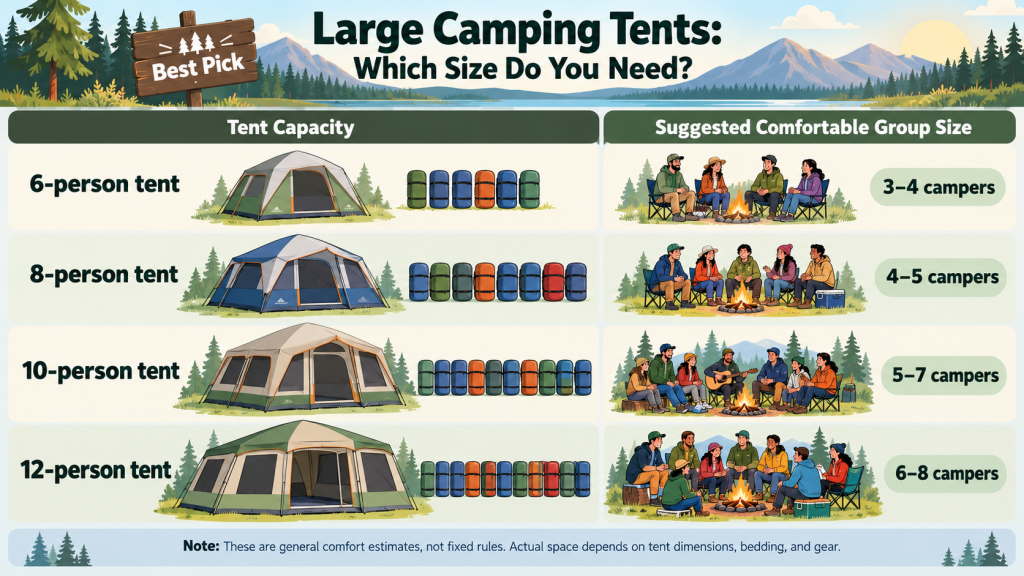
A manufacturer’s capacity describes a maximum sleeping arrangement, not a guarantee of comfortable living space. Eight pads might fit, leaving little room for bags.
For car camping, consider a tent rated for more people than your group, especially if you use wide air mattresses. Four adults may appreciate a six- or eight-person model, while a family of six might prefer a larger cabin or two separate tents. Check floor dimensions when bringing pets or bulky bedding.
Measure Floor Space and Standing Height
Write down the dimensions of every air mattress or sleeping pad you plan to bring. Sketch them on the floor plan, leaving a walkway.
A 12-by-9-foot floor provides 108 square feet on paper, but sloping walls reduce usable space around the edges. Check where the ceiling is tall enough to stand, not just the advertised peak height. Near-vertical walls are especially helpful for taller campers.
Cabin, Dome, and Tunnel Tents Compared
Cabin tents favor standing room. Their straighter walls make arranging beds and dividing the interior straightforward, although the broad sides can catch more wind and demand careful anchoring.
Dome tents typically have curved poles and lower edges, which can make them more practical when the site is exposed. Tunnel designs often create long living and sleeping zones, but some depend heavily on their stakes and guylines to retain their shape. No shape guarantees storm resistance; pitching and frame quality matter.
Check the Rainfly, Seams, and Tent Floor
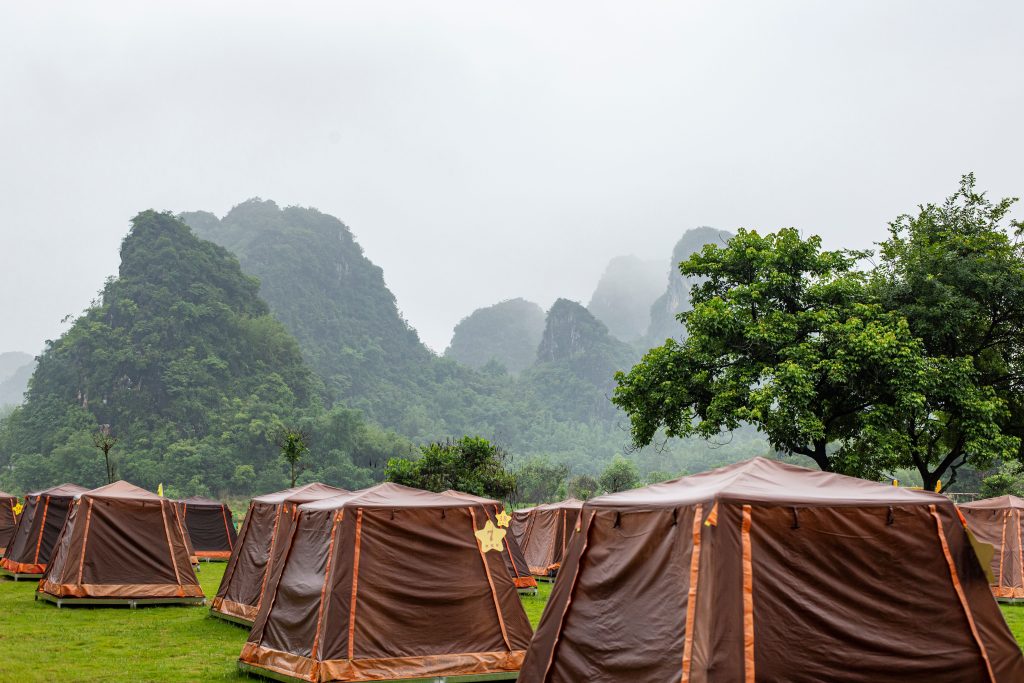
For rainy trips, examine how far the rainfly reaches down the walls. A full-coverage fly generally shields more fabric than a small roof cap, though its design must still allow ventilation. Look for taped or sealed seams, protected openings, and a floor with raised edges.
Water-resistance ratings can help compare fabrics, but they do not predict performance by themselves. Rain can enter through a poorly pitched fly, an open zipper, or water pooling beneath the floor. Proper anchoring matters more than a “waterproof” label.
Ventilation Matters More in Bigger Groups
Every sleeper adds warmth and moisture to the air. When warm, humid air meets a cooler tent surface, condensation may collect even if the rainfly is working properly.
Choose mesh windows, upper vents, and adjustable low openings that support airflow while keeping insects outside. Inspect whether those openings remain usable during rain. A darkened bedroom can make mornings more comfortable, but blackout fabric does not replace moving air. Keep bedding away from damp walls and vents partly open.
Dividers, Doors, and Screen Rooms
A removable divider is useful when adults want a separate changing area or children go to bed earlier. Remember that a fabric curtain improves visual privacy but rarely provides meaningful sound insulation.
Two doors reduce traffic through one sleeping area. Screen rooms offer a place to sit away from insects, store footwear, or organize bags, but check whether the floor and walls are designed for sleeping in wet conditions. Porches may offer less weather protection than bedrooms.
Instant Setup Versus Traditional Poles
Instant tents use frames with many poles already connected, reducing the number of steps at the campsite. They are appealing for short stays, but their bundled frames can be long, heavy, and awkward to pack.
Traditional pole systems usually take more assembly and may be easier to handle in smaller sections. Manufacturer setup times often reflect an experienced team, so check how many people the estimate assumes. Practice pitching and packing every component at home. A quick pitch means little if the packed tent will not fit in the car.
Check Campsite Dimensions and Packed Weight
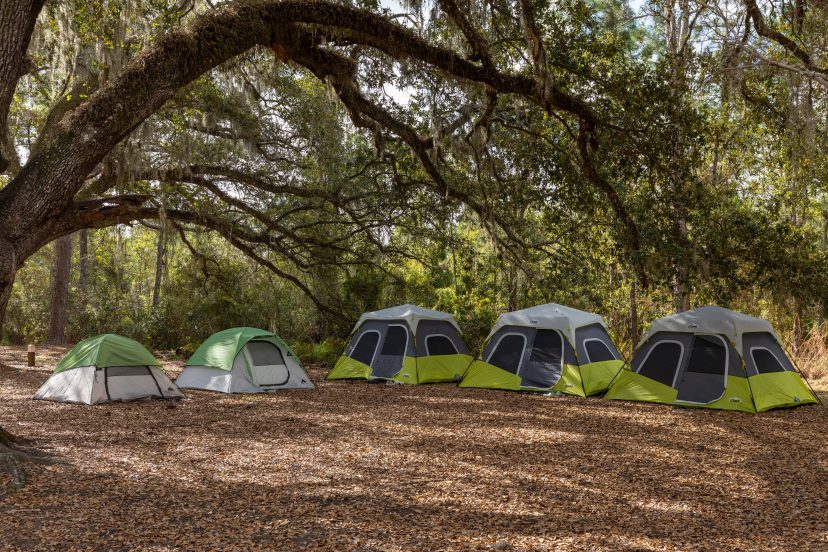
A large tent needs more ground than its listed floor size. Allow room for the extended fly, stakes, guylines, and a safe walking route around the shelter. Before booking, check campground limits on tent pads and the number of tents permitted.
Weight matters even on drive-up trips if the campsite is a walk from the parking area. A bulky instant frame may be manageable for two adults but inconvenient for one person. Check that the carry bag fits your car.
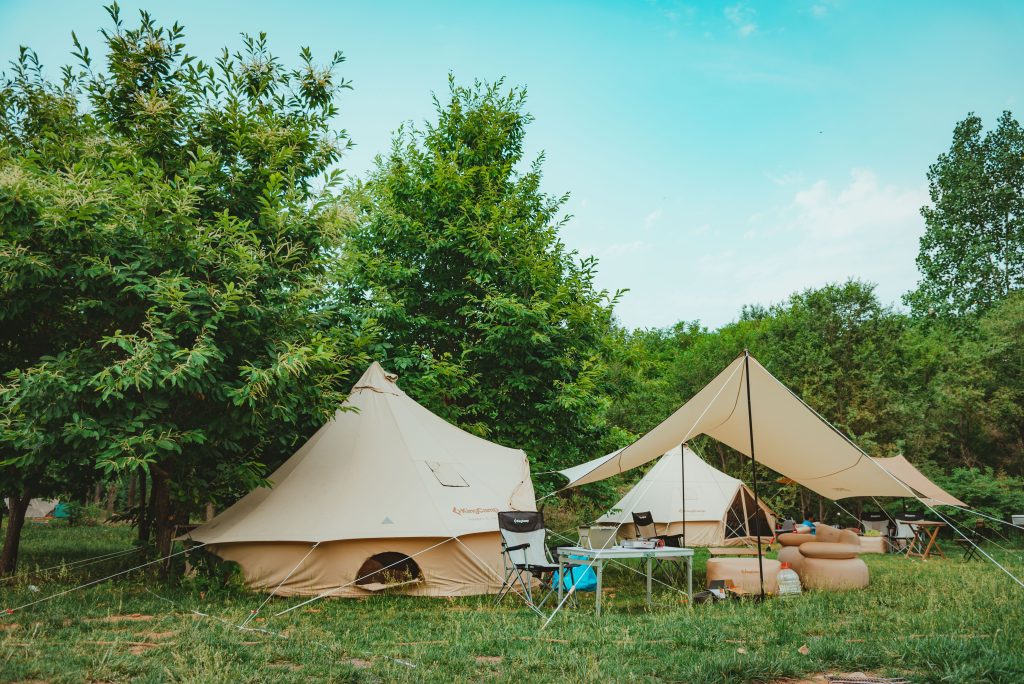
Recommended Large Camping Tents for Different Needs
These five models address different priorities. Treat the stated sleeping capacities as upper limits and compare the layouts against your actual group and bedding.
CORE 9 Person Instant Cabin Tent
Best for: Families wanting a simple two-zone layout
The 14-by-9-foot CORE cabin has preattached poles, two doors, a removable room divider, and adjustable ventilation. Its 78-inch center height offers useful standing space, while the manufacturer suggests four campers plus gear as a more comfortable arrangement than the nine-person maximum. The tradeoff is a substantial packed frame weighing about 37 pounds, better suited to car camping than long carries.
Coleman Skydome 8-Person Camping Tent
Best for: Families prioritizing straightforward setup and manageable weight
This 12-by-9-foot tent uses preattached poles and nearly vertical walls, with a 6-foot-4-inch center height and room for two queen airbeds. Its wide door simplifies moving bedding inside, and the included rainfly covers the roof. It is lighter than many larger instant cabins, but has no room divider, making it less convenient for groups wanting separate sleeping zones.
Wenzel Klondike 8 Person Tent
Best for: Campers who want a screened sitting area
The Klondike combines a main sleeping compartment with a convertible screened front room. Wenzel lists a 16-by-11-foot overall footprint, a 78-inch peak, mesh ventilation, and a removable fly. The porch is handy for shoes or insect-free lounging, but the multi-part fiberglass-and-steel structure takes more assembly than an instant cabin. Do not count on the screened area staying dry with its walls open.
CORE 12 Person Instant Cabin Tent
Best for: Larger groups needing flexible sleeping zones
With an 18-by-10-foot floor and two removable dividers, this CORE model can form up to three sections. Preattached poles simplify pitching, and adjustable vents help circulate air. Its generous floor suits group car camping, although the nearly 48-pound packed weight and broad footprint require advance planning. Like other large three-season shelters, it should not be treated as a storm shelter.
Coleman Skydome 8-Person Dark Room Camping Tent
Best for: Families sensitive to early morning light
This Dark Room version of the Skydome combines a 12-by-9-foot floor with preattached poles and a tall central roof. Coleman’s light-blocking fabric is intended to make sunrise less intrusive, while a tub-style floor and rainfly address ordinary campground weather. Darker fabric cannot guarantee a cool interior, and the single-room design offers less privacy than cabins with removable dividers.
Accessories That Are Worth Packing
A properly sized footprint protects the floor against abrasion from grit and rough ground. It should sit entirely beneath the tent; exposed tarp edges can collect rain and direct it underneath.
Pack stakes suited to the site rather than assuming the supplied set will hold in sand or hard soil. Bring spare guylines, repairs, and a mallet. Keep lighting cables clear of entrances and water. Avoid overloading ceiling hooks with heavy equipment.
Pitching a Large Tent Without Surprises
Start on established, level ground away from low spots that could fill with runoff. Look up for damaged branches and check that the door will not open directly into a busy path.
Spread the tent out before extending the poles, and anchor it as the instructions specify. Attach the fly in its intended orientation, tension guylines evenly, and check that the fly does not press against the inner walls. For a detailed rehearsal, see this step-by-step guide to setting up a tent. Keep nighttime essentials beside the entrance.
Common Mistakes When Buying a Family Tent
Buying solely by the sleeping-capacity label is the most common way to end up cramped. Other mistakes include overlooking the packed length, choosing a porch without checking rain protection, and assuming a tall tent fits every campground pad.
Do not confuse an easy-pitch mechanism with strong storm performance. Compare replacement-pole availability, the warranty terms, and how the fabric should be cleaned and dried. For longer stays, doors and airflow outweigh setup speed.
What Expert Safety Guidance Says About Tent Use
Outdoor safety advice sets limits that product marketing cannot erase. The National Weather Service’s lightning guidance for campers states that tents do not protect occupants from lightning. When thunder is audible, move to a substantial building or enclosed hard-topped vehicle; wait at least 30 minutes after the final thunder before returning outside.
The agency’s flood guidance for camping and hiking warns against low ground near streams, even when rain falls upstream. Meanwhile, REI’s tent setup guidance recommends practicing at home and keeping footprints smaller than tent floors. These are practical safety and equipment-care recommendations, not laboratory proof that a particular tent model is superior.
Frequently Asked Questions About Large Camping Tents
Is an eight-person tent big enough for a family of four?
Usually, yes, if the floor accommodates your actual beds and belongings. Large air mattresses can still dominate the floor. Measure the beds and leave a route to the exit. If you want distinct rooms, look beyond overall capacity to models with dividers or separate entrances.
Are large cabin tents suitable for windy campsites?
They can handle ordinary breezes when properly pitched, but tall walls present a larger surface to gusts. Follow the manufacturer’s anchoring instructions, use every required guyline, and check the forecast. Never rely on a marketing wind rating to justify camping in severe weather. If storms are expected, reconsider the campsite or trip rather than trusting tent size or shape.
Can one person put up a twelve-person tent?
Some experienced campers can assemble a large tent alone, but many instant-cabin setup claims assume two people. Bigger frames are harder to lift, align, and anchor while fabric catches the wind. Read the model’s manual before purchasing and practice on a calm day. If solo pitching is essential, prioritize a manageable packed weight and a design explicitly suited to one-person setup.
Should I choose one big tent or two smaller tents?
Choose one large tent for families who value shared space and centralized gear storage. Two smaller tents can give adults, older children, or unrelated friends better privacy and more flexible placement on uneven sites. They also allow campers to keep different sleep schedules. Check campsite limits on multiple shelters.
Do large camping tents need an additional ground tarp?
Not always. A tent’s own waterproof floor should provide the primary barrier, while an optional footprint reduces wear from rough surfaces. Choose a fitted footprint or fold a generic tarp so no material extends past the floor. An oversized sheet can collect rainwater and channel it beneath the tent. Inspect the floor before trips, particularly after camping on gravel.
Conclusion: Choosing the Right Large Camping Tent
The best large camping tents match the people, bedding, site, and weather you actually have—not the biggest occupancy number on a label. Start by drawing your sleeping layout, then compare standing height, entrances, ventilation, rainfly coverage, and packed size. Those details determine whether a spacious-looking shelter feels comfortable after everyone moves in.
For a typical family needing flexible space, the CORE 9 Person Instant Cabin Tent makes a practical starting point. Campers who want a screened place to relax may prefer the Wenzel Klondike, while larger groups can consider the CORE 12 Person Instant Cabin Tent. Whichever you choose, confirm the campsite dimensions and practice setting it up before your trip. A tent that fits both your group and your destination is the sensible purchase.