Camping Knife Guide: How to Choose the Right One
We may earn a commission for purchases made using our links. Please see our disclosure to learn more.
You do not realize how much a camping knife matters until you are standing at a picnic table trying to slice food, cut cord, shave kindling, or fix a stubborn strap with the wrong blade in your hand. Suddenly, that “cool-looking” knife you bought on impulse feels about as useful as flip-flops in a rainstorm.
The good news is that choosing the right knife is not nearly as complicated as some gear forums make it sound. You do not need a movie-prop survival blade. You do not need a steel chart tattooed on your forearm. You just need a knife that fits the way you camp.
In this guide, you will learn what makes a good camping knife, how to compare fixed blades and folders, what blade shapes and steels actually mean in real life, and which Amazon options are worth a closer look.
Affiliate note: The Amazon products below are included as helpful examples, and qualifying purchases may earn a small commission at no extra cost to you.
What a camping knife actually needs to do
A camping knife is not just for “survival.” That word gets tossed around a lot, but most campers are doing pretty normal things: opening packaging, prepping food, trimming rope, making feather sticks, and handling quick repairs.
Think of your knife like the unsung backup singer of your campsite. It is rarely the star, but if it is missing, the whole song feels off.
A solid camping knife should be:
- Easy to control
- Comfortable in your hand
- Simple to maintain
- Safe to carry
- Tough enough for real camp chores
REI’s guidance makes the same basic point: the right knife depends on your intended use, and the best knife for ultralight backpacking may not be the best one for car camping.
Fixed blade vs folding camping knife
This is the first big fork in the trail.
A fixed blade camping knife is stronger, easier to clean, and usually more comfortable for harder work. A folding camp knife is easier to carry and takes up less space. REI notes that fixed blades offer more strength and ergonomic comfort, while folding knives are compact but can be less stable in use.
For most campers, here is the simple rule:
- Choose fixed blade if you do wood prep, rougher camp tasks, or want maximum simplicity
- Choose folding knife if you want lighter carry, pocket convenience, or a general-use tool
If you mostly camp at established campgrounds, either can work. If you like bushcraft, wet weather, or messy camp cooking, fixed blades start looking very attractive.
What is the best blade length for a camping knife?
For most people, the sweet spot is around 3.5 to 5 inches.
Why? Because it is long enough to handle food prep, cord, wood shavings, and general campsite work, but not so long that it feels clumsy. Bigger blades can look impressive, but many campers discover they are awkward for simple jobs. It is like bringing a shovel to eat cereal.
A shorter knife usually gives you better control. A longer knife offers more reach and leverage. Unless you are doing heavier wilderness tasks, medium length is the friendliest place to start.
Best blade shapes for camping use
Blade shape sounds technical, but it really comes down to how the tip and edge behave.
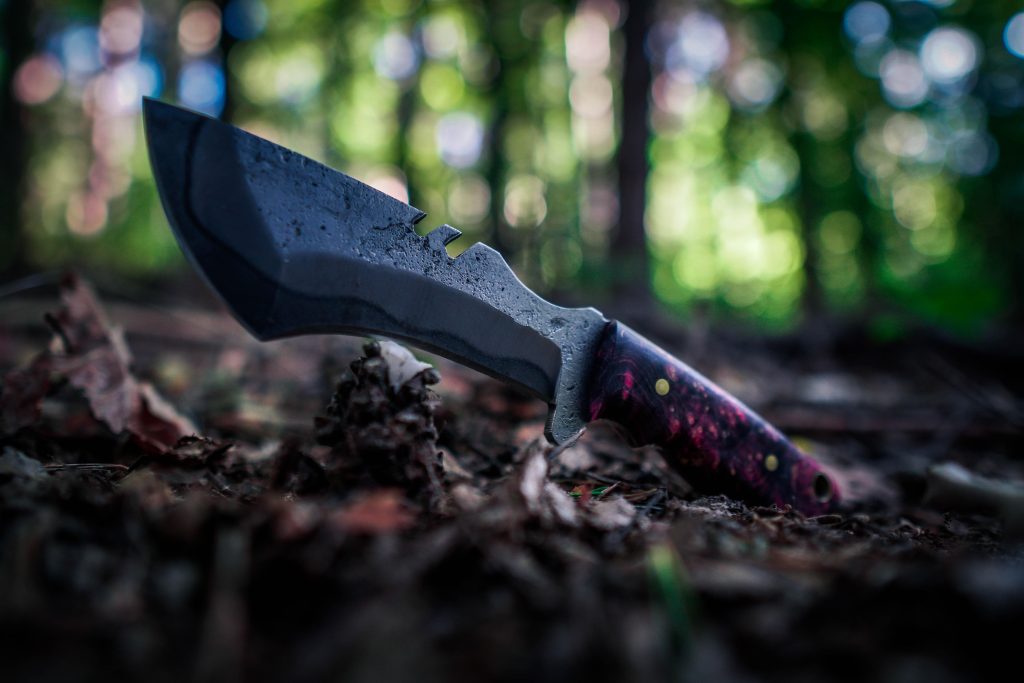
REI highlights several common outdoor blade shapes: drop point for versatile general use, clip point for more detailed cutting and puncturing, tanto for tougher piercing tasks, and sheepsfoot-style shapes for food prep and safer slicing.
For camping, these are the most practical:
- Drop point: the safest all-around choice for most campers
- Clip point: better for precision, but a bit less robust at the tip
- Sheepsfoot or santoku-style edge: surprisingly nice for camp kitchen use
- Tanto: better for tougher scraping or piercing, but often less friendly for food and wood prep
If you want one blade to do many jobs, a drop point is usually the easiest recommendation.
Full tang vs. partial tang: does it really matter?
Yes, but maybe not in the dramatic way the internet says it does.
A full tang knife has steel running through the full handle, which usually improves strength and durability. A partial tang knife can still be fine for lighter tasks, but full tang gives you more confidence if your knife sees harder use.
If you are buying one fixed blade for years of camping, full tang is a smart pick. If you mainly open food packs, cut paracord, and do light tasks, you do not need to act like you are outfitting for a jungle expedition.
Blade steel without the jargon headache
This is where people get lost fast.
In plain English, knife steel is mostly a balancing act between:
- Edge retention
- Toughness
- Corrosion resistance
- Ease of sharpening
Blade HQ’s steel guide explains that these traits all affect performance, and stronger wear resistance often comes with tradeoffs in toughness or sharpening ease. Knife Steel Nerds makes a similar point: higher carbon and higher vanadium often improve wear resistance and edge retention, but they can reduce toughness.
For camping, that means this:
- Stainless steel is great if you want lower maintenance and better rust resistance
- High-carbon steel is great if you want toughness and strong edge performance, but it needs more care
- Mid-range steels are often the smartest buys because they are easier to sharpen and live with
A knife you can maintain easily is better than a “premium” knife you secretly hate sharpening.
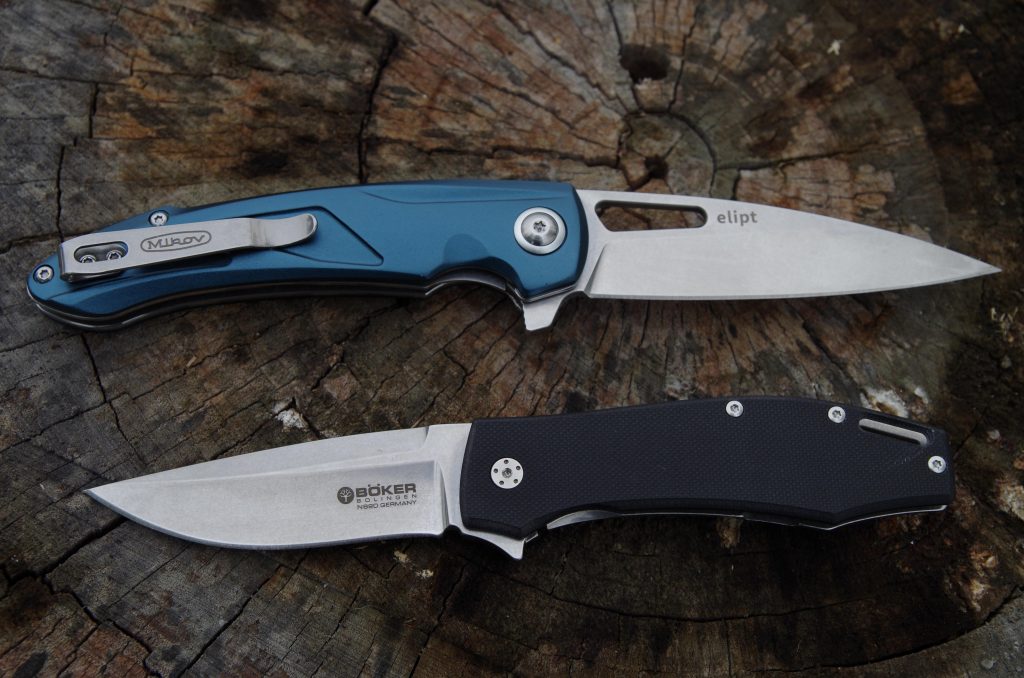
Handle comfort and grip matter more than people think
You can have a great blade and still dislike the knife if the handle feels wrong.
REI notes that handle materials vary widely: wood can feel great but dislike moisture, plastic resists water but may feel slippery, and rubber offers strong grip but may sacrifice some durability.
When you choose a camping knife, pay attention to:
- Grip when wet
- Hot spots during longer use
- Glove compatibility
- Overall balance
A handle should feel secure, not like you are politely negotiating with it.
Why the sheath matters so much
People obsess over blades and then treat the sheath like an afterthought. Bad idea.
A good sheath keeps the knife secure, accessible, and safe around kids, gear, and your own legs. Fixed blades especially need a sheath that holds the knife firmly and rides well on a belt, pack, or pocket edge.
If a knife is wonderful but annoying to carry, you will stop carrying it. And a camping knife left in the car is basically a paperweight with ambitions.
How you will actually use a camping knife at camp
Before buying, ask yourself one honest question:
What am I really going to do with this knife?
Here are the most common camping jobs:
- Food prep
- Cutting cord or tape
- Opening packages
- Feather sticking and kindling prep
- Gear repair
- Tent and tarp adjustments
And yes, if you are improving your cold-weather setup too, learning how to insulate a tent for colder nights pairs nicely with choosing the right camp gear.
Also, if your knife will touch food, do not ignore hygiene. USDA food safety guidance recommends preventing cross-contamination between raw meat and ready-to-eat foods, which matters just as much at camp as it does at home.
Camping knife safety tips you should never skip
A knife is useful because it is sharp. That same fact is also why sloppy habits go bad fast.
A few non-negotiables:
- Cut away from your body
- Keep your hand dry before using the knife
- Close or sheath it immediately after use
- Never use a dull knife longer than you should
- Do not pry with a blade unless it is truly built for that
REI’s Ten Essentials guide also treats a knife as standard carry for outings and says every adult in a group should have one. That is a good reminder: a knife is a tool, not a toy or campsite prop.
How to care for your camping knife
Knife maintenance sounds boring until rust, grime, or a dull edge ruins the trip.
A simple routine works:
- Wipe it dry after use
- Clean it after food prep or dirty camp chores
- Sharpen before it gets embarrassingly dull
- Oil carbon steel if needed
- Store it dry
Stainless steel helps with rust resistance, but Blade HQ points out that stainless does not mean rust-proof. Corrosion still dulls edges and can damage the blade over time.
When one camping knife is enough and when two make sense
For a lot of campers, one knife is enough.
But if you do mixed-use camping, two tools can be better:
- One fixed blade for harder tasks
- One small folder or multi-tool for quick everyday jobs
This setup feels a bit like having both hiking boots and camp sandals. One does the heavier lifting. The other just makes life easier.
Common mistakes people make when buying a camping knife
Here are the traps I see most often:
- Buying too large a knife for normal camp use
- Choosing looks over comfort
- Ignoring the sheath
- Obsessing over steel while forgetting maintenance
- Picking a folder with a weak or awkward lock
- Assuming “survival” branding means better performance
A practical knife usually beats a flashy one. Every time.
5 camping knife picks worth a look
Morakniv Companion Stainless Steel Fixed-Blade Knife with Sheath, 4.1 Inch,Black
Short description: A clean, affordable, beginner-friendly fixed blade that covers most basic camping tasks.
Features: 4.1-inch stainless fixed blade, included sheath.
Who it is for: First-time campers, casual campers, and anyone who wants a reliable budget option.
OPINEL No. 08 INOX – Sandvik Stainless Steel Folding Pocket Knife, Beechwood Handle, 3.28 in Blade, Virobloc Safety Locking Collar, Made in France
Short description: A classic folding knife with simple charm and excellent everyday usability.
Features: No. 8 format, stainless blade, locking collar, beechwood handle.
Who it is for: Campers who want a lightweight, classic folder for food prep, snacks, and light camp chores.
Victorinox Huntsman Swiss Army Knife, 15 Functions, Swiss Made Pocket Knife with Large Blade, Screwdriver, Scissors and Wood Saw – Red
Short description: More of a camp helper than a hard-use blade, but wildly useful.
Features: Large blade, screwdriver, scissors, wood saw, and 15 total functions.
Who it is for: Family campers, road-trippers, and people who love one tool doing many small jobs well.
Gerber StrongArm Fixed Blade Knife Plain Edge – Coyote Brown
Short description: A tougher fixed blade built for more demanding outdoor use.
Features: 420HC steel blade, rubberized diamond-texture grip, nylon webbing for carry.
Who it is for: Campers who want a more rugged, hard-use fixed blade and do heavier chores.
KA-BAR Becker BK2 Campanion Fixed Blade Knife, Carbon Steel
Short description: A famously sturdy heavy-duty knife that leans more “hard-use” than “casual campsite.”
Features: Carbon steel construction and a reputation for durability.
Who it is for: Bushcraft fans, hard-use campers, and people who do not mind extra weight.
What experts say about choosing a camping knife
Two expert takeaways matter most.
First, use case beats hype. REI’s knife buying advice emphasizes matching the knife to the activity, which is exactly why ultralight backpackers, car campers, and bushcraft campers often land on different tools. REI’s knife and multi-tool buying advice is a strong reminder that there is no magic one-size-fits-all answer.
Second, steel is about tradeoffs, not trophies. Knife Steel Nerds’ metallurgist-led steel ratings and Blade HQ’s steel guide both point to the same reality: edge retention, toughness, corrosion resistance, and sharpening ease pull against each other. For most campers, balanced steel and easy maintenance beat brag-worthy specs.
FAQs about choosing a camping knife
What size camping knife is best for beginners?
A blade around 3.5 to 5 inches is usually the easiest place to start. It gives you enough length for real camp chores without feeling oversized or awkward.
Is a fixed blade better than a folding camping knife?
Usually, yes for tougher tasks. Fixed blades are stronger and easier to clean. Folding knives are lighter and easier to carry. Your camping style decides the winner.
What is the best steel for a camping knife?
There is no single best steel. For most campers, a steel that balances rust resistance, toughness, and easy sharpening is more practical than a premium steel that is hard to maintain.
Can I use one camping knife for food prep and wood work?
Yes, but clean it carefully between tasks. If you handle raw meat, avoid cross-contamination and wash the knife before using it on ready-to-eat foods.
Do I really need an expensive camping knife?
No. Many campers will be perfectly happy with a well-made budget or mid-range knife. Comfort, safety, and fit for your real tasks matter more than price.