The Only Cold Weather Camping Checklist You Need
We may earn a commission for purchases made using our links. Please see our disclosure to learn more.
Cold weather camping sounds dreamy in theory. Crisp air, quiet trails, steaming coffee, a sky full of stars. Lovely, right?
Then 2 a.m. arrives, your toes feel like tiny ice cubes, and your water bottle has decided to become a science experiment.
That is where a smart Cold Weather Camping Checklist saves the trip. This is not about packing every piece of gear you own “just in case.” It is about bringing the right layers, sleep setup, food, water, and safety items so you can actually enjoy the cold instead of fighting it all weekend.
Why Cold Weather Camping Feels Different
Warm-weather camping gives you room to make small mistakes. Cold weather camping does not.
A forgotten pair of gloves, damp socks, or a sleeping pad with poor insulation can turn a peaceful night outdoors into a long, shivery lesson. In cold conditions, your comfort depends on systems working together.
Your tent blocks wind.
Your sleeping pad protects you from the frozen ground.
Your sleeping bag traps warmth.
Your layers manage sweat and insulation.
Your food keeps your body fueled.
Think of it like a campfire. One log helps, but the whole fire burns better when everything is stacked the right way.
Start With the Weather Forecast
Before you pull out your gear bins, check the forecast for your exact campsite or trail area.
Do not only glance at the daytime high. The overnight low is usually the number that matters most.
Look beyond the temperature
Check for:
- Wind chill
- Rain or snow
- Ice risk
- Road conditions
- Park closures
- Avalanche warnings in mountain areas
- Sudden temperature drops
A sunny 40°F afternoon can turn into a frosty, windy night fast. Cold weather camping is much easier when the forecast is part of your packing plan, not an afterthought.
Choose the Right Winter Camping Shelter
Your shelter should match the conditions you expect.
For chilly but mild weather, a sturdy three-season tent may be enough. For snow, heavy wind, exposed campsites, or true winter conditions, a four-season tent is a safer choice.
Look for:
- Strong poles
- Good ventilation
- A rainfly that blocks wind
- Enough room for gear
- A solid floor or footprint
Small comfort tip
Avoid pitching your tent in low dips where cold air settles. Choose a flat, protected spot away from dead branches. Snow may look soft and peaceful, but gravity still enjoys being dramatic.
Build a Warm Sleep System
Your sleep system is the heart of your cold weather camping checklist.
A warm night depends on three things:
- A cold-rated sleeping bag
- An insulated sleeping pad
- Dry sleep clothes
Choose the right sleeping bag
Pick a sleeping bag rated lower than the coldest temperature you expect. If the forecast says 25°F, do not bring a 30°F bag and hope positive thinking will do the rest.
Positive thinking is great. It is not insulation.
Do not skip the sleeping pad
The ground steals body heat quickly. Even a great sleeping bag can feel disappointing if your pad has poor insulation. An insulated sleeping pad helps create a warmer barrier between you and the cold ground.
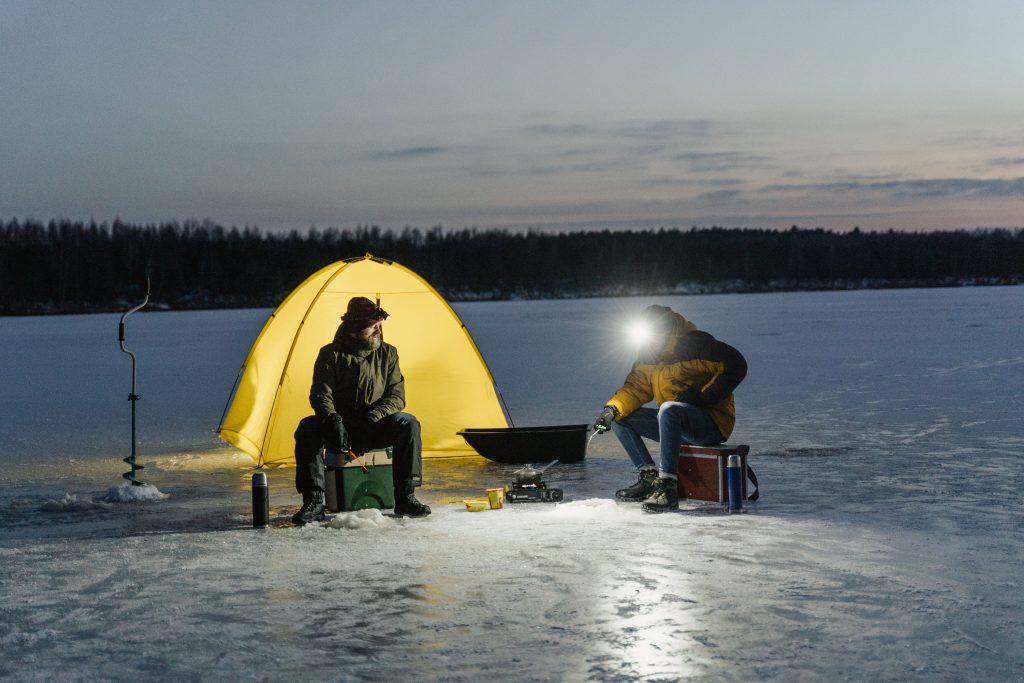
Pack Smart Clothing Layers
Layering does not mean wearing every hoodie you own until you look like a marshmallow with hiking boots.
It means building a clothing system.
Base layer
Your base layer sits against your skin. Choose wool or synthetic fabric because these materials help move moisture away from your body.
Avoid cotton for cold weather camping. Once cotton gets damp, it dries slowly and can make you feel colder.
Middle layer
This is your warmth layer. Fleece, wool, synthetic insulation, or down can all work well.
Outer layer
You should be shielded from wind, rain, and snow by your outer layer. A wind-resistant or waterproof shell can make a huge difference when the weather turns.
Protect Your Hands, Feet, and Head
Cold usually reaches your fingers, toes, ears, and nose first.
Pack:
- Wool socks
- Extra dry socks
- Insulated gloves
- Mittens
- Warm hat or beanie
- Neck gaiter
- Balaclava
- Camp shoes or insulated boots
Mittens are often warmer than gloves because your fingers share heat. Gloves are better when you need to cook, adjust gear, or tie knots. If you have room, bring both.
Bring the Right Footwear
Your footwear can make or break your trip.
For dry cold, insulated hiking boots may be enough. For snow, slush, or icy trails, waterproof boots with good traction are a better choice.
If you expect snow, add gaiters to keep moisture from sneaking into your boots.
Tiny but mighty trick
Keep tomorrow’s socks inside your sleeping bag overnight. Pulling on warm socks in the morning feels like a small luxury. Pulling on frozen socks feels like betrayal.
Plan Easy Cold Weather Meals
Cold weather camping food should be warm, filling, and simple.
Your body burns more energy trying to stay warm, so bring hearty meals and plenty of snacks. This is not the trip for tiny portions and complicated recipes that require six pans and emotional stability.
Good meal ideas include:
- Oatmeal with nuts
- Chili
- Soup
- Rice bowls
- Pasta packets
- Breakfast burritos
- Trail mix
- Nut butter packets
- Hot chocolate
- Tea or coffee
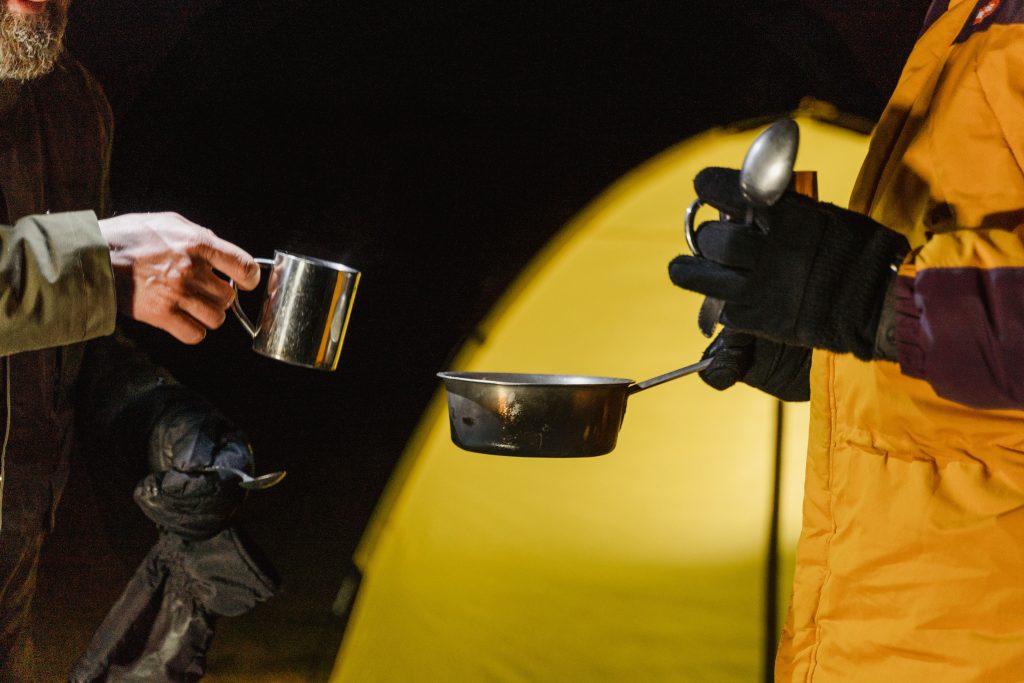
Premade camping meals are especially helpful because nobody wants to chop vegetables with cold fingers while the wind is bullying the stove.
Keep Water From Freezing
You still need water in cold weather, even if you do not feel sweaty.
Dry air, movement, and breathing all pull moisture from your body. Dehydration can sneak up quietly, especially when you are bundled up.
Use wide-mouth bottles because they are easier to open if ice forms. Since water frequently freezes from the top first, store bottles upside down. At night, keep a bottle inside your sleeping bag if temperatures are expected to drop hard.
Do Not Rely Only on a Campfire
A campfire is wonderful. It is warm, cozy, and emotionally supportive.
But it should not be your only heat plan.
Bring:
- Waterproof matches
- Lighter
- Fire starter
- Backup fire starter
- Stove fuel for cold conditions
- Hand warmers
- Emergency blanket
Always follow local fire rules. Even in winter, fire safety matters. Dry wind, dead brush, and careless sparks can still create problems.
Pack Reliable Lighting and Power
Cold weather usually means shorter days, so your headlamp will work overtime.
Pack:
- Headlamp
- Spare batteries
- Lantern
- Power bank
- Charging cables
- Backup flashlight
Cold can drain batteries faster than expected. Keep small electronics and batteries close to your body or inside your sleeping bag at night.
Research-Backed Cold Weather Camping Safety
Cold weather camping is safer when you stay dry, block wind, and pack the right layers.
Research on cold-weather clothing for hypothermia prevention found that a cap, windbreaker, and proper clothing helped support body warmth during low-intensity activity in cold conditions.
Another study on hypothermia risk in cold and wet weather found that hypothermia can happen even in moderate cold, especially when precipitation is involved.
The takeaway is simple: do not only prepare for freezing temperatures. Prepare for wind, sweat, rain, damp socks, and long periods of sitting still. A smart cold weather camping checklist should include moisture-wicking layers, a warm hat, gloves, dry backup clothes, and reliable rain or wind protection.
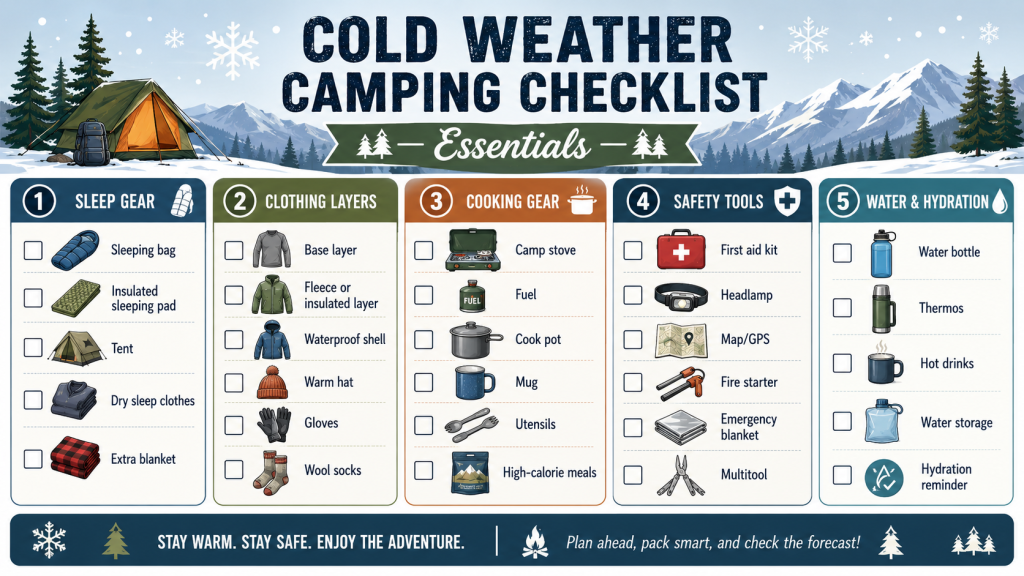
Your Cold Weather Camping Checklist
Use this checklist before every cold-weather trip.
Sleep and shelter
- Four-season or sturdy three-season tent
- Cold-rated sleeping bag
- Insulated sleeping pad
- Pillow or stuff-sack pillow
- Dry sleep clothes
- Extra blanket if car camping
Clothing
- Wool or synthetic base layers
- Fleece or insulated mid-layer
- Waterproof or windproof shell
- Warm hat
- Gloves and mittens
- Wool socks
- Extra socks
- Neck gaiter
Cooking and food
- Stove
- Cold-weather fuel
- Cook pot
- Mug
- Utensils
- High-calorie meals
- Snacks
- Hot drink mix
Safety and tools
- First aid kit
- Map and compass or GPS
- Headlamp
- Extra batteries
- Fire starter
- Emergency blanket
- Knife or multitool
- Hand warmers
Organize Gear Before You Leave
Cold weather camping rewards boring organization. Truly, boring wins here.
Use separate bags or bins for:
- Sleep gear
- Cooking supplies
- Clothing
- Emergency items
- Wet gear
Keep important items easy to reach. Your gloves should not be buried under a pasta pot, three mystery stuff sacks, and one rogue marshmallow bag.
Before leaving, ask yourself: “Could I find this in the dark with cold hands?” If not, reorganize.
Add Comfort Without Overpacking
Comfort matters, especially if you are camping with kids, pets, beginners, or anyone who already thinks sleeping outside in the cold sounds suspicious.
Small comfort items can make the trip feel much easier.
Pack:
- Camp slippers
- Extra blanket
- Thermos
- Seat pad
- Dry sleep socks
- Lip balm
- Moisturizer
Cold air can dry your skin fast. It is sneaky like that.
If you are car camping or camping in an RV, upgrade the sleep setup first. A warm, supportive bed can change the whole mood of the trip. For RV travelers, this comfortable RV mattress guide can help you choose a better sleep surface for chilly nights on the road.
Cold Weather Camping With Kids, Pets, or Beginners
If you are camping with kids, pets, or first-time cold-weather campers, keep the trip simple.
Choose a site close to help, bring extra warmth, and plan shorter outdoor activities. The goal is not to prove everyone can “tough it out.” The goal is to make the trip enjoyable enough that they want to come back.
Pack extra:
- Blankets
- Dry socks
- Snacks
- Warm drinks
- Pet sleeping pad
- Backup gloves
- Easy tent activities
Kids may not notice they are too cold until they are already uncomfortable. Pets also need insulation from the ground, especially older dogs, small breeds, or short-haired pets.
Common Cold Weather Camping Mistakes
A few mistakes show up again and again.
Wearing cotton
Cotton holds moisture and makes you colder. Choose wool or synthetic layers instead.
Forgetting the sleeping pad
A warm sleeping bag is not enough if the cold ground is pulling heat from underneath you.
Sweating too much
If you hike in too many layers, your clothes can get damp. Remove layers before you overheat.
Not eating enough
Food is fuel. Calories are necessary for your body to stay warm.
Ignoring wind
A calm 25°F night can feel manageable. A windy 25°F night can feel personally offensive.
Best Products for a Cold Weather Camping Checklist
Here are five useful products to consider for winter camping, car camping, and chilly shoulder-season trips.
1. Teton Celsius XXL Sleeping Bag
The Teton Celsius XXL Sleeping Bag is designed for cold-weather camping and comes in temperature options including 35°F, 25°F, 20°F, and 0°F versions. Amazon lists it with a compression sack included.
Features: Roomy shape, cold-weather options, compression sack.
Use case: Great for car campers, family campers, and anyone who wants more space than a narrow mummy bag.
2. Therm-a-Rest NeoAir XTherm NXT Sleeping Pad
The Therm-a-Rest NeoAir XTherm NXT is a lightweight insulated sleeping pad with a listed 7.3 R-value and a compact packed size.
Features: High insulation, lightweight build, packable design.
Use case: Best for backpackers or campers who want serious ground insulation without bulky foam.
3. Merino.tech Merino Wool Base Layer
The Merino.tech Merino Wool Base Layer comes in different weights, including midweight and heavyweight options. The listing describes 250 g/m² for cold-weather outdoor use and 320 g/m² for lower-activity frosty conditions.
Features: Merino wool, moisture-wicking, odor-resistant, multiple weights.
Use case: Good for campers who want a warm base layer for sleeping, hiking, or sitting around camp.
4. BLACK DIAMOND Spot 400 Headlamp
The BLACK DIAMOND Spot 400 Headlamp offers 400 lumens, red night vision, dimming, Brightness Memory, and battery meter features.
Features: Bright beam, red light mode, dimmable settings, AAA battery operation.
Use case: Great for cooking after dark, nighttime bathroom walks, and early morning camp chores.
5. HotHands Body & Hand Super Warmers
HotHands Body & Hand Super Warmers are air-activated warmers designed to provide up to 18 hours of heat, depending on the pack.
Features: Disposable warmers, long heat duration, small pack size.
Use case: Helpful for cold fingers, emergency kits, chilly mornings, and campers who run cold.
FAQs
What should be on a cold weather camping checklist?
A cold weather camping checklist should include a cold-rated sleeping bag, insulated sleeping pad, layered clothing, waterproof outerwear, warm socks, gloves, a hat, winter-ready stove fuel, high-calorie food, water storage, fire starters, lighting, navigation tools, and emergency supplies.
How cold is too cold for camping?
It depends on your equipment and level of expertise. Beginners should avoid extreme overnight lows and start with mild cold-weather trips. If temperatures drop below your sleeping bag and pad rating, or if wind, snow, and wet conditions are expected, postpone the trip or upgrade your gear.
What should you wear to sleep while camping in cold weather?
Wear dry base layers, warm socks, and a hat if needed. Avoid sleeping in damp hiking clothes. Also, do not overdress so much that you sweat inside your sleeping bag, because moisture can make you colder later.
How do you stay warm in a tent during winter camping?
Use an insulated sleeping pad, a properly rated sleeping bag, dry sleep clothes, warm socks, and a sheltered tent site. Eat a warm meal before bed, keep water bottles from freezing, and ventilate the tent to reduce condensation.
Is cold weather camping safe for beginners?
Yes, but beginners should start with mild conditions, camp close to help, bring proper gear, and understand basic cold-weather safety. Car camping is a great first step before trying remote winter backpacking.