Portable Camping Grill: Best Picks for Campers
We may earn a commission for purchases made using our links. Please see our disclosure to learn more.
Nothing ruins a peaceful camping dinner faster than a weak cooking setup. You packed the burgers, the veggies, the coffee, and maybe even the fancy sausages you swore were “totally worth the price.” Then the fire burns unevenly, the pan wobbles, and dinner turns into a smoky guessing game.
That is where a portable camping grill earns its spot in your gear pile. The right one gives you steady heat, better control, easier cleanup, and real camp meals that do not taste like panic with a side of ash.
In this guide, you will learn how to choose the best portable grill for camping, which Amazon products are worth considering, what features matter most, and how to grill safely outdoors.
Why a Portable Camping Grill Is Worth Packing
A portable camping grill gives you freedom. You are not stuck hoping the campsite fire ring is clean, level, or even available.
It also makes outdoor cooking feel less like survival mode and more like a tiny open-air kitchen. You can cook breakfast by the lake, grill skewers at a tailgate, or make late-night quesadillas while everyone else is poking at damp firewood.
A good grill helps with:
- Faster cooking
- Better heat control
- Safer food preparation
- Easier cleanup
- More meal options
- Less dependence on open flames
Think of it as the “camp kitchen anchor.” Your cooler, utensils, and prep table all matter, but the grill is where the magic happens.
Quick Buyer’s Snapshot: What Matters Most
Before falling for the shiniest grill online, ask one simple question: how do you actually camp?
A solo backpacker, an RV family, and a festival camper do not need the same grill. One needs light and compact. Another needs cooking space. Another needs fast setup because hungry kids wait for no one.
Look for these basics:
- Fuel type: propane, charcoal, or electric
- Cooking space: enough for your group size
- Weight: light enough to carry comfortably
- Heat control: adjustable burners or vents
- Cleaning: removable drip tray or ash catcher
- Build quality: sturdy grates, strong legs, reliable lid
- Storage shape: easy to fit in a trunk, RV bin, or gear box
A portable grill should make camp cooking easier, not become the awkward suitcase nobody wants to carry.
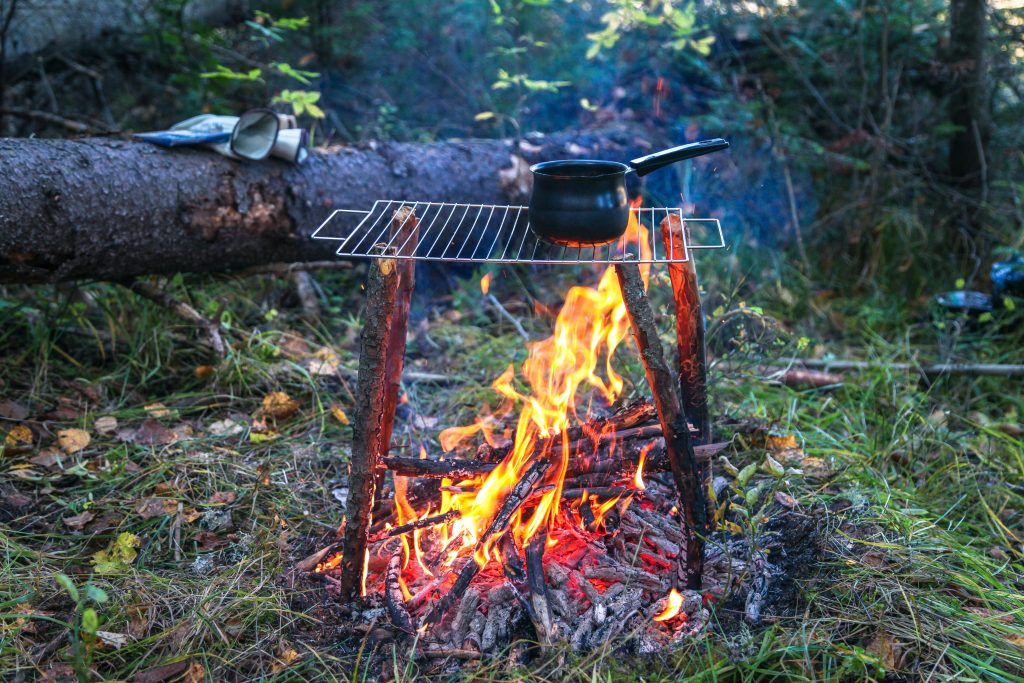
Best Portable Camping Grill Picks
Weber Q1200 Liquid Propane Portable Gas Grill
If you’re looking for a dependable tabletop camping BBQ grill with superior heat control than many small versions, the Weber Q1200 Liquid Propane Portable Gas Grill is a great choice. Amazon lists it with an 8,500 BTU burner, cast-iron grates, and electronic ignition.
Features:
- 1-burner propane design
- Cast-iron cooking grates
- Electronic ignition
- Compact tabletop body
- Good for steady campsite cooking
Best for: campers who want a durable small gas grill for camping, RV trips, beach days, and tailgates.
Coleman RoadTrip 285 Portable Stand-Up Propane Grill
For campers who like greater cooking space, the Coleman RoadTrip 285 Portable Stand-Up Propane Grill is preferable. Amazon lists it with three adjustable burners, Instastart ignition, and 20,000 BTUs of power.
Features:
- Stand-up design with wheels
- Three adjustable burners
- Push-button ignition
- Large cooking surface
- More heat flexibility
Best for: families, RV campers, tailgaters, and anyone cooking for a group.
Cuisinart Venture Portable Gas Grill
The Cuisinart Venture Portable Gas Grill has a clever “stack and go” design, and Amazon notes that its wooden lid doubles as a cutting board. It also includes porcelain-enameled cast-iron grates and a 154-square-inch cooking surface.
Features:
- Built-in cutting board lid
- Compact carry handle
- 9,000 BTU burner
- Porcelain-enameled cast-iron grate
- Picnic-basket-style portability
Best for: couples, picnic campers, van lifers, and anyone who likes gear that earns its space.
Cuisinart Petite Gourmet Portable Gas Grill
The Cuisinart Petite Gourmet Portable Gas Grill is a compact propane option for simple camp meals. Amazon lists it with a 150-square-inch cooking surface, 5,500 BTU burner, folding legs, and carry handles.
Features:
- Lightweight tabletop design
- Folding legs
- Carry handles
- 150-square-inch cooking area
- Simple propane setup
Best for: small campsites, quick meals, apartment patios, and casual outdoor cooks.
Weber Go-Anywhere Charcoal Grill
The Weber Go-Anywhere Charcoal Grill is a classic choice if you like the flavor of charcoal and don’t mind managing coals. Amazon search results show it alongside compatible accessories, and it remains a popular compact charcoal option for camping and tailgating.
Features:
- Compact rectangular shape
- Charcoal cooking
- Lid for covered grilling
- Easy trunk storage
- Simple design
Best for: campers who want smoky flavor, simple construction, and a portable charcoal grill that feels old-school in the best way.
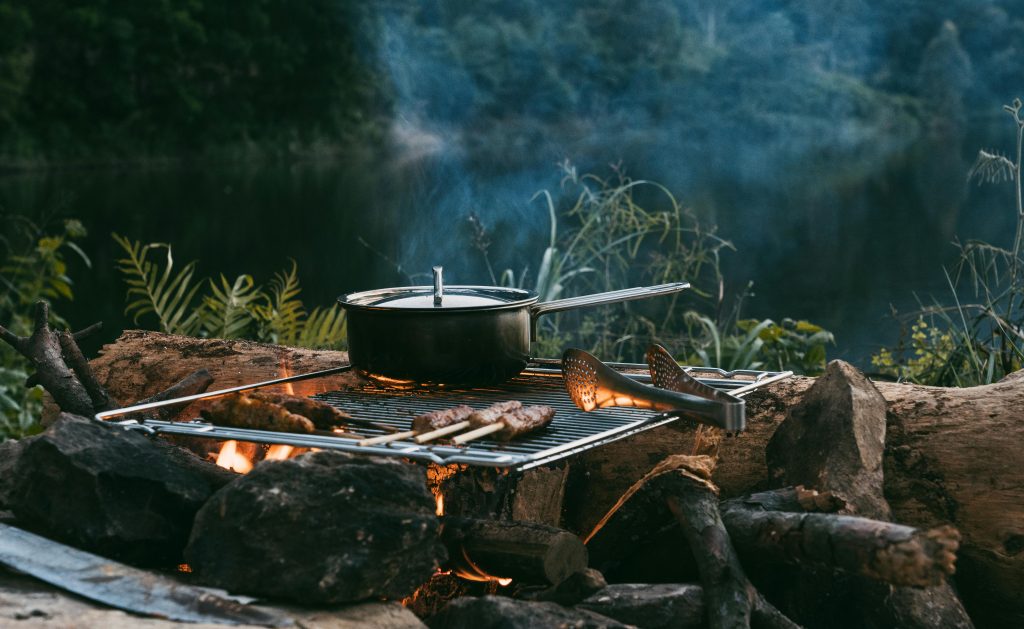
Propane vs Charcoal vs Electric: Which Fuel Type Wins?
No fuel type wins for everyone. It depends on your camping style.
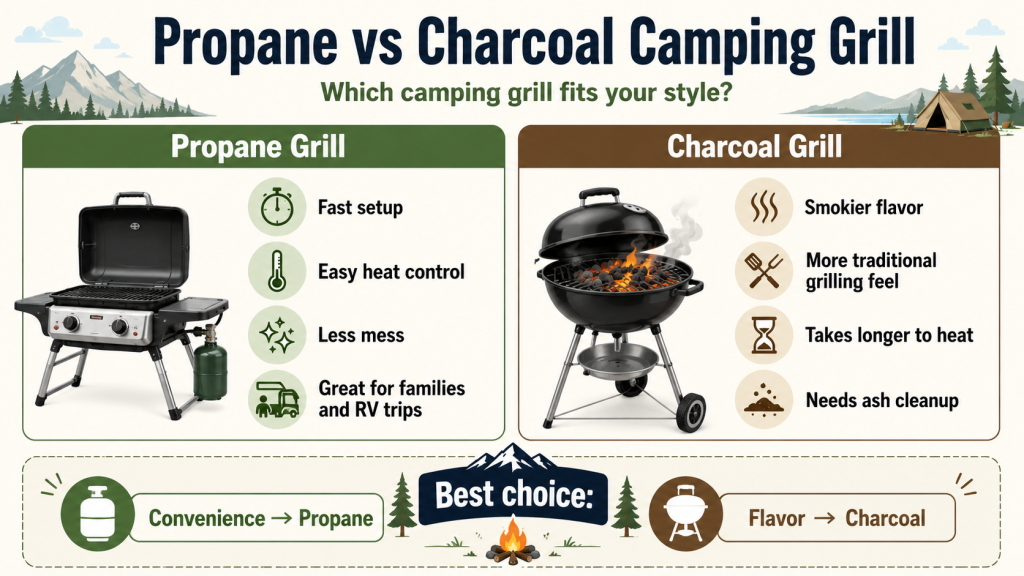
Propane grills are fast, clean, and beginner-friendly. Turn the knob, light the burner, and cook. They are great for families, RV campers, and people who want less mess.
Charcoal grills bring deeper flavor. They are perfect for burgers, steaks, corn, and kebabs. But they require ash removal and take longer to heat.
Electric portable grills are useful where open flames are restricted, but they need a power source. That makes them better for RV parks, balconies, and powered campsites.
If you camp often, propane is usually the easiest. If flavor is your love language, charcoal has the edge.
Choose the Right Grill Size for Your Group
A tiny tabletop camping grill can handle two burgers beautifully. Ask it to feed six hungry campers, though, and it starts sweating harder than you on a July hike.
Use this quick guide:
- 1–2 people: 100–160 square inches
- 3–4 people: 160–250 square inches
- 5+ people: 250+ square inches or a larger stand-up grill
Also, think about what you cook. Hot dogs need less space. Chicken thighs, foil packets, corn, and veggie skewers need more room.
Weight and Packability Matter More Than You Think
A portable camping grill should feel portable in real life, not just in the product title.
If you camp near your car, a heavier grill with better features may be fine. If you carry gear across sand, gravel, or a crowded festival field, every pound suddenly becomes personal.
Look for:
- Folding legs
- Locking lid
- Carry handle
- Slim body shape
- Wheels for larger grills
- Secure fuel storage
A grill that packs neatly will get used more. A bulky one may become garage decor with “someday” energy.
Heat Control Makes or Breaks Camp Cooking
Heat control is the difference between golden chicken and chicken that looks done outside but is still plotting revenge inside.
For propane grills, look for adjustable burners. Two or three burners give you more control because you can create hot and cooler zones.
For charcoal grills, vents matter. Good airflow lets you raise or lower heat without playing campfire roulette.
A lid also helps. It traps heat, cooks thicker foods more evenly, and makes the grill more versatile.
Build Materials: What Should Your Grill Be Made Of?
Camping gear gets bumped, dragged, rained on, and shoved into trunks beside coolers and folding chairs. So yes, build quality matters.
Common materials include:
- Cast iron grates: excellent heat retention, heavier
- Porcelain-coated grates: easier to clean, good heat spread
- Stainless steel: durable and rust-resistant
- Aluminum: lightweight and portable
- Painted steel: budget-friendly, may need more care
A good grill feels stable when you press on it. If the legs wobble empty, imagine them holding dinner. Not ideal.
Cleaning and Grease Management
Nobody wants to clean a grill in the dark while mosquitoes treat your ankles like a buffet.
Choose a grill with smart cleanup features:
- Removable grease tray
- Easy-access ash catcher
- Nonstick or coated grates
- Smooth interior surfaces
- Fewer tiny food-trap corners
Bring foil, a grill brush, paper towels, biodegradable soap, and a trash bag. Future-you will be deeply grateful.
Best Portable Camping Grill by Camper Type
Different campers need different grills.
For solo campers: choose a small tabletop gas grill or compact charcoal model.
For couples: choose a portable camping grill with 150–200 square inches of cooking space.
For families: choose a stand-up propane grill with multiple burners.
For RV campers: prioritize stability, cooking area, and easy fuel hookup.
For beach days: go lightweight and easy to carry.
For tailgating: choose fast ignition, strong heat, and enough surface for burgers, wings, and sausages.
The best grill is not always the biggest one. It is the one that suits your rhythm.
Helpful Campfire Cooking Tools to Pack
A portable grill works even better when you bring the right accessories. You do not need a luxury camp kitchen, but a few smart tools can make cooking smoother.
Pack:
- Long-handled tongs
- Heat-safe spatula
- Digital meat thermometer
- Grill brush
- Cutting board
- Foil
- Heat-resistant gloves
- Small prep knife
- Cooler thermometer
- Reusable plates and utensils
For more outdoor cooking gear ideas, check out this guide to essential campfire cooking tools. It pairs nicely with your grill setup, especially if you want to build a more complete camp kitchen.
Research-Backed Notes on Portable Camping Grill Safety and Performance
A portable camping grill can make outdoor meals easier, but heat, fuel, and food safety still matter. According to the USDA’s guide on grilling food safely, meat and poultry can brown quickly on the outside before reaching a safe internal temperature. That is why a food thermometer is one of the smartest tools you can pack.
For safe cooking, follow the USDA’s safe minimum internal temperature chart. Whole cuts of beef, pork, lamb, and veal should reach 145°F with a rest time, ground meats should reach 160°F, and poultry should reach 165°F. It sounds simple, but it can save you from the not-so-fun side of camp cooking.
Fire safety is just as important. The National Fire Protection Association’s report on home grill fires shows why grills should always be used on stable surfaces, away from tents, dry brush, low branches, and enclosed spaces. Even a small camping BBQ grill can become risky if it is placed too close to flammable gear.
Common Portable Grill Mistakes to Avoid
A portable grill is simple, but simple does not mean foolproof.
Avoid these mistakes:
- Cooking too close to tents, cars, or dry grass
- Forgetting a meat thermometer
- Packing only one fuel canister
- Using a grill on an uneven surface
- Closing the lid without checking flare-ups
- Leaving grease in the tray after cooking
- Packing the grill before it cools fully
Also, do not test a brand-new grill for the first time at camp. Try it at home once. You will learn how it lights, how hot it gets, and whether the legs have any little quirks.
What to Cook First on a New Portable Camping Grill
Start simple. Your first campsite meal is not the time to attempt a 14-step smoked brisket unless chaos is your hobby.
Good beginner meals include:
- Burgers
- Hot dogs
- Chicken skewers
- Foil packet potatoes
- Grilled corn
- Veggie kebabs
- Sausages
- Breakfast sandwiches
- Halloumi or paneer skewers
- Tortilla pizzas
That last one is a camp classic. Tortilla, sauce, cheese, toppings, lid closed for a few minutes. Suddenly you are a wilderness chef. Sort of.
How to Make Your Portable Camping Grill Last Longer
A good grill can last years if you treat it kindly.
After each trip:
- Scrape the grates while warm
- Empty grease or ash
- Wipe exterior surfaces
- Dry it before storage
- Store propane safely
- Use a carry bag or cover
- Check hoses, valves, and vents before your next trip
Moisture is the sneaky villain. Even a solid grill can rust if it gets packed dirty and damp.
Is a Portable Camping Grill Better Than a Camp Stove?
A grill and a camp stove are cousins, not twins.
A portable camping grill is better for burgers, steaks, kebabs, corn, fish, and anything that benefits from direct heat.
A camp stove is better for boiling water, cooking rice, simmering soup, making coffee, or using pots and pans.
If you camp often, having both is ideal. The stove handles breakfast coffee and pasta. The grill handles dinner and “wow, this actually tastes amazing” moments.
FAQs
Which portable camping grill is ideal for beginners?
The best portable camping grill for beginners is usually a propane tabletop grill. It lights quickly, offers simple heat control, and creates less mess than charcoal. Look for a stable base, easy ignition, a lid, and a removable grease tray.
Is propane or charcoal better for camping?
Propane is better for convenience, speed, and easy cleanup. Charcoal is better for smoky flavor and classic barbecue taste. If you want simple weeknight-style camp cooking, choose propane. If you enjoy slower cooking and richer flavor, choose charcoal.
How much cooking space do I need on a camping grill?
For one or two people, 100–160 square inches is usually enough. For three or four campers, aim for 160–250 square inches. For families or groups, choose 250 square inches or more so you are not cooking in endless tiny batches.
Can I use a portable camping grill at a campsite?
Usually, yes, but always check campground rules first. Some parks restrict charcoal, open flames, or grilling during dry conditions. Use your grill only in approved areas, keep it away from tents, and never use it inside a tent, car, or RV.
What should I pack with a portable camping grill?
Pack fuel, tongs, a spatula, heat-safe gloves, a grill brush, foil, a meat thermometer, a cutting board, trash bags, and cleaning supplies. Bring extra fuel if you are camping for more than one night or cooking for a group.