7 Car Camping Packing Hacks That Will Save You Space and Time
We may earn a commission for purchases made using our links. Please see our disclosure to learn more.
Car camping sounds simple until your back seat starts looking like a yard sale with cup holders.
You toss in blankets, snacks, lanterns, a stove, three mystery bags, and somehow the one thing you need first, usually the headlamp or tent stakes, ends up buried under everything else. Then you reach camp tired, hungry, and just a little dramatic. I get it.
That is exactly why Car Camping Packing Hacks matter so much. They are not about being ultra-minimal or weirdly militant with labels. They are about making your trip feel easier from the moment you leave home to the moment you crawl into bed.
In this article, you’ll learn how to pack your car with less chaos, more usable space, faster setup, and fewer “where did I put that?” moments. You’ll also get a few practical product ideas, two research-backed insights, and simple systems you can reuse on every trip.
Why smart packing matters more than bringing more stuff
Most car campers do not have a gear problem. They have a retrieval problem.
In other words, the issue is rarely, “I forgot everything.” It is usually, “I packed too much, packed it badly, and now I can’t find the one item I need without unpacking half the car.”
Smart packing also matters for safety. The NHTSA notes that all 50 states and Washington, D.C. have laws about unsecured loads, and anything that can shift, leak, or fly loose needs to be properly secured.
So yes, better packing saves time. But it also makes your trip calmer, safer, and a lot less annoying.
Start with zones, not random piles
Here’s the first shift that changes everything: stop packing by panic. Start packing by zone.
Think of your car like a tiny studio apartment on wheels. Every area needs a job. For example:
- Sleep zone: sleeping bags, pillows, pads, blankets
- Kitchen zone: stove, fuel, utensils, cookware, dish bin
- Food zone: cooler, dry food tote, coffee setup
- Safety zone: first-aid kit, flashlight, rain gear, tool kit
- Quick-stop zone: wipes, snacks, water, layers, phone cables
REI recommends giving gear a dedicated place and even using separate tubs for kitchen and camping gear so things stay organized throughout the trip.
Once everything has a zone, packing gets faster because you stop making a hundred tiny decisions.
Use soft bags for soft gear and bins for hard gear
This is one of the most practical Car Camping Packing Hacks because it saves space instantly.
Soft things should go in soft containers. Hard things should go in structured ones.
Sleeping bags, jackets, and extra layers can squish into duffels or compression sacks. Cookware, pantry items, and tools do better in bins because they stack cleanly and keep sharp edges from turning your trunk into a mess.
It’s a bit like packing groceries. Bread does not belong under canned beans. Your puffy jacket does not belong under a cast-iron pan either.
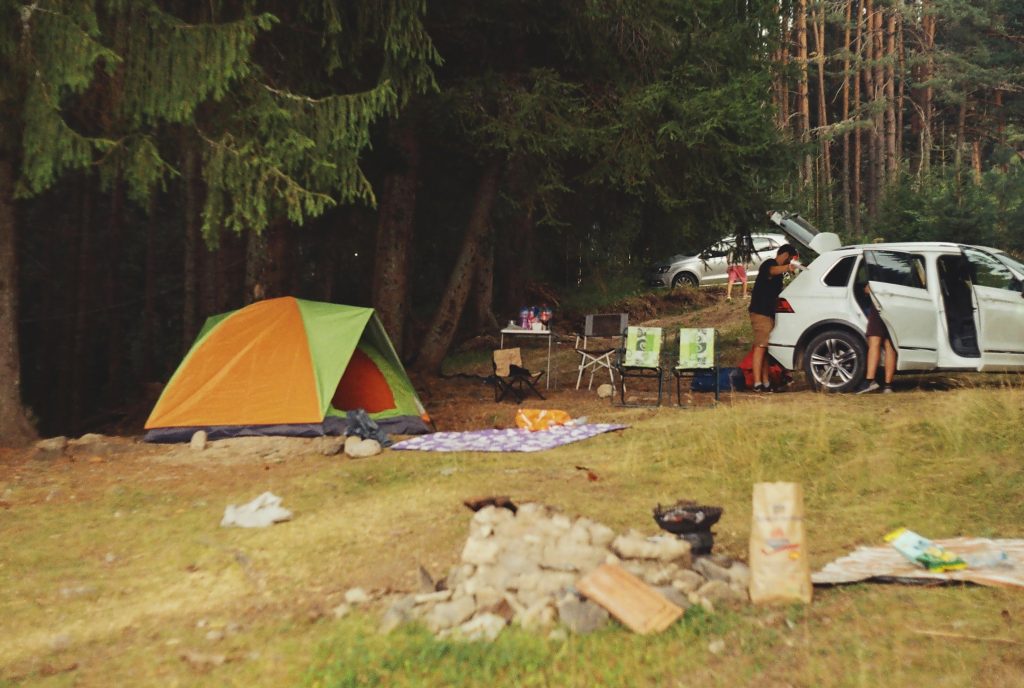
Keep your first-hour setup kit within reach
Ask yourself one question before you load the car: What will I need in the first hour after arriving?
That kit should never be buried.
REI specifically advises keeping items like headlamps, flashlights, the tent, rainwear, insulation, and insect repellent easy to reach instead of packing them deep in the rig.
A good first-hour setup kit usually includes:
- Tent and stakes
- Headlamp or lantern
- Rain jacket
- Warm layer
- Bug spray
- Toilet paper
- Camp shoes
- Water
- Quick snack
If you arrive late, tired, or in light rain, this one habit feels like a small miracle.
Pack by routine, not by category alone
This is where many packing lists quietly fail.
Yes, categories matter. But routines matter more.
Instead of thinking only in terms of “clothes,” “food,” and “gear,” think about moments:
- What do you need when you wake up?
- What do you need right before bed?
- What do you grab when you stop for lunch?
- What do you use every single night?
For example, your coffee kit should live together because you use it as one routine. Same with your bedtime kit: headlamp, sleep clothes, toiletries, meds, earplugs, and phone charger.
When you pack by routine, your campsite starts feeling smoother and more human.
Give every loose item a tiny home
Loose items are the gremlins of car camping.
Lighters, utensils, charging cables, sunscreen, keys, pocket knives, and tea bags somehow multiply and disappear at the same time. The fix is simple: give small things a tiny home.
Use zip pouches, small cubes, or labeled pouches for:
- Lighting
- Toiletries
- Coffee and drink supplies
- First aid
- Electronics
- Eating utensils
A pouch may not seem exciting, but it saves the emotional energy of rummaging through six bags while muttering to yourself in the woods.
Use vertical space without creating a landslide
Stacking is smart. Unstable stacking is chaos with a deadline.
Put the flattest, heaviest, and least-needed items on the bottom. Lighter gear goes on top. If you are using bins, try to keep heights consistent so the stack feels stable instead of wobbly.
Also, do not turn your whole back area into a game of camping Jenga. If one item requires moving five others, your packing system needs work.
A good rule is this: if you need it daily, it should be accessible with one move or less.
Don’t let food take over your whole car
Food expands. Somehow it always does.
One cooler becomes a cooler, a snack tote, a bread bag, a coffee box, a condiment pouch, and three grocery bags rolling around the floor. That is why food needs boundaries.
Use one bin for dry pantry items, one cooler for cold storage, and one small grab-bag for road snacks. If you are camping in bear country, be extra strict. The National Park Service says food, drinks, trash, coolers, cookware, toiletries, fuel, and other odorous items should be stored in a bear-resistant locker or a locked hard-sided vehicle, not in tents or soft-sided vehicles.
That advice protects both you and wildlife, which is a pretty good reason to stay organized.
Build a sleep kit you actually look forward to
A lot of campers obsess over cooking gear and then treat sleep like an afterthought. Big mistake.
The CDC says adults should get at least 7 hours of sleep each day, and a 2024 randomized study found that camp cots improved sleep satisfaction, bedding comfort, and morning sleepiness compared with a much firmer cardboard bed.
You do not need luxury-hotel energy in the woods. But you do want a sleep setup that feels inviting.
Your sleep kit might include:
- Sleeping pad or cot
- Pillow you actually like
- Warm socks
- Sleep layers
- Earplugs
- Small fan or extra blanket depending on weather
If better sleep means you wake up happier, warmer, and less creaky, that is not overpacking. That is wisdom.
Prep for weather swings without packing your whole closet
Weather mood swings are part of camping. Warm afternoon. Cold night. Surprise drizzle. Wind that feels personal.
The trick is to pack layers, not wardrobes.
Bring pieces that stack well: base layer, fleece, rain shell, warm hat, extra socks. Choose clothes that work more than once. A neutral fleece does not care whether you are making breakfast, hiking a trail, or sitting by the fire with instant noodles and big life thoughts.
This is one of those Car Camping Packing Hacks that quietly saves both space and sanity.
Keep safety items visible, not buried
Your safety gear should never require excavation.
Because unsecured cargo can become dangerous and because surprises happen fast on road trips, keep essentials where you can reach them quickly. NHTSA’s guidance on securing loads is a good reminder that safe packing is not separate from smart packing. It is part of it.
Keep these visible:
- First-aid kit
- Flashlight or headlamp
- Emergency blanket
- Jumper cables or battery pack
- Tire gauge
- Rain gear
- Medications
If you’re also bringing power support for longer trips, this guide to choosing a solar generator for camping is a helpful next read.
Create a reset system for mornings and departures
The best campers are not necessarily the neatest. They just reset often.
Take five minutes each night or morning to put things back where they belong. Trash out. Kitchen gear back in its bin. Loose layers folded into one bag. Toiletries returned to the same pouch.
This is the secret behind trips that still feel manageable on day three.
Without a reset, every campsite slowly turns into a treasure hunt designed by raccoons.
Best Amazon gear for smarter car camping packing
HOTOR Trunk Organizer, Sturdy Foldable with Cooler for Car & SUV
This is great for people whose trunk turns into a mixed pile of shoes, snacks, tools, and camping gear. It offers large compartments, extra pockets, and a detachable insulated cooler bag, so you can keep categories separated without bringing multiple bulky containers. Best for families, weekend campers, and anyone who wants fast grab-and-go trunk access.
Camp Chef Sherpa Camp Table & Organizer
If your camp kitchen tends to sprawl across every available surface, this helps. The Amazon listing highlights a versatile aluminum roll-top table with 600-denier fabric and four zippered compartments. Best for campers who want one organized station for cooking, dishwashing, and food prep.
Amazon Essentials 4-Piece Packing Cubes Travel Accessories Set
These are simple, but they work. Amazon notes the set includes small, slim, medium, and large cubes with mesh tops and double zippers, which makes them perfect for organizing clothing, linens, kid gear, or “clean vs. dirty” systems. Best for campers who want soft gear to stay tidy without using bulky plastic bins.
Coleman 5-Gallon Water Container with Spigot & Carry Handle
Water is one of the easiest things to under-plan. Coleman’s carrier has an easy-use spigot and molded handle, which makes it much easier to pour, cook, and wash up at camp. Best for base campers, family trips, and sites where the faucet is farther away than you hoped.
CargoSmart Soft Sided Car Top Cargo Bag
When your trunk is full but your gear is light and bulky, a rooftop bag can save the day. Amazon’s listing says this model adds up to 15 cubic feet of storage and mounts to a roof rack or basket. Best for pillows, blankets, jackets, or other soft items that would otherwise eat your interior space.
What research says about organized packing and better rest
Two findings are especially useful here.
First, a 2011 study on visual attention and clutter in the human visual cortex found that multiple stimuli compete for neural representation, which helps explain why cluttered scenes feel mentally noisy. In plain English: when your car and campsite are visually chaotic, your brain has to work harder to find what matters. That is a strong argument for labeled zones, dedicated pouches, and not stuffing everything into one giant bin.
Second, a 2024 randomized camp cot sleep quality study found that camp cots improved pressure distribution, comfort, sleep satisfaction, and reduced morning sleepiness compared with a much harder setup. That matters because smart packing is not only about fitting more gear. It is also about prioritizing the gear that actually improves your trip.
So if you are choosing between “more stuff” and “better systems,” pick the better systems every time.
Car Camping Packing Hacks FAQs
What are the best Car Camping Packing Hacks for small cars?
Focus on soft bags for clothing and bedding, bins for kitchen gear, and a strict zone system. Use vertical stacking carefully, keep your first-hour kit accessible, and move bulky but lightweight gear to a rooftop bag if needed.
How do I organize food for a car camping trip?
Use one cooler for perishables, one bin for dry goods, and one small road-snack bag up front. In bear country, store food, coolers, trash, toiletries, and other scented items in a locked hard-sided vehicle or approved locker when not in use.
What should I keep easy to reach while car camping?
Keep your tent, headlamp, rain layer, bug spray, water, snacks, and warm clothing where you can grab them right away. REI also recommends not burying light sources, rainwear, and insulation deep in the vehicle.
Are packing cubes worth it for car camping?
Yes, especially for clothes, sleepwear, kids’ gear, and separating clean from dirty items. They make soft gear easier to stack, easier to find, and much less likely to explode all over your car.
How do I stop my car from getting messy during a camping trip?
Build a reset habit. Spend five minutes each morning or night putting gear back into its home, emptying trash, and regrouping loose items. The goal is not perfection. The goal is keeping the mess from snowballing.
Conclusion
The best Car Camping Packing Hacks are not flashy. They are simple habits that make life easier: pack in zones, keep first-use items close, store food smartly, protect your sleep, and reset often. When your gear has a place, your trip feels lighter before you even arrive. So next time you load the car, do not just ask, “Will this fit?” Ask, “Will this make camp easier?” That one question changes everything.