Solar Generator for Camping: 7 Best Picks
We may earn a commission for purchases made using our links. Please see our disclosure to learn more.
There is always that one moment on a camping trip when power suddenly becomes everyone’s problem. Your phone is almost dead. The lantern starts fading. Somebody wants to charge a speaker. Somebody else is asking whether the cooler still has enough juice. And just like that, your peaceful little campsite starts feeling a bit less peaceful.
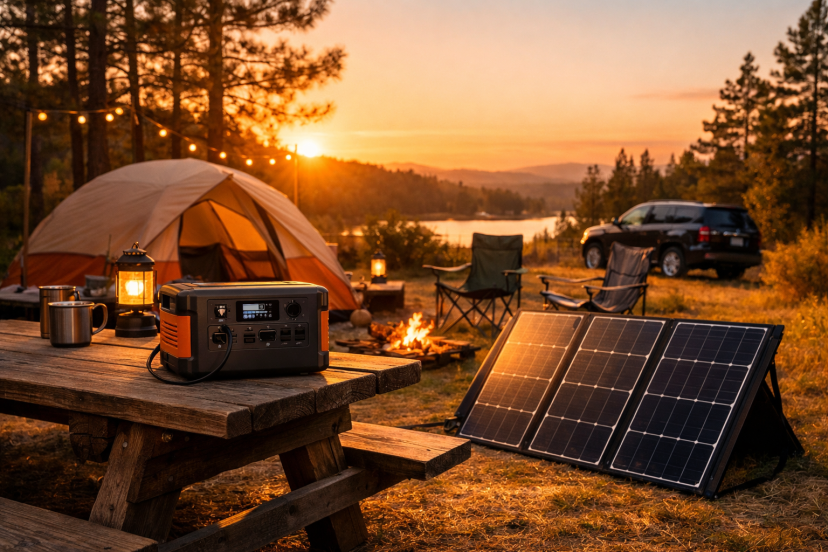
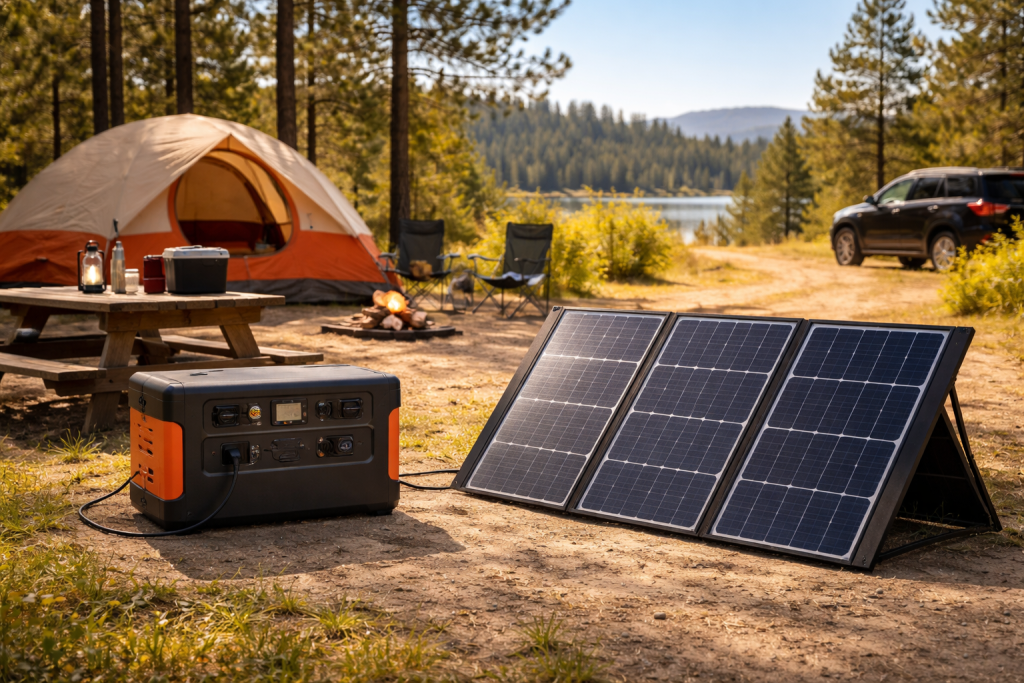
That is exactly why a solar generator for camping can make such a big difference. It gives you a simple way to keep your essentials running without the noise, smell, and hassle of a gas generator. You can charge phones, lights, cameras, fans, and in some cases even small appliances, all while keeping your campsite quieter and easier to manage.
In this guide, I’ll walk you through what a solar generator actually is, how to figure out the right size, what features are worth paying for, and which products make the most sense for different kinds of campers.
This article includes product recommendations, which means I may earn a small commission if you buy through those links, at no extra cost to you.
Why a Solar Generator Can Make Camping So Much Easier
A good solar generator is not one of those “nice to have” gadgets that ends up sitting in the garage. When you camp often, it quickly becomes one of the most useful things you pack.
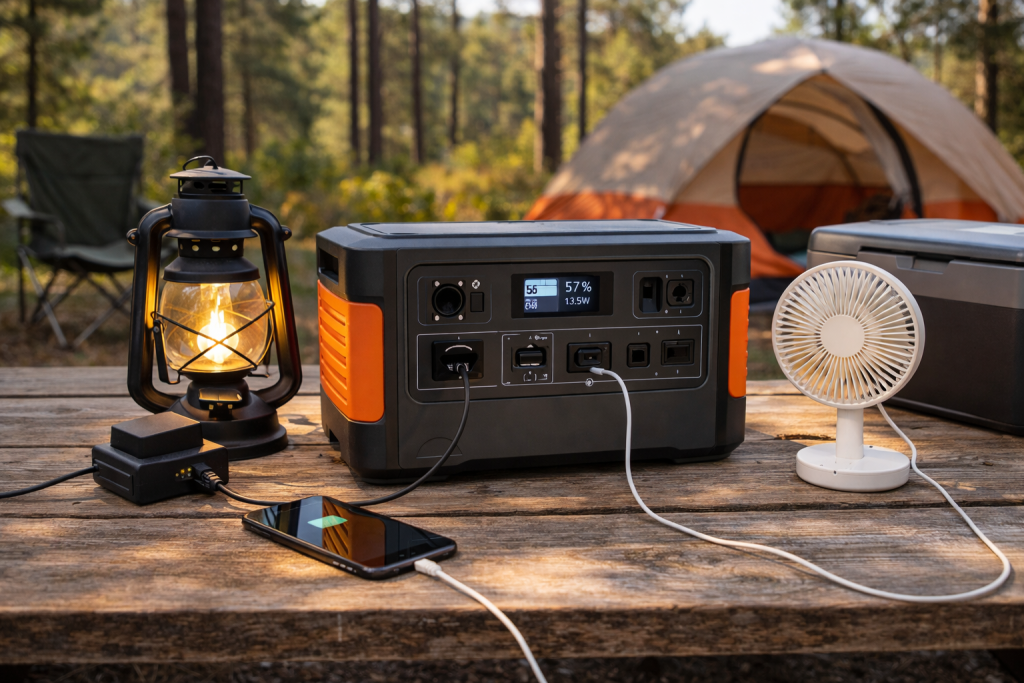
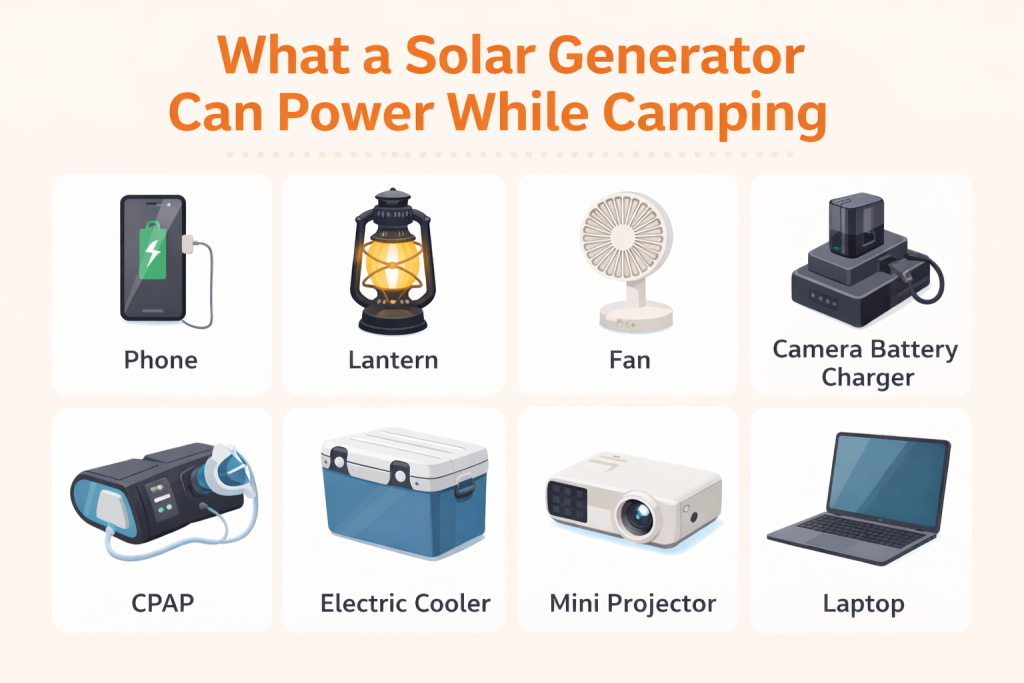
It keeps the basics covered, of course. You can charge your phone, power your lantern, top up a camera battery, or keep a fan running on a warm night. But it also helps in those little moments that make camping more comfortable. Maybe your kid sleeps better with a sound machine. Maybe you want to power a small cooler. Maybe you just want to drink your coffee in the morning without worrying that your phone will die before lunch.
That is really the appeal. A solar generator gives you flexibility without turning the trip into a noisy power setup.
What a Solar Generator for Camping Actually Is
The name makes it sound like it is generating power all on its own, but most solar generators are really portable power stations that can be charged with solar panels.
They usually include:
- a battery that stores power
- an inverter that converts that stored power into usable electricity
- several output ports, including AC, USB, and DC
- input options for wall charging, car charging, and solar charging
So when people say “solar generator,” what they are usually talking about is a battery-powered station that can be recharged by the sun.
That matters because it helps set expectations. You are not buying a gas generator with a cleaner personality. You are buying stored power that is quiet, portable, and much easier to use around camp.
Why So Many Campers Prefer Solar Over Gas
If you have ever camped near someone running a loud generator, you already understand one big reason. Noise travels fast outdoors. A machine that seems tolerable at home can sound ridiculous in the middle of a quiet campground.
Solar generators solve that problem right away. They run silently, so you can charge gear without filling the whole area with a mechanical hum.
They are also easier to deal with. No fuel cans. No fumes. No pulling cords. No wondering where to place the machine so you are not breathing in exhaust.
Safety plays a role too. Fuel-burning devices always come with extra caution. If your normal camping needs can be handled by a battery-powered station instead, a lot of people find that to be the simpler and more comfortable option.
How to Choose the Right Size Without Overthinking It
This is where people either overspend or end up disappointed.
The easiest way to choose the right solar generator for camping is to forget the marketing for a minute and think about the gear you actually use. Ask yourself:
- What do I want to power?
- How many watts does each item use?
- How long will I use it each day?
If your list is just phones, headlamps, and a camera battery, you do not need a giant power station. If you want to run a fan, CPAP machine, projector, or electric cooler, then you will need something with more battery capacity and stronger output.
The big mistake is buying for a fantasy version of your camping life. If you mostly take short weekend trips and charge a handful of small devices, you probably do not need a heavy, expensive unit that looks ready to power a cabin.
Best for Light Camping Setups
If you camp simply, you can usually keep your power setup simple too.
A smaller solar generator works well for solo campers, couples, and anyone who mostly wants to charge personal devices and maybe power a few comfort items. This kind of setup makes sense if you:
- camp for one or two nights at a time
- cook with propane or over a fire
- mainly use USB-powered devices
- want something easy to carry and easy to recharge
For casual weekend trips, small and mid-size units often hit the sweet spot.
Best for Family Camping and Bigger Setups
Once more people are involved, your power needs grow fast.
Now it is not one phone. It is three. Maybe four. Add in a couple of lights, a tablet for the kids, a fan, a camera charger, maybe a cooler, and suddenly that tiny power station you almost bought starts looking very optimistic.
That is why families and regular car campers usually do better with a mid-size model. It gives you more breathing room. You are not constantly doing mental math every time someone plugs something in.
Cold-Weather Trips Usually Need More Power
Cold-weather camping changes the equation.
Longer nights mean more lighting. Chilly mornings make heated accessories more tempting. Fans, medical devices, or extra layers of powered gear may stay in use longer than expected. Even if you are not running anything major, colder conditions can make you more aware of how nice it is to have dependable backup power.
So if you camp in shoulder season or colder weather, it is usually smart to choose a bit more capacity than you think you need. And if that sounds like your style of trip, these practical winter camping tips are worth checking out before you head out.
Features That Matter More Than Fancy Extras
Some features sound exciting in product listings but do not make much difference once you are actually at camp. Others quietly make your life easier every single trip.
Here is what I would pay attention to first:
Battery Capacity
Measured in watt-hours, this tells you how much power the unit can store. The higher the number, the longer it can run your gear.
AC Output
This tells you what the unit can handle at one time. If you want to run anything more demanding than phones and lights, this matters a lot.
Recharge Speed
This gets overlooked more than it should. A unit that recharges quickly is much easier to live with, especially on short trips or cloudy days.
Weight
A power station can be “portable” on paper and still feel annoying in real life. If you will be moving it in and out of the car often, weight matters.
Battery Type
LiFePO4 batteries are popular because they tend to last longer and handle repeated charging better.
Solar Input
If you actually plan to recharge with solar panels while camping, make sure the input is strong enough to make that worthwhile.
Port Selection
More ports do not always mean better, but having the right mix of AC, USB-A, USB-C, and car-style outlets is genuinely useful.
7 Amazon Solar Generators Worth Looking At
Here are seven options that stand out for camping, whether you want something light and simple or something strong enough for a busier family setup.
1. Jackery Solar Generator 1000 v2
This is the kind of unit that works for a wide range of campers, which is why it is such an easy recommendation.
It offers 1,070Wh capacity, 1,500W AC output, and a 3,000W surge peak, so it can handle a solid mix of gear without feeling oversized for normal camping use. It also supports fast charging through the Jackery app and stays fairly manageable in terms of weight.
Best for: families, longer weekends, road trips, and campers who want one dependable all-around power station.
2. Anker SOLIX C1000 with 200W Solar Panel
If fast charging matters to you, this one is a strong contender.
The C1000 delivers 1,800W output, supports up to 2,400W with SurgePad, and can reach 80% charge in just 43 minutes. It is also rated for 3,000 battery cycles, which gives it long-term appeal. The included solar panel is built to capture sunlight efficiently and makes it easier to recharge off-grid.
Best for: campers running more demanding gear, or buyers who want a powerful setup that feels a little more future-ready.
3. EF ECOFLOW RIVER 2 Pro
This one sits in a very practical middle ground.
It recharges from AC in about 70 minutes, supports up to 1,600W with X-Boost, includes 11 outlets, and uses an LFP battery rated for 3,000+ cycles. It also supports 220W solar input, which helps keep it useful for longer trips.
Best for: campers who want a strong balance of portability, charging speed, and versatility.
4. EF ECOFLOW River 2 Max Solar Generator
For regular weekend camping, this is one of the easier models to like.
It offers up to 1,000W output, 3,000+ charging cycles, and 60-minute AC charging, plus the included 160W solar panel helps make solar recharging realistic for casual off-grid use. It also has a strong reputation among buyers looking for something capable without being excessive.
Best for: couples, weekend campers, and anyone who wants more power without stepping into a much heavier class.
5. Jackery Explorer 500
This one is older-school in the best possible way. It is simple, dependable, and easy to understand.
With a 518Wh battery and 500W output, it works well for lighter trips where you mainly want to charge essentials and keep small devices powered. It is not the one to buy if you want to run a bunch of gear, but for basic camping needs, it still makes a lot of sense.
Best for: light camping, short trips, and people who want a no-fuss unit for phones, lanterns, and cameras.
6. Jackery Explorer 1000 v2 Portable Power Station
This is a great pick for people who like the Jackery 1000 platform but do not necessarily need the bundled solar kit right away.
It has the same 1,070Wh capacity, 1,500W AC output, and 3,000W surge peak as the solar-generator version, plus fast charging through the app. If you already own compatible panels or plan to buy them later, this can be a smart way to spread out the cost.
Best for: campers who want a strong power station first and the freedom to build the solar side later.
7. EF ECOFLOW RIVER 2 Portable Power Station
If you keep your setup simple, this little unit can be enough.
It offers 256Wh battery capacity, 1-hour fast charging, and up to 600W output for smaller devices. It is not meant for bigger appliances, but for solo campers or short overnight trips, it can cover the basics nicely without taking up much space.
Best for: solo campers, festival camping, quick overnight trips, and people who mainly need power for small electronics.
Which One Makes the Most Sense for You?
If you are still torn, here is the simplest way to think about it:
- For light weekend camping: Jackery Explorer 500 or EcoFlow RIVER 2
- For balanced everyday camping use: EcoFlow River 2 Max or RIVER 2 Pro
- For families or heavier gear: Jackery Solar Generator 1000 v2 or Anker SOLIX C1000
- For panel flexibility: Jackery Explorer 1000 v2
Most people do not need the biggest unit on the market. They just need one that fits the way they actually camp.
Common Buying Mistakes to Avoid
A lot of disappointment comes from choosing based on hype instead of real use.
One common mistake is focusing on the brand name first and your actual power needs second. Another is ignoring recharge speed. A large battery sounds great until you realize it takes forever to fill back up.
A few other mistakes show up a lot too:
- underestimating how heavy the unit feels in real life
- assuming surge wattage is the same as normal running output
- forgetting to check solar panel compatibility
- buying way more capacity than you realistically need
- paying for appliance-level power when you mostly charge small devices
What the Research and Experts Suggest
If you want a little more confidence in the idea of solar camping power, expert sources help support the logic behind it.
The U.S. Department of Energy’s solar energy and storage basics explain that energy storage helps solar remain useful even when the sun is not actively shining. That is exactly what makes this kind of setup practical for camping. You can collect energy when conditions are good and use it later when you actually need it.
The DOE also notes in its battery storage overview for solar energy systems that solar-plus-storage systems can provide power more flexibly when grid access is limited or unavailable. While that idea often comes up in home energy discussions, the same principle works well off-grid at camp.
And from a safety perspective, the Consumer Product Safety Commission’s carbon monoxide guidance is a good reminder that fuel-burning generators come with real precautions. That is one big reason many campers prefer a battery-based option for routine trips.
A Few Simple Tips to Get More Out of Your Power Station
Even a good generator will feel better if you use it smartly.
- Charge phones and battery packs during sunny hours
- Use LED lights instead of power-hungry alternatives
- Keep your solar panel angled toward the sun when possible
- Avoid running heating devices unless your unit is built for that
- Pre-chill your cooler before the trip so it uses less energy later
- Know which devices are the real battery drainers
You do not need to obsess over every watt. A few smart habits go a long way.
Final Buying Advice Before You Choose
If I could leave you with one simple piece of advice, it would be this: buy for the trip you actually take, not the trip you imagine taking once a year.
A smaller unit that is easy to carry and easy to use is often better than a giant one that feels like a chore. At the same time, if you camp often, bring family, or rely on a CPAP or cooler, stepping up to a mid-size model is usually worth it.
For a lot of campers, the sweet spot is somewhere in the middle. Enough power to feel comfortable. Not so much weight that you regret bringing it.
Frequently Asked Questions
Is a solar generator for camping enough for a CPAP machine?
Often, yes. But it depends on the CPAP model, its watt draw, whether you use a heated humidifier, and how many nights you need it to run. For CPAP use, a mid-size unit is usually the safer choice.
Can a solar generator run an electric cooler or mini fridge?
Yes, many mid-size and larger units can. The real runtime depends on how efficient the cooler is, how often it cycles on, the outdoor temperature, and how often you open it.
How long does it take to recharge a solar generator with solar panels?
It depends on the size of the battery, the wattage of the panel, weather conditions, and how much direct sun you are getting. Some models can recharge in a few hours under strong sun, while others take much longer.
Are solar generators allowed where gas generators are restricted?
In many cases, yes, because they do not make the same kind of noise or exhaust. Still, campground rules vary, so it is always worth checking ahead.
What size solar generator is best for a weekend camping trip?
For basic weekend trips, a small or mid-size model is usually enough. If you are bringing more people, using a fan, powering a cooler, or running a CPAP, it makes sense to size up.
Conclusion
A good solar generator for camping can make your trip feel easier, quieter, and a lot more comfortable. It helps you stay powered without dragging fuel, fumes, or extra stress into camp.
If you want the safest all-around choice, the Jackery Solar Generator 1000 v2, Anker SOLIX C1000, and EcoFlow RIVER 2 Pro are all strong picks. If you want something lighter and simpler, the Explorer 500 or EcoFlow RIVER 2 may be all you need.
The right choice really comes down to how you camp. Once you match the unit to your real setup, everything gets easier. And honestly, it is a lot more fun when nobody is fighting over the last charging cable.
If you want, I can do one more pass and make it sound even more like a personal blog post with warmer transitions and less “review article” energy.