How To Prepare For Your First Camping Trip
We may earn a commission for purchases made using our links. Please see our disclosure to learn more.
It’s easy to imagine a peaceful evening by the campfire, but planning everything that happens before it can feel overwhelming. What type of tent do you need? How cold will it get at night? And what happens if you forget something important once you’re out there?
Preparing for your first camping trip doesn’t require expensive equipment or years of outdoor experience. A nearby campground, a comfortable place to sleep, and a few reliable supplies are enough to get started. The trick is knowing what deserves your attention and what can wait until you’ve spent more time outdoors.
From choosing a campsite and packing your equipment to preparing meals and handling unexpected weather, here’s how to make your first overnight adventure comfortable, manageable, and safe.
Choose the Right Type of Camping
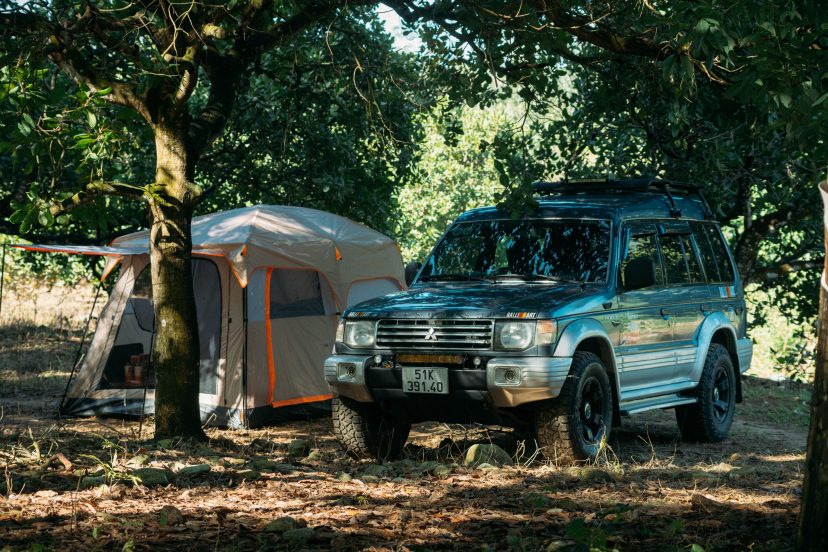
Car camping is a practical starting point for beginners. You drive to or near your campsite, unload your equipment, and keep your vehicle accessible.
Backpacking requires more preparation because you must carry your shelter, food, water, and safety equipment along the trail. Dispersed camping can also be challenging, especially in areas without toilets or drinking water. Save these experiences for later if you’re still learning how to camp.
Pick a Beginner-Friendly Campground
Look for established campgrounds with maintained toilets, potable water, designated tent sites, and straightforward road access. A campground close to home makes it easier to leave early if the weather changes or someone feels unwell.
Before making a reservation, check:
- Campsite availability, fees, and check-in procedures.
- Parking arrangements and tent size restrictions.
- Fire regulations, pet policies, and quiet hours.
- Access to drinking water and emergency assistance.
Check whether the facilities operate during your intended visit. Some campgrounds turn off their water supply or close restrooms outside the main camping season.
Plan Your First Camping Trip Around the Weather
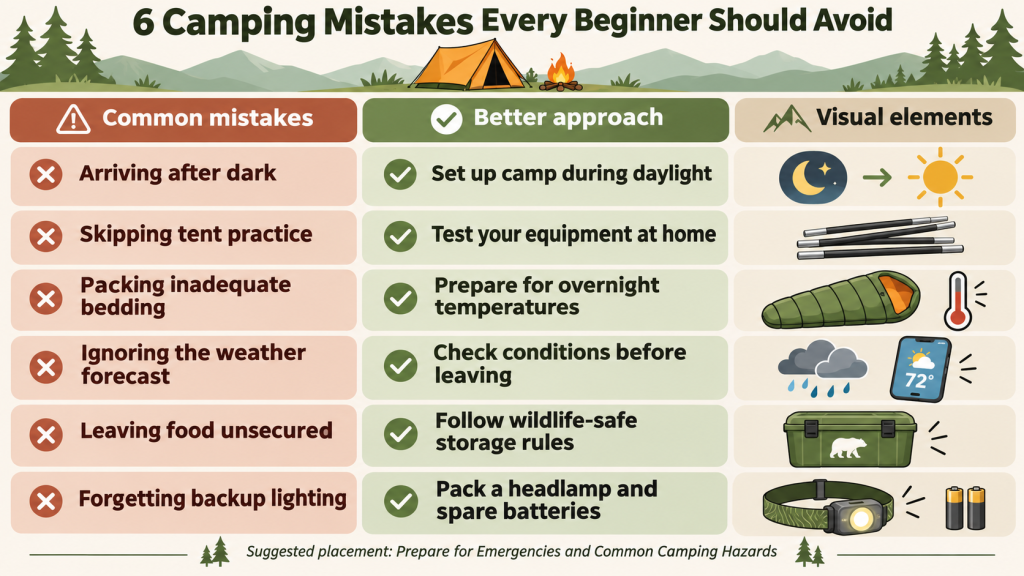
Start with one overnight stay during a period of mild weather. Check the forecast for the campground itself rather than the nearest major city, particularly if you’re heading into the mountains.
Pay attention to nighttime temperatures, rainfall, wind, and severe weather alerts. A pleasant afternoon can give way to a surprisingly cold evening. Pack for the overnight low and keep dry clothing in a waterproof bag or container.
If thunderstorms, flooding, dangerous heat, or strong winds are expected, reschedule. A beginner camping trip should give you room to learn, not force you to manage hazardous conditions.
Set a Budget and Gather Essential Camping Gear
You don’t need to purchase everything at once. Borrow a tent from a friend, rent equipment from an outdoor outfitter, or use suitable cookware and clothing from home.
Build your packing list around these essentials:
- Shelter: Tent, rainfly, stakes, guylines, and a suitable groundsheet.
- Bedding: Sleeping bag, insulated pad, and pillow.
- Cooking: Stove, compatible fuel, cookware, cooler, and utensils.
- Safety: First-aid kit, navigation tools, headlamp, and backup batteries.
- Personal supplies: Drinking water, clothing, toiletries, sunscreen, and insect repellent.
Use this camping gear list for beginners to organize the remaining equipment according to your trip.
Choose a Tent and Practice Setting It Up
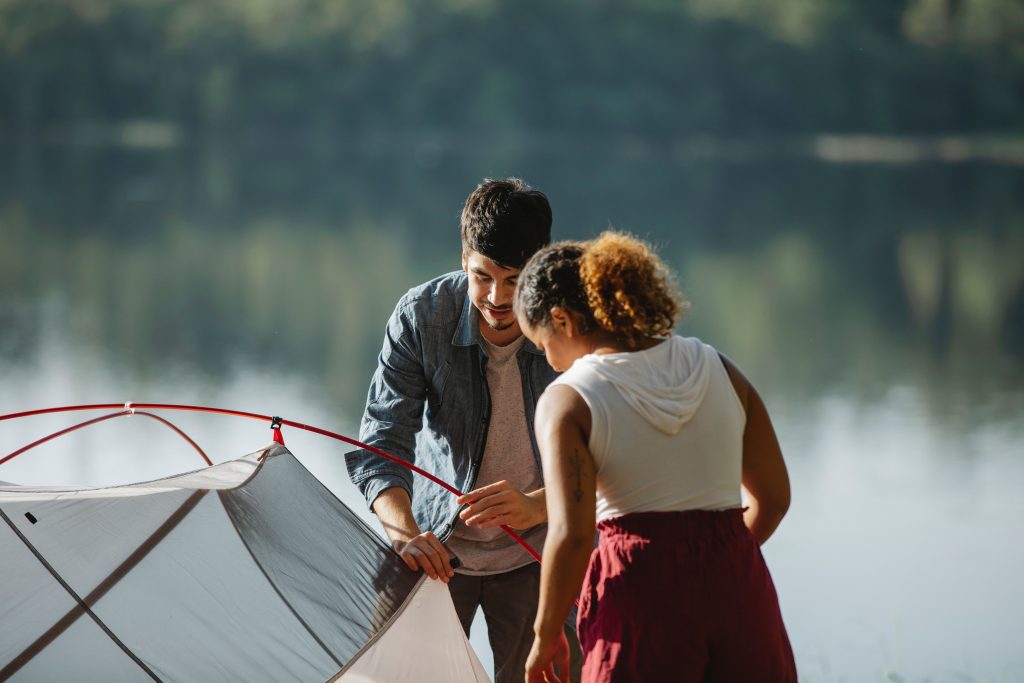
Tent capacity describes how many people the sleeping area can accommodate, not how comfortably everyone can move around. A four-person tent can be a reasonable choice for two adults who want extra space for bedding and bags.
Pitch your tent at home before leaving. Check that all poles, stakes, and guyline attachments are present. Learn how the rainfly fits and how to pack everything away afterward.
If you’re borrowing equipment, examine the floor, seams, and zippers for damage. Finding a missing pole at home is inconvenient; discovering it at the campground just before sunset is a much bigger problem.
Put Together a Comfortable Sleeping System
A sleeping bag alone won’t protect you from heat loss into the ground. Pair it with an insulated sleeping pad, paying attention to the pad’s R-value, which indicates resistance to heat transfer. Higher values generally provide better ground insulation.
Choose a bag suited to the expected overnight low, allowing extra warmth if you tend to feel cold. Where available, use the comfort rating rather than treating a lower-limit rating as a guarantee of comfortable sleep.
Keep your sleeping clothes separate from anything damp or sweaty that you wore during the day.
Pack Clothing for Changing Conditions
Choose clothing that works in layers. A moisture-wicking shirt provides a useful starting point, fleece adds warmth, and a rain jacket helps protect you against wind and precipitation. Quick-drying fabrics are particularly useful when conditions are damp.
Bring spare socks, comfortable walking shoes, a hat, and a dry change of clothes for bedtime. Avoid relying on new footwear for long walks, since uncomfortable shoes can quickly spoil an otherwise enjoyable trip.
Keep rain protection accessible rather than buried under your sleeping gear.
Prepare Simple Meals and Drinking Water
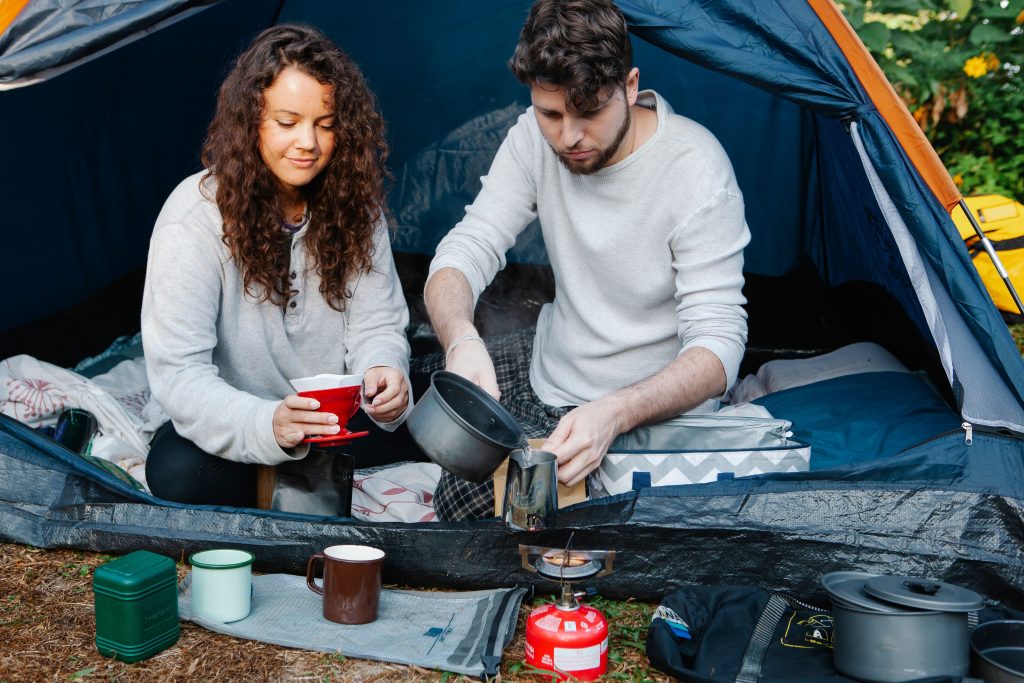
For a short camping trip, choose meals with few ingredients and minimal cleanup. Breakfast might be oatmeal and fruit, while dinner could be pasta with prepared sauce. Portion ingredients at home and bring a meal that requires no cooking in case stove use becomes impractical.
Keep perishable ingredients in a properly chilled cooler and separate raw meat from ready-to-eat foods. Bring a reliable supply of potable water for drinking, cooking, and brushing your teeth. Confirm whether the campground’s taps are safe to drink from before relying on them.
Set Up Camp Before Dark
Give yourself enough daylight to find your assigned site and become familiar with the campground. Choose a level spot within the designated tent area, avoiding depressions where rainwater could collect and trees with visibly damaged overhead branches.
Pitch and secure your shelter first. Arrange bedding before organizing the cooking area, chairs, and other equipment. Follow campground requirements for separating food storage and cooking from sleeping areas, especially in bear country.
Locate the toilets, water source, and exit route before sunset. Keep a headlamp and warm layer somewhere you can reach easily once darkness falls.
Prepare for Emergencies and Common Camping Hazards
Share your campground address, campsite number if known, travel plans, and expected return time with someone staying home. Download maps before departure, charge your phone, and carry a backup power source. Don’t assume you’ll have mobile reception.
Pack a first-aid kit with basic wound dressings, blister supplies, and any personal medication. Familiarize yourself with local wildlife precautions and the nearest place to obtain medical care.
If a fire is permitted, use the designated fire ring and never leave it unattended. Extinguish it thoroughly with water, stir the ashes, and repeat until everything is cold. Never operate a fuel-burning stove inside a tent.
Practice Good Camping Etiquette and Leave No Trace
Respect quiet hours, keep pets under control, and avoid walking through another camper’s site.
Follow the campground’s waste disposal rules, including instructions for dishwater and food scraps. Use the provided toilets and store scented items according to local wildlife regulations. Even small scraps can attract animals.
Before leaving, collect tent stakes, check the ground for litter, and return the campsite to its original condition. Dry your tent completely at home before storing it, and note anything you wish you had packed.
Recommended Gear for Your First Camping Trip
Coleman Sundome 4-Person Camping Tent
Best for: Couples and small groups at developed campgrounds.
The Sundome has a nine-by-seven-foot floor, a dome-shaped structure, and an included rainfly. Its spacious footprint gives two campers room to arrange their bedding without sleeping immediately beside their bags. It’s designed for three-season use rather than demanding winter expeditions, so consider the weather before choosing it.
Coleman Brazos 20°F Sleeping Bag
Best for: Adult campers who prefer rectangular sleeping bags.
The Brazos offers a roomy alternative to a close-fitting mummy bag and has a manufacturer temperature rating of 20°F. Its soft polyester lining provides a comfortable sleeping surface. Coleman recommends it for people up to five feet eleven inches tall, and individual warmth needs may vary from the advertised rating.
Therm-a-Rest Z Lite SOL Sleeping Pad
Best for: Campers who want bedding without an inflation valve.
Made from closed-cell foam, this folding mat can be laid out without a pump or any inflation time. Its reflective surface contributes to insulation. The relatively thin profile may feel firm to side sleepers, and colder conditions call for additional insulation, such as pairing it with another suitable pad.
Black Diamond Spot 400 Headlamp
Best for: Nighttime campsite tasks and walks to the restroom.
The Spot 400 provides adjustable illumination with a maximum output of 400 lumens. It runs on three AAA batteries or the separately available compatible rechargeable battery. Keeping both hands free is useful when fastening tent guylines or carrying supplies after dark. Brighter settings consume battery power faster, so carry spares.
Coleman Classic Propane Gas Camping Stove, 2-Burner
Best for: Preparing simple meals for two or more campers.
Two independently adjustable burners make it possible to heat water while cooking food in a separate pan. Side panels help shield the flames from wind, and the folding design suits vehicle-accessible campsites. You’ll need compatible propane fuel and a stable outdoor cooking surface. It’s less practical for trips involving long hikes.
What Safety Guidance Reveals About Camping Preparedness
The Centers for Disease Control and Prevention’s outdoor water treatment guidance explains that clear streams can contain harmful microorganisms. Boiling is the most dependable method for killing these germs, although it cannot remove hazardous chemical contamination. For beginners, carrying drinking water from a trusted source avoids much of this uncertainty.
The U.S. Consumer Product Safety Commission’s camping equipment guidance also warns about carbon monoxide poisoning from fuel-burning equipment in enclosed spaces. Keep cooking equipment outdoors, and rely on appropriate bedding and clothing for overnight warmth instead of bringing a camping stove into your tent.
Frequently Asked Questions About First-Time Camping
How many nights should a beginner go camping?
Starting with a single night is a practical choice. It gives you time to pitch your tent, prepare dinner, sleep outdoors, and pack up the following morning. If you enjoy the experience and feel comfortable using your equipment, extend your next trip to a full weekend.
Is it better to camp alone or with someone experienced?
Camping with an experienced companion is generally easier for a beginner. They can help you troubleshoot unfamiliar equipment, understand campground procedures, and recognize hazards. If you prefer to go alone, choose a staffed campground with good access to help and let someone know your plans.
What should you do if rain begins while you’re camping?
Secure your rainfly and guylines, move loose equipment somewhere dry, and put on your waterproof clothing. Keep bedding away from wet tent walls and monitor the forecast. If conditions become dangerous, especially during thunderstorms or potential flooding, move to appropriate shelter or leave the area safely.
Can I go camping without a campfire?
Yes. Campfires are optional, and some locations prohibit them because of wildfire risks. A permitted outdoor camping stove can handle meal preparation, while battery-powered lanterns provide light. Bring warm clothing and sleeping equipment so your comfort doesn’t depend on having an open fire.
What mistake do first-time campers make most often?
Underestimating nighttime conditions is a particularly avoidable mistake. Daytime warmth doesn’t guarantee a comfortable night, and beginners sometimes pack inadequate insulation or forget spare dry clothes. Check overnight temperatures and try your sleeping setup at home before relying on it outdoors.
Conclusion
A successful first camping trip begins with realistic expectations. You don’t need to head deep into the wilderness or invest in an entire collection of outdoor equipment. A familiar campground and a dependable shelter, sleeping system, and food plan give you a solid foundation for learning.
Prioritize warmth, safe drinking water, and reliable lighting before spending money on comfort accessories. A straightforward tent like the Coleman Sundome and a hands-free headlamp can make everyday tasks considerably easier. Borrowing suitable equipment is equally worthwhile if you’re unsure about camping regularly.
Book a one-night stay near home, test your equipment beforehand, and leave enough daylight for setting up camp. You’ll return with a much clearer idea of what to bring next time and what you can comfortably leave behind.