Everything You Need When Camping With Toddlers
We may earn a commission for purchases made using our links. Please see our disclosure to learn more.
Packing for a camping trip is one thing. Packing for a toddler who needs snacks, naps, clean clothes, and close supervision is another. Camping With Toddlers can be a wonderful family adventure, but the easiest trips usually start with modest plans and a reliable checklist.
You need more than a tent and sleeping bags. Think about where your child will sleep, how you’ll handle nighttime toilet trips, what they’ll eat, and how you’ll manage hazards around the campsite. The right setup also leaves room for curiosity, muddy shoes, and changing plans.
This guide covers what to bring, how to arrange your campsite, which products may help, and the safety advice worth knowing before your first overnight trip.
Start With a Short, Manageable First Trip
For your first outing, choose one night at a developed campground within a reasonable drive from home. Skip remote backcountry sites until you know how your toddler responds to outdoor sleeping.
Practice pitching the tent at home, and let your child explore it during daylight. Check how long setup takes with one adult watching the toddler and another handling the poles. Familiarity can make the actual arrival less overwhelming.
Plan around your toddler’s usual nap and meal times, but leave the schedule loose enough for breaks.
Choose a Campsite That Is Easy to Supervise
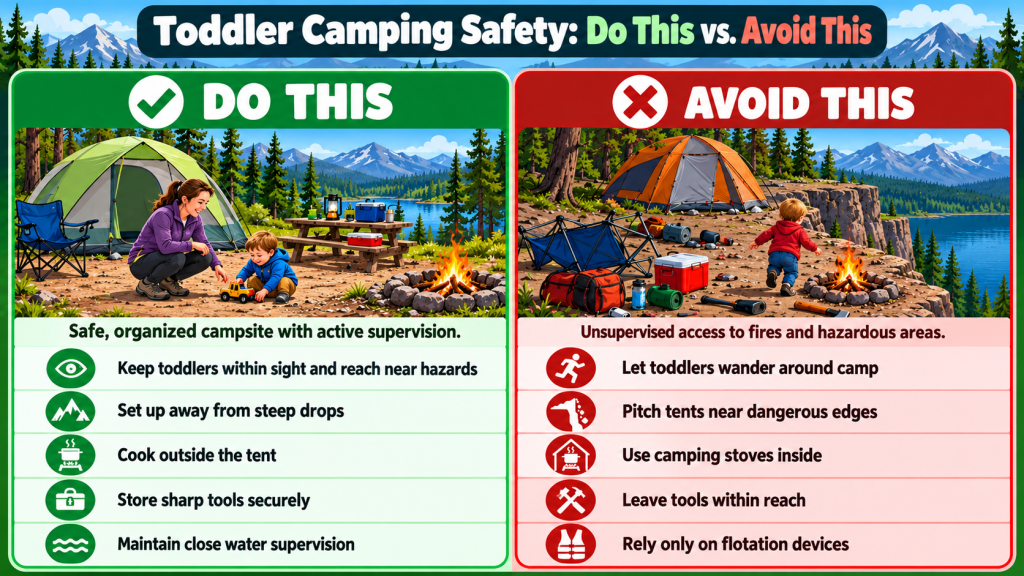
Look for level, well-drained ground away from roads, steep drops, and open water. Check for dead branches overhead and places rainwater might collect.
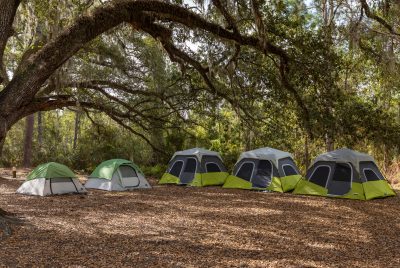
Choose a pitch with room to separate the tent, play area, and cooking equipment. Look for shade that doesn’t involve placing your tent below unstable branches, and check how easily you can see your child from the picnic table. Keep access to the car straightforward in case weather deteriorates or someone needs to leave early.
Before booking, check the campground’s rules on fires, food storage, pets, and quiet hours.
Pack a Roomy Tent and Simple Shelter Essentials
A spacious tent gives you room to change clothes, settle a child, and organize bags without stepping on sleeping mats. Check actual floor measurements before buying.
Pack the rainfly, stakes, guylines, a correctly sized footprint, and a mallet. Practice the complete setup before departure, including rain protection and ventilation.
Set up in daylight and keep trip-prone lines away from the main walking route. Open vents according to the tent instructions to help manage condensation, and test the door zipper before bedtime.
Create a Toddler-Friendly Sleeping Arrangement
Sleep gear should match your child’s age, size, and forecast overnight temperature. A toddler-sized sleeping bag or appropriate wearable sleep system, paired with an insulating sleeping pad, helps avoid excessive empty space and cold ground. Follow the manufacturer’s fit and temperature guidance; ratings are not guarantees of comfort.
For a younger child still using a crib, a correctly assembled portable crib may be the more familiar choice if it fits safely inside your tent. Infants under one require a separate firm, flat sleep surface and infant-safe bedding, not adult sleeping bags or loose blankets.
Keep bedtime cues familiar and expect earlier wake-ups.
Dress for Warm Days, Cold Nights, and Rain
Pack clothing in layers instead of depending on one heavy outfit. Start with comfortable base layers, add a warm midlayer when needed, and keep a waterproof jacket accessible. Closed-toe shoes with traction are better for walking around roots and rocks than slippery sandals.
For a short trip, pack spare socks, extra underwear or diapers, an additional complete outfit, and dry sleepwear. Toddlers can soak through clothing quickly while playing or during a sudden shower.
Store one clean, dry nighttime outfit in a sealed bag rather than mixing it with daytime clothes.
Bring Familiar Meals, Safe Snacks, and Plenty of Water
Keep meals uncomplicated: familiar breakfast foods, sandwiches, soft fruit prepared safely, and dinners that require little cooking. Keep perishables chilled in a cooler.
Serve food while your toddler is seated and supervised. Whole grapes, popcorn, nuts, and large pieces of hot dog can be choking hazards; modify or avoid foods according to age and chewing ability. Keep hot drinks and cookware beyond children’s reach.
Store all food, wrappers, and scented supplies in the campground-approved location, never inside the tent.
Plan Diapers, Potty Breaks, and Handwashing
Even toddlers who use the toilet confidently may struggle with unfamiliar campground bathrooms. Bring a portable potty or child-size seat, wipes, toilet paper, spare underwear, and a small light for nighttime trips. Follow campground rules for disposing of bagged waste.
For children still in diapers, pack more than the usual daily amount, plus a changing mat, sealable disposal bags, and skin-care essentials.
Set up a handwashing station using safe water and soap, especially before eating and after toilet trips.
Set Firm Boundaries Around Fire, Water, and Roads
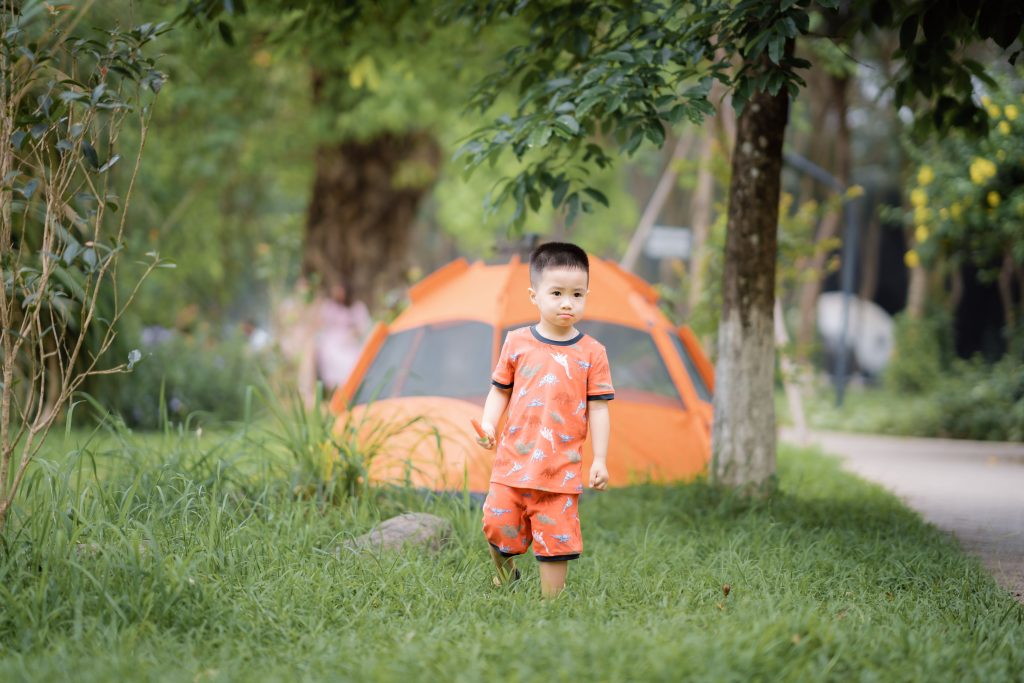
Walk the site together immediately after arriving. Point out the tent, the picnic table, and places your toddler must never approach without an adult. Use short rules: stay close, avoid the fire, and stop when called.
Assign an adult to active supervision when someone else is cooking or setting up gear. Keep matches, fuels, blades, cords, and small batteries locked away or out of reach.
Near water, keep your child within arm’s reach. Flotation devices never replace supervision.
Protect Against Sun, Insects, and Sudden Weather
Pack a wide-brimmed hat, shade, protective clothing, and broad-spectrum sunscreen suitable for your child’s age. Apply and reapply it according to the label, especially after water play.
For mosquitoes and ticks, choose an EPA-registered repellent appropriate for the child and follow its directions. Avoid oil of lemon eucalyptus or PMD repellents for children younger than three. Don’t apply repellent to small hands, eyes, or irritated skin.
If storms, extreme temperatures, or poor air quality threaten your campsite, change plans instead of pushing through.
Keep Activities Short, Flexible, and Age-Appropriate
Toddlers rarely need an elaborate entertainment schedule. Try a short nature scavenger hunt, looking for different leaf shapes, listening for birds, or collecting observations rather than removing plants and rocks.
Plan short walks with easy turnaround points. A child carrier can help when little legs get tired, provided it fits your child and is used as directed.
Let your toddler help with safe jobs such as passing soft clothing or choosing where to sit. Avoid leaving them alone with small objects, sharp sticks, or unfamiliar plants.
Use a Final Packing Checklist Before You Leave
Organize gear by task rather than stuffing everything into one large bag.
- Shelter and sleep: tent, stakes, rainfly, footprint, sleeping setup, and bedtime comforts.
- Clothing and hygiene: layers, rainwear, spare outfits, diapers or potty, wipes, and soap.
- Meals: safe water, prepared food, cooler, utensils, and toddler cup.
- Safety: first-aid kit, medications, sunscreen, repellent, lights, and emergency contacts.
- Activities: a book, simple outdoor toys, and a compact backup activity for rain.
For broader preparation, use CampNestle’s camping safety tips for beginners to check weather, cooking, and emergency planning before departure.
Recommended Products for Camping With Toddlers
These five items solve different campsite problems. Choose gear that suits your child.
Coleman 6-Person Skydome Dark Room Camping Tent
Best for: Families wanting extra room and reduced morning light.
The six-person Skydome Dark Room design offers a broad entry, steep walls, and fabric intended to reduce incoming sunlight. Check your campsite dimensions, practice setup beforehand with another adult, and remember that darker fabric cannot guarantee later sleep or cooler temperatures.
Regalo My Chair Portable Baby Booster Seat with Tray, Foldable, Gray
Best for: Toddlers eating at a campsite with a compatible adult chair.
This folding booster includes a removable tray and three-point harness, with a manufacturer-stated age range of 9–36 months and weight limit of 37 pounds. Fasten it to a compatible adult chair as directed, rather than using it loose on uneven ground, and always supervise meals.
OXO Tot 2-in-1 Go Portable Potty with Travel Bag
Best for: Toddlers learning to use the toilet away from home.
The foldable legs let this potty work independently with disposable bags or sit over a regular toilet. You’ll still need to carry replacement liners, manage waste responsibly, and clean the seat; it cannot replace access to approved campground sanitation facilities.
Munchkin Miracle 360 Sippy Cups for Toddlers, 10oz, 2 Pack
Best for: Keeping drinking water accessible at camp.
These spoutless cups let children drink from the rim and seal when they stop sipping, helping limit ordinary spills. Two cups make it easier to keep one clean while the other is used. Clean the seals thoroughly after use, especially when dusty hands, food, or sand get onto the rim.
Energizer WeatheReady PRO-360 LED Camping Lantern
Best for: Lighting a family tent and common area.
This battery-powered lantern provides 360-degree illumination and selectable light settings, including a lower-output mode for quieter evenings. Keep the batteries and compartment inaccessible to toddlers, and bring spare power; the lantern is not a child-safe toy and needs a stable location away from play.
Research-Backed Safety Advice for Toddler Camping
The strongest guidance for camping with small children comes from pediatric safety recommendations and established outdoor-risk advice rather than experiments measuring the perfect camping checklist.
The American Academy of Pediatrics’ water safety guidance for young children calls for close, arm’s-reach supervision near water. That matters even at campgrounds where a stream or pond is outside the formal swimming area.
The CDC’s guidance on preventing mosquito bites recommends EPA-registered repellents used as labeled and advises against OLE or PMD products for children under three. Meanwhile, the CDC’s carbon monoxide guidance warns against using portable gas camping stoves indoors. Keep fuel-burning cooking equipment outside tents, even in rain.
These are prevention guidelines, not promises of zero risk. Choose a site and routine that let adults follow them consistently.
Frequently Asked Questions About Camping With Toddlers
What age is best to take a toddler camping?
There is no single ideal age. A short trip can work for many toddlers if the conditions, sleeping setup, and adult supervision fit their development. Start close to home and adjust the trip to your child, especially when naps are easily disrupted.
How do I keep my toddler warm while sleeping in a tent?
Use an age-appropriate, properly fitting sleeping system, an insulating pad beneath it, and dry sleep clothes suitable for the overnight forecast. Keep extra dry layers handy for nighttime changes. Never use a fuel-burning heater or stove inside the tent to warm the space.
Is it safe for a toddler to sleep on an air mattress while camping?
For older toddlers, suitability depends on the mattress design, age guidance, setup, and risk of gaps or falls. A low, appropriately insulated sleeping pad may be simpler. Babies under one need infant-safe sleep arrangements and should never sleep on an adult air mattress.
What should I do if my toddler refuses to sleep at camp?
Try the same bedtime sequence you use at home, keep lighting low, and offer a familiar comfort item when age-appropriate. Nighttime noises and unfamiliar surroundings may cause extra waking. Consider a shorter evening routine if necessary. Ending the trip early is reasonable if everyone becomes exhausted.
How much extra clothing should I pack for a toddler?
For an overnight trip, bring at least one complete spare outfit, extra socks, dry pajamas, and weather-appropriate layers beyond the clothes being worn. Add more if your child is potty training, loves muddy play, or rain is forecast. Store bedtime clothes separately to keep them dry.
Final Thoughts on Camping With Toddlers
Camping With Toddlers works best when you keep the destination simple and prepare for the ordinary challenges: sleep, food, changes of clothes, bathroom trips, and constant supervision. Choose a manageable campground, set clear boundaries, and pack for the overnight temperature rather than the daytime forecast.
A roomy Coleman Skydome tent can make organization easier, while the OXO portable potty is useful for children who are toilet training. Neither replaces the basics: a well-fitting sleep setup, safe water, weather protection, and adults who know exactly who is watching the child.
For your first trip, prioritize a single comfortable night over an ambitious itinerary. Pack the essentials, make room for unplanned breaks, and choose a campsite where safety is practical to maintain.