Camping Safety Tips For Beginners
We may earn a commission for purchases made using our links. Please see our disclosure to learn more.
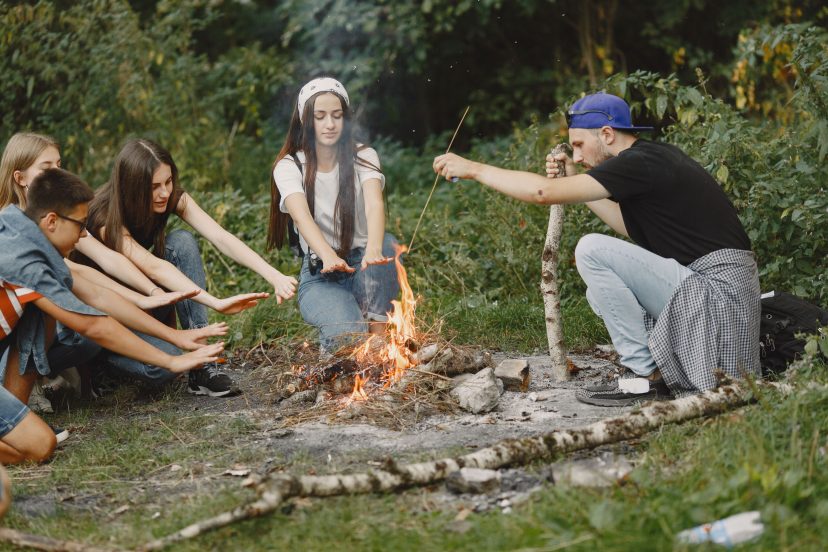
Camping feels simple once the tent is up, but a first trip raises practical questions: Is this campsite safe? What if the weather turns? Can I drink that water? Where should food go overnight? These Camping Safety Tips answer the concerns that matter most without making the outdoors feel intimidating. You will learn how to choose a safer site, handle fire and water, prepare for wildlife and weather, build an emergency plan, and choose useful safety gear. The goal is a practical routine for spotting problems early and making calmer decisions when conditions change.
Affiliate disclosure: This article may contain affiliate recommendations. If you purchase through qualifying links, we may earn a commission at no additional cost to you.
Camping Safety Tips Start Before You Leave Home
Check the campground or land manager’s current rules, weather, fire restrictions, road conditions, wildlife notices, and permit requirements. The National Park Service also recommends matching activities to the group’s abilities and practicing with unfamiliar gear before departure.
Share your destination and return time with someone staying home. Save offline maps and emergency contacts. Use these Camping Safety Tips alongside CampNestle’s beginner-friendly camping gear list, which organizes shelter, sleep, water, lighting, navigation, and first aid by trip type.
Choose a Safe Campsite Before You Unpack
Before pitching your tent, look above for dead branches or damaged trees. Look below for drainage channels, unstable ground, sharp debris, and low spots where rainwater could collect.
Use established campsites when possible and follow local rules. The National Park Service recommends setting up before dark, when hazards are easier to see. Keep sleeping, cooking, and food-storage areas appropriately separated, especially in bear country, and follow the exact requirements for your location.
Set Up Your Tent for Weather, Not Just Views
Stake the tent properly, tension the rainfly, and keep gear away from tent walls where moisture can soak it. Avoid exposed ground during threatening weather and do not camp beside a stream just because it looks convenient.
Clear normal walking paths around chairs, guylines, and cooking gear. A tidy layout matters after dark, when trip hazards are harder to judge. Keep shoes, rain gear, and a light within easy reach before going to sleep.
Keep Fire, Stoves, and Carbon Monoxide Outside Your Shelter
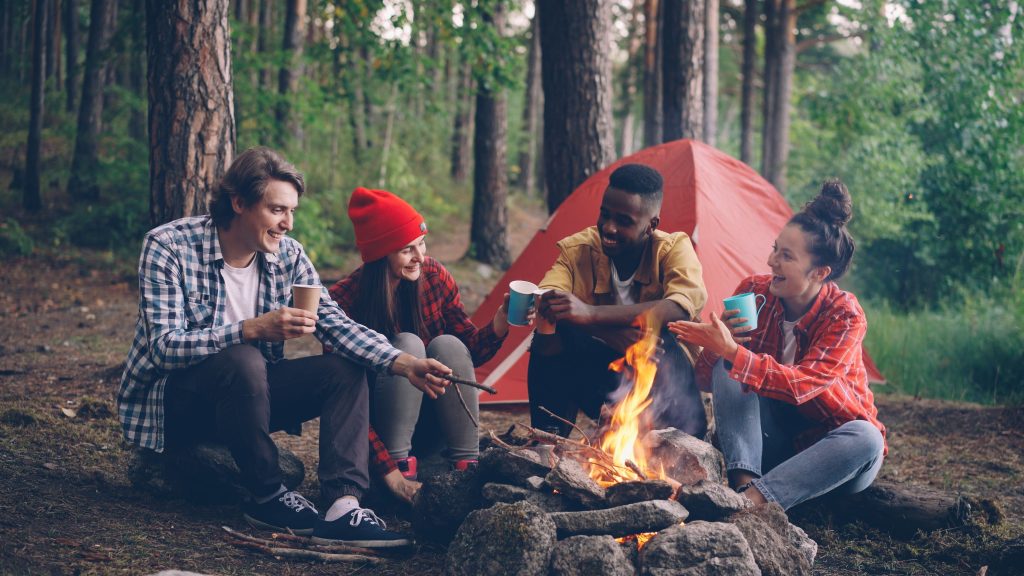
Check fire rules before lighting anything. Where fires are allowed, use an existing ring when available, keep water ready, and extinguish the fire completely before sleeping or leaving.
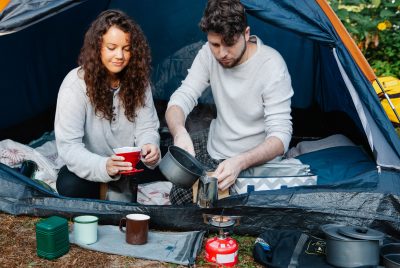
Fuel-burning stoves create another danger: carbon monoxide. CDC guidance warns against using portable gas camp stoves indoors because this odorless gas can accumulate in enclosed spaces. Cook outside and follow the appliance instructions. Rain or cold is not a safe reason to move a stove into your tent.
Make Water and Food Safety Non-Negotiable
A core Camping Safety Tips rule: clear water can still contain germs. If you are unsure whether water is safe, CDC guidance recommends treating it before drinking or cooking. Boiling is the most reliable germ-killing method; when that is impractical, appropriate filtration followed by disinfection can provide broader protection.
Bring known-safe water when practical and carry backup treatment. Keep raw ingredients away from ready-to-eat food, clean your hands before meals, keep perishables cold, and seal food to control spills and odors.
Store Food and Respect Wildlife
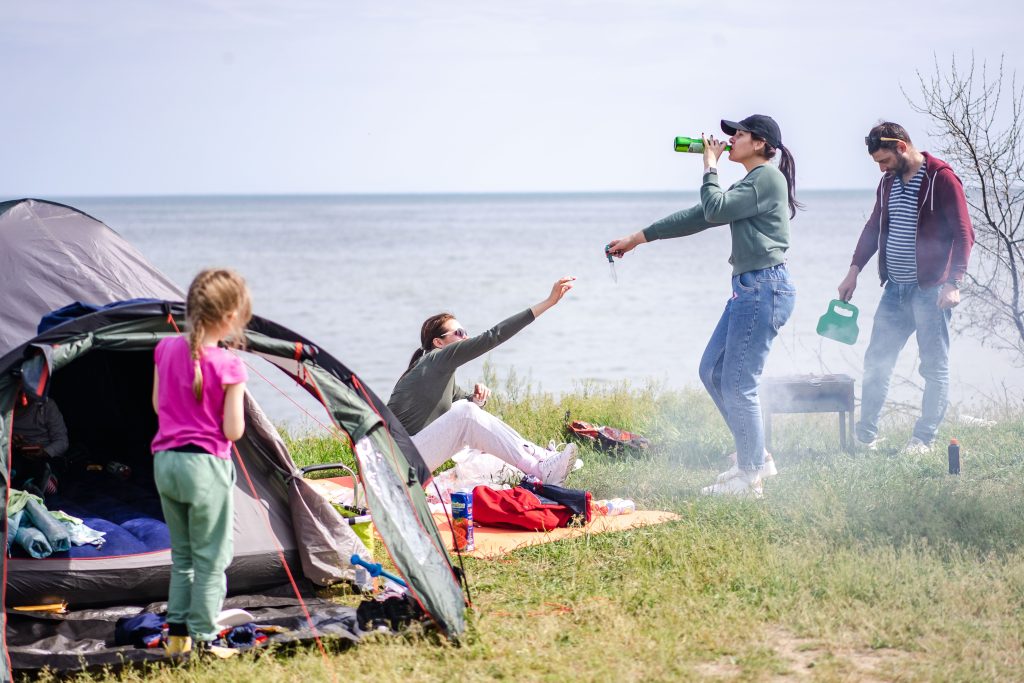
Never feed wildlife or leave snacks, trash, pet food, toiletries, or scented items around camp. In bear country, use the storage method required by the park, whether that means a locker, approved canister, vehicle, or another specified system.
The National Park Service advises keeping food out of tents and securing food, garbage, and scented items. Clean dishes and cooking areas promptly. If an animal approaches, give it space and follow species-specific local guidance rather than relying on generic advice.
Dress for Temperature Swings, Sun, and Insects
Pack layers so you can add or remove insulation as conditions change, and protect at least one dry layer from rain. Wear footwear suited to the terrain rather than casual shoes chosen only for comfort around the car.
Use sun protection, check for ticks after brushy areas, apply insect repellent as directed, and hydrate regularly. These Camping Safety Tips sound basic, but discomfort can affect judgment when you are cold, wet, overheated, or dehydrated.
Light, Navigation, and Communication After Dark
Give every adult a dependable light, ideally a headlamp that leaves both hands free. Carry spare batteries or a backup light. A phone flashlight works temporarily, but draining the device you use for maps or emergency calls is a poor trade.
Download offline maps before losing service and carry a physical map when the setting justifies it. In remote areas, consider a satellite communicator and learn its controls before departure. Groups should also agree on a meeting point if someone gets separated after dark.
First Aid and Emergency Planning for Beginners
Open your first-aid kit at home. Learn where the bandages, gloves, wound supplies, and medications are stored, check expiration dates, and add personal medicines. Basic first-aid knowledge matters more than simply carrying a large kit.
Before a hike, share your route and return time. If conditions become unsafe, turn around early. For serious injury, fire, severe weather, or a lost person, follow local emergency procedures and contact emergency services or park staff when safe.
Recommended Products to Support These Camping Safety Tips
Safety gear should solve a specific problem. These six options support Camping Safety Tips covering first aid, water backup, communication, lighting, weather information, and emergency warmth.
| Product | Best for | Useful feature | Main consideration |
| Adventure Medical Kits Mountain Series Medical Kit – Hiker | Weekend trips | Organized first-aid supplies | Limited for larger groups |
| LifeStraw Personal Water Filter | Water backup | Compact filter format | Not universal treatment |
| Garmin inReach Mini 2 | Remote trips | Satellite messaging and SOS | Subscription required |
| Petzl ACTIK CORE Headlamp | Night camp tasks | Rechargeable hands-free light | Higher cost |
| Midland ER310 Emergency Crank Weather Radio | Car camping | NOAA alerts, multiple power options | Adds bulk |
| S.O.L. Emergency Blanket | Emergency warmth | Heat-reflective material | Backup only |
Adventure Medical Kits Mountain Series Medical Kit – Hiker
Best for: Weekend trips for one or two people
This compact kit is organized by injury and includes wound-care supplies, an elastic bandage, trauma pad, gloves, medications, and a wilderness first-aid guide. The manufacturer positions it for one or two people for up to two days. It is easy to pack, but larger groups or longer trips need more supplies.
LifeStraw Personal Water Filter
Best for: Lightweight personal backup filtration
This compact straw-style filter is easy to keep in a daypack or emergency kit when your planned water setup fails. Portability is its biggest strength. However, use it as one part of a water-safety plan; CDC guidance makes clear that filtration alone does not address every possible waterborne hazard.
Garmin inReach Mini 2 Satellite Communicator
Best for: Campers beyond reliable cell coverage
The inReach Mini 2 supports two-way satellite messaging, location sharing, navigation features, and interactive SOS communication. Those functions are most relevant to remote camping and backcountry travel. An active satellite subscription is required for communication features, so include that ongoing service in your trip budget.
Petzl ACTIK CORE Headlamp
Best for: Hands-free lighting around camp
The ACTIK CORE is a rechargeable outdoor headlamp with red-light functionality. Hands-free lighting helps when cooking, adjusting guylines, or handling first aid after dark. It costs more than a basic flashlight, and rechargeable equipment still needs a charging or battery-backup plan.
Midland ER310 Emergency Crank Weather AM/FM Radio
Best for: Car campers in storm-prone areas
The ER310 combines NOAA weather alerts, AM/FM radio, a flashlight, and multiple power options, including rechargeable, hand-crank, solar, and AA-battery backup. It provides another way to receive weather information when phone service is unreliable. The tradeoff is bulk, so backpackers may prefer a lighter setup.
S.O.L. Survive Outdoors Longer Emergency Blanket
Best for: Low-bulk emergency warmth
This compact blanket uses heat-reflective material and is designed to resist wind and water, making it useful when someone becomes unexpectedly cold or exposed. It takes little pack space. Still, it should supplement—not replace—a sleeping bag, insulating layers, and weather-appropriate shelter.
Research-Backed Camping Safety Tips
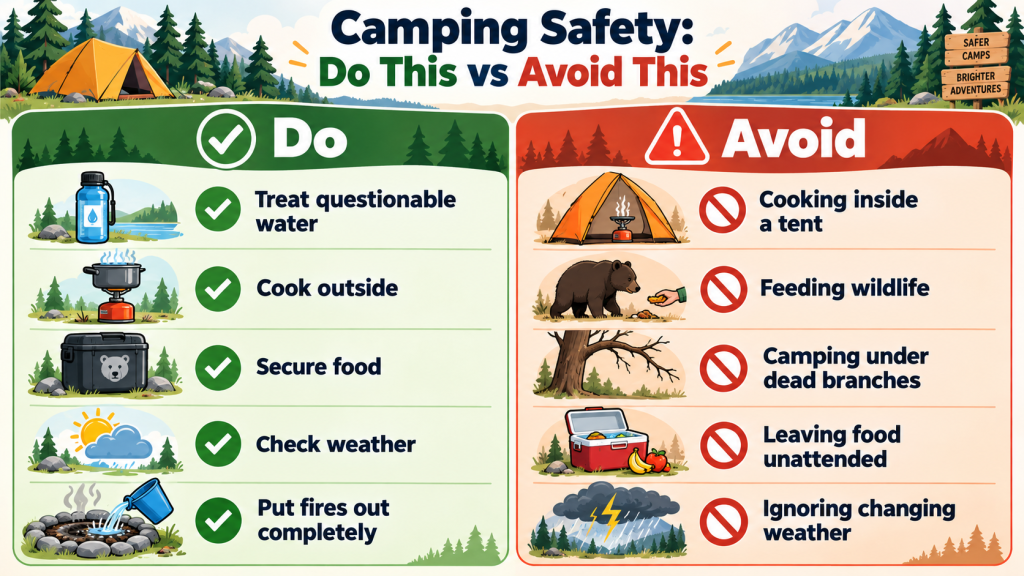
Many Camping Safety Tips come from established risk-management guidance rather than randomized camping trials. National Park Service pre-trip guidance emphasizes checking hazards and rules, matching activities to the group, carrying emergency supplies, inspecting campsites, and setting up before dark. Its campsite-selection guidance also addresses overhead hazards, drainage, and separating sleeping areas from food preparation.
CDC water-treatment guidance says water that looks clean can still contain germs and recommends boiling when safety is uncertain; when boiling is not possible, filtration followed by disinfection can improve protection. CDC carbon-monoxide guidance also warns against using portable gas camp stoves indoors. The Camping Safety Tips theme is consistent: remove avoidable hazards before convenience tempts you into a shortcut.
Camping Safety Tips for Kids, Pets, and Groups
Set group rules early. Show children the campsite boundary and hazards such as water, roads, fire rings, and cliffs. If separated, teach them to stop, stay somewhere safe, and make themselves easier to find. A whistle supports supervision; it does not replace it.
For pets, follow leash rules and secure food and waste. Not every trail permits dogs, and wildlife encounters can escalate if pets chase animals. Adults can divide responsibility for fire, food, water, and navigation so essential tasks never become “someone else’s job.”
What to Do When Weather or Plans Change
One of the most useful Camping Safety Tips is giving yourself permission to change the plan. If wind rises, lightning approaches, temperatures fall, roads deteriorate, or someone feels unwell, reassess instead of forcing the itinerary.
Check forecasts before departure and when service is available. Ask staff about local conditions on arrival. Keep rain gear, warm layers, water, and a light accessible. Leaving early, changing trails, or moving somewhere safer is sound risk management.
Camping Safety Tips: Frequently Asked Questions
What is the most important safety rule for beginner campers?
Plan for the place you are visiting. Check weather, fire restrictions, wildlife rules, water, roads, and emergency contacts. Make sure shelter, clothing, food storage, lighting, first aid, and communication fit those conditions. Generic Camping Safety Tips help, but current local guidance should take priority.
Is it safe to sleep with food inside a tent?
In wildlife areas, no. The National Park Service advises keeping food out of tents and securing food, garbage, and scented items according to local rules. Even elsewhere, crumbs and odors can attract animals. Store food using the method required by the campground or land manager, then clean the cooking area before sleeping.
Can I use a camping stove inside my tent when it rains?
No. Fuel-burning camp stoves can produce carbon monoxide, a colorless and odorless gas that can accumulate in enclosed or partly enclosed spaces. CDC guidance warns against using portable gas camp stoves indoors. Cook outside in a safely ventilated area and follow the manufacturer’s instructions, even when bad weather makes indoor cooking tempting.
Do beginners need a satellite communicator?
Not for every trip. A developed campground with reliable phone coverage, nearby staff, and easy road access may not justify the extra cost. In remote areas without cellular service, a satellite communicator can provide two-way messaging and SOS capability. If you carry one, activate the required service and learn its controls before leaving home.
What should I do if the weather becomes dangerous while camping?
Prioritize people over gear. Follow official alerts and park instructions, move away from hazards such as exposed ridges or flood-prone areas, and use your planned safe location or evacuation route. If conditions are worsening and you can leave safely, changing or ending the trip early is a sensible decision.
Final Camping Safety Tips for a Safer First Trip
Good Camping Safety Tips are about reducing preventable surprises, not fearing the outdoors. Check current conditions, choose stable ground, control food and fire, treat uncertain water, prepare for temperature changes, and know how you will communicate if something goes wrong. A compact first-aid kit and dependable headlamp suit almost every beginner, while a satellite communicator becomes more relevant beyond reliable cell coverage. Build your plan around the location and the people going with you. If weather, wildlife activity, group health, or local restrictions change, adjust the trip. For a first outing, choose a manageable destination and make “change the plan” part of the plan from the beginning.