Truck Camping Tips For Beginners
We may earn a commission for purchases made using our links. Please see our disclosure to learn more.
If you’ve ever pulled into a gorgeous spot at sunset, looked at your truck, and thought… “I could totally sleep here, but how do I not mess this up?”—you’re in the right place. Truck Camping is one of the easiest ways to escape the noise without buying a whole RV or becoming a gear hoarder overnight. But your first trip can also turn into a comedy of errors: a saggy “bed,” wet condensation everywhere, and a midnight scramble because you forgot a headlamp.
In this guide, you’ll learn how to pick a setup, sleep comfortably, stay warm safely, cook simply, and find great places to park—so your first truck-camping night feels like freedom, not survival.
Affiliate disclosure: This post includes affiliate recommendations; if you buy through them, I may earn a small commission at no extra cost to you.
Why Truck Camping Feels Like a Cheat Code for Weekends
You get “hotel convenience” with trailhead access
With pickup truck camping, you can roll in late, skip the tent drama, and wake up already there. That alone is worth it.
It’s flexible, not fussy
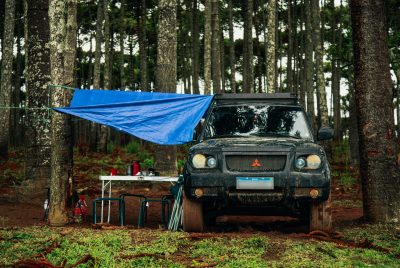
Truck camping lets you start simple: a sleeping pad in the bed, a tarp if it rains, and you’re off. Then you can level up later with a truck bed tent, camper shell, or a DIY sleeping platform.
It fits real life
Maybe you’re solo. Maybe you’re camping with your partner. Maybe you’ve got kids who treat bedtime like an Olympic event. Truck camping can flex for all of it—with the right basics.
Choose Your Truck Camping Setup (Bed Tent vs Topper vs Platform)
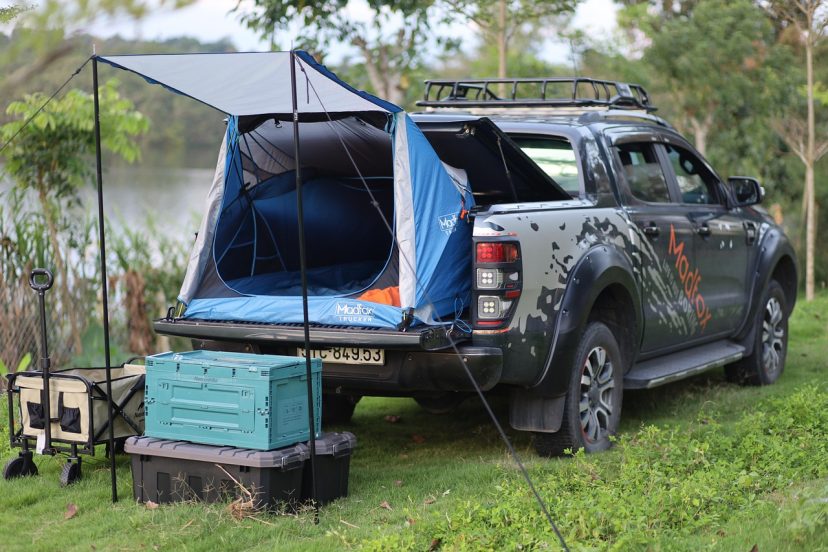
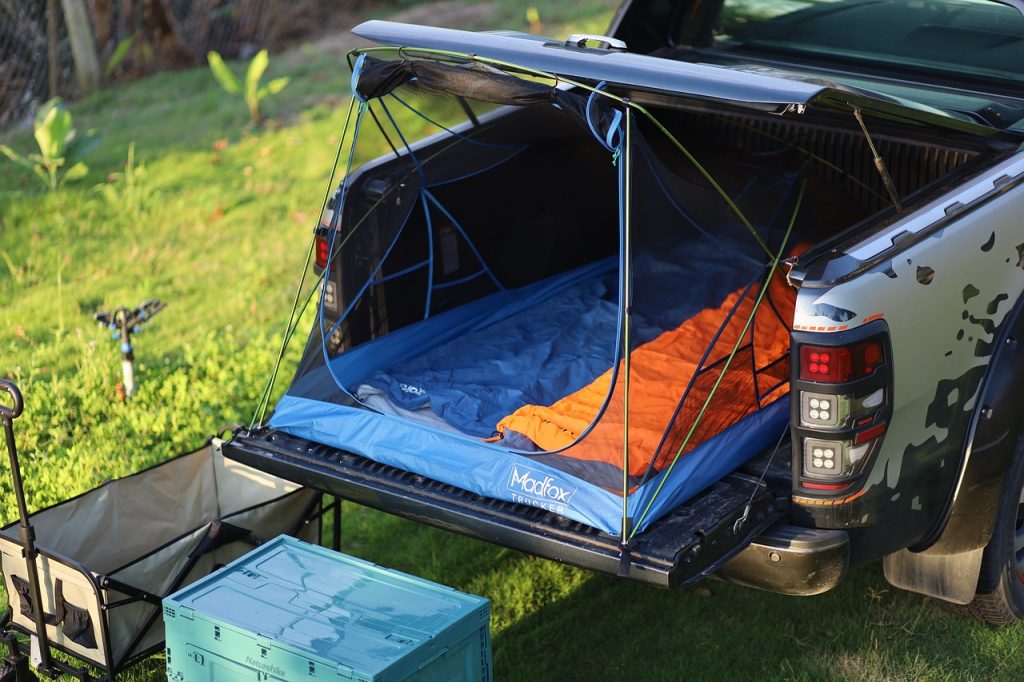
Option 1: Truck bed tent
A truck bed tent is great if you want quick shelter, bug protection, and a little “room” to sit up. It also keeps you off the ground, which feels oddly luxurious.
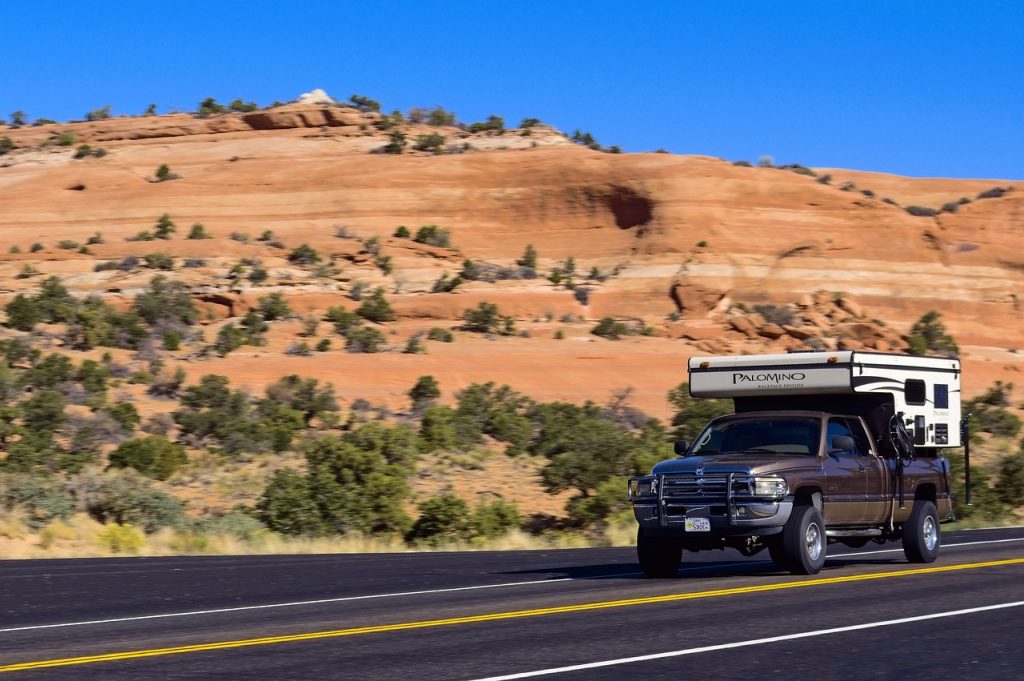
Option 2: Camper shell / topper setup
If you already have a shell, you’re winning. It’s stealthier, warmer in shoulder seasons, and easier to leave set up (especially if you build a simple bed platform).
Option 3: Minimalist “bed-only” camping
This is the “try it this weekend” option: tarp or tonneau cover + sleeping setup + good weather forecast. It’s perfect for beginners who want to test the vibe before buying anything.
Friendly rule: Start with the setup you can do this week, not the setup you can afford in six months.
Measure Your Truck Bed and Plan the Layout
The 3 measurements that save your sanity
Grab a tape measure and jot these down:
- Bed length (tailgate up and down—both matter)
- Bed width (between wheel wells is the real number)
- Bed height (if you’ll use a bed tent or shell)
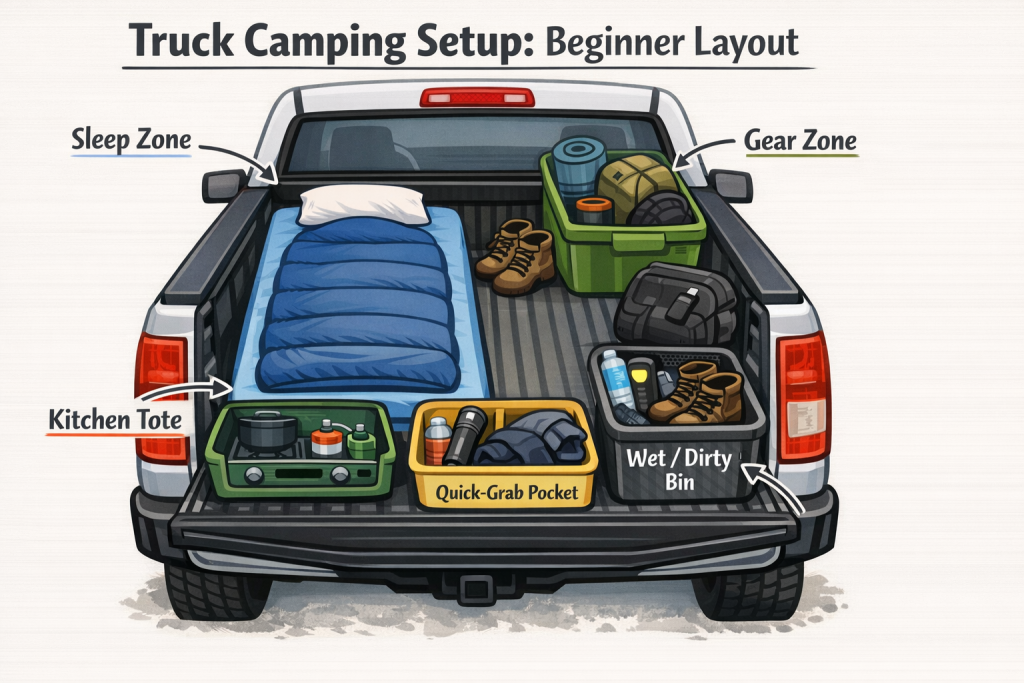
Think in “zones,” not piles
Picture your bed like a tiny studio apartment:
- Sleep zone (flat, comfy, nothing poking you)
- Gear zone (bins, shoes, kitchen tote)
- Quick-grab zone (headlamp, water, jacket)
You’re not packing more—you’re packing smarter.
A Sleep System That Actually Feels Like Sleep
Your goal: flat, insulated, and not squeaky
Truck beds have ridges, gaps, and weird pressure points. You’ll feel them at 2 a.m. if your sleep setup is thin.
Beginner-friendly sleep stack:
- A thicker pad or foam mattress (comfort)
- A warm sleeping bag or quilt (temperature)
- A small pillow you actually like (morale)
Don’t underestimate “pillow psychology”
A decent pillow makes your brain go, “Oh… we’re safe. We can sleep.”
A jacket stuffed in a hoodie makes your neck go, “We’re in danger.”
Ventilation and Condensation: Keep It Dry, Not Drippy
Condensation is normal—panic is optional
Warm breath + cool air + enclosed space = moisture. That’s why you wake up damp even when it didn’t rain.
Quick fixes that actually work
- Crack two openings (cross-ventilation beats one tiny gap)
- Keep wet gear outside the sleep area (or in a sealed tote)
- Use a small towel to wipe surfaces in the morning
If you’re using a topper, adding mesh window screens is a tiny upgrade that feels huge.
Weatherproofing for Rain, Wind, and Dust
Rain strategy: keep the “wet line” outside
Think of your setup like a mudroom. Decide where wet stuff goes before it’s wet:
- Shoes: outside or in a tray/bin
- Jacket: on a hook/line, not on your bedding
- Tarp: ready to deploy without unpacking everything
Wind strategy: lower profile wins
A truck is already a windbreak. Park so your bed opening isn’t facing the gusts, and keep loose items clipped or stored.
Dust strategy (overlanding folks know this pain)
If you’re doing overlanding or forest roads, dust gets everywhere. Keeping bedding inside a large bag during travel helps a lot.
Cold-Weather Truck Camping Without Risky Mistakes
Warmth is mostly about layers, not gadgets
Start with the boring stuff that works:
- Warmer sleep bag rating than you think you need
- Dry base layers + thick socks
- Insulated pad (cold comes from below first)
Safe heat matters more than “toasty”
Portable heaters can be dangerous in enclosed spaces if used incorrectly. The U.S. Consumer Product Safety Commission warns against using portable heaters or lanterns while sleeping in enclosed areas like tents and vehicles.
And the CDC notes more than 400 Americans die each year from unintentional carbon monoxide poisoning (not linked to fires), with 100,000+ emergency department visits (CDC, 2026).
If you want deeper guidance, check my tent heaters for camping safety guide (it covers what to look for, and what to avoid).
Your cold-night checklist (simple, safe)
- Ventilation (always)
- CO detector if you use any fuel-burning gear nearby
- Hot water bottle trick (in a sealed bottle, inside a sock)
- Eat something warm before bed (your body runs warmer)
Power and Lighting: Stay Charged, Stay Chill
Keep it simple: “small power, big comfort”
A little power goes a long way for truck camping:
- Phone charging
- Headlamps/lanterns
- Small fan (also helps condensation)
- Emergency backup
Lighting that won’t ruin your night vision
- Headlamp for hands-free tasks
- Soft lantern for inside the bed tent/shell
- A tiny “always know where it is” flashlight
Pro tip: Put your headlamp in the same pocket every trip. Your future self will thank you at 1 a.m.
Tailgate Kitchen: Simple Food, Happy Humans
The best beginner kitchen is basically a snack board
Keep meals easy on your first trip:
- Tortillas + deli meat/cheese + greens
- Instant oatmeal + nut butter
- Pre-cut veggies + hummus
- One-pan eggs if you’re cooking
A tiny system prevents big mess
Use two bins:
- Kitchen bin (stove, fuel, lighter, utensils)
- Food bin (dry goods, snacks, coffee)
Tailgate cooking feels way better when you’re not digging for a spoon like it’s buried treasure.
Water, Hygiene, and “Bathroom Reality”
Hydration without chaos
Bring at least:
- A large water jug for refills
- A smaller bottle for the cab/quick sips
Hygiene that fits truck life
- Baby wipes (they’re basically camping magic)
- Small towel + biodegradable soap (if allowed)
- Toothbrush kit you don’t have to “re-pack”
Bathroom plan = peace of mind
Know what you’ll do before you’re half-asleep:
- Campground bathrooms
- A wag bag system (if needed)
- A “just-in-case” bottle/container for emergencies (not glamorous, but real)
No shame. Just planning.
Where to Park: Campgrounds, Dispersed Camping, and Stealth Etiquette
Campgrounds: easiest for beginners
Bathrooms, flat sites, and fewer unknowns. Great first-trip training wheels.
Dispersed camping: more freedom, more responsibility
If you go dispersed camping, follow Leave No Trace—especially “camp on durable surfaces” and “dispose of waste properly.”
Stealth camping: keep it respectful (and legal)
Stealth truck camping isn’t “park anywhere.” It’s:
- Legal parking
- Quiet arrival and early exit
- No trash, no noise, no setting up chairs like it’s your driveway
Think “invisible guest,” not “main character.”
Truck Camping Gear You’ll Reuse for Years (Amazon Picks)
Note: Product availability and ratings change—double-check current reviews, sizing, and compatibility with your truck bed.
1) Rightline Gear Truck Bed Tent
What it is: A floorless-style truck tent that sets up in your bed so you’re off the ground and protected from bugs.
Features:
- Floorless design (you can keep some gear in the bed)
- Rainfly + vents
- Made for quick setup
Best for: Beginners who want a true “truck bed tent” experience without building anything.
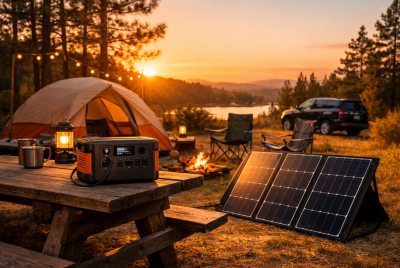
2) Jackery Explorer 500 Portable Power Station (518Wh)
What it is: A portable power station for charging phones, lights, and small devices.\Features:
- Multiple outlets/ports for charging
- Grab-and-go handle
- Useful for emergencies beyond camping
Best for: Anyone who wants comfortable truck camping without worrying about dead batteries.
3) Coleman Triton+ 2-Burner Propane Camping Stove
What it is: A straightforward two-burner stove that makes real meals possible.
Features:
- Two adjustable burners
- Wind guards help in breezy camps
- Push-button ignition (less lighter drama)
Best for: Tailgate cooking, couples, or families who want simple hot food fast.
4) Milliard Tri-Fold Mattress (Cot Size, 6-inch)
What it is: A thick tri-fold mattress that can smooth out a truck bed and feel genuinely comfortable.
Features:
- Tri-fold for easy storage
- Thick foam for pressure relief
- Washable cover
Best for: People who care about sleep (so… everyone after age 22).
5) Coleman 316 Series 52-Quart Cooler
What it is: A hard cooler for keeping food and drinks cold on weekend trips.
Features:
- Big capacity for multi-day trips
- Durable lid (often doubles as a seat)
- Designed for outdoor use
Best for: Food-first campers, group trips, and anyone who wants cold drinks without constant ice runs.
Research-Backed Benefits and Safety Notes
Truck camping can help reset your sleep rhythm (seriously)
Ever notice how you get sleepy earlier when you’ve been outside all day? There’s real science behind that. A well-known camping circadian rhythm study (2013) found that spending time outdoors with natural light-dark cycles can shift your internal body clock earlier.
In plain words: a weekend of truck camping can help your sleep timing feel more “normal” again—especially if your weeknights are full of screens and late bedtimes.
Safety reminder: carbon monoxide is the silent risk
Cold nights can tempt people to use heat sources the wrong way, and that’s where danger sneaks in. The CDC shares important guidance in carbon monoxide safety basics (CDC, 2026), including the reminder that CO is odorless and can build up fast in enclosed or poorly ventilated spaces.
Practical takeaway for truck camping:
- Don’t run fuel-burning devices in enclosed spaces
- Ventilate
- Consider a CO alarm if you’re anywhere near heaters/generators
Truck Camping FAQs
What is the easiest truck camping setup for beginners?
Start with a simple sleep system in the truck bed: a thick pad or foam mattress, a warm sleeping bag, and a basic tarp or tonneau cover if needed. Keep your first trip “easy mode.”
Do I need a truck bed tent for truck camping?
Nope. A truck bed tent adds comfort and bug protection, but you can try truck camping with just bedding and a weather-aware plan. Many people upgrade after a few trips.
How do I stop condensation when sleeping in my truck bed?
Ventilation is your best friend. Crack two openings for airflow, keep wet gear away from bedding, and wipe down moisture in the morning. A small fan can help a lot too.
Is truck camping safe in cold weather?
It can be, if you focus on insulation, dry layers, and safe ventilation. Avoid using heaters while sleeping in enclosed spaces, and follow trusted safety guidance (CDC, 2026).
Where can I legally park overnight for truck camping?
Campgrounds are the simplest. For dispersed camping, follow local rules and Leave No Trace. For stealth camping, only use legal parking areas and keep your setup minimal and respectful.
Wrap-Up: Your First Trip Can Be Simple
If you take nothing else from this: truck camping is supposed to feel light and freeing. Start with one solid night of sleep, a simple meal, and a safe place to park. That’s a win.
Then, as you get more comfortable, you can add the “nice-to-haves”—a truck bed tent, better power, a tighter kitchen system, whatever fits your style.
Pick a date, pick a place, and make your first trip small on purpose. You don’t need perfect. You just need to go.