5 Portable Mosquito Repellers for Peaceful Evenings
We may earn a commission for purchases made using our links. Please see our disclosure to learn more.
You know that moment. The sky turns pink, dinner’s finally done, everyone’s settling into “ahhh” mode… and then the whining starts. Not from the kids. From the mosquitoes.
If you’ve ever tried to enjoy a porch chat, a campsite marshmallow session, or a quiet balcony tea—while doing a full-body slap-dance—this is for you.
Today we’re talking Portable Mosquito Repellers in a real, practical way. Not “buy this and you’ll never be bitten again” fantasy. More like: here’s what actually helps, how to choose it, and how to set it up so your evening feels peaceful again.
Affiliate note: This post may contain affiliate links, which means I may earn a small commission at no extra cost to you.
Why mosquitoes feel extra rude at the worst times
Mosquitoes don’t show up when you’re power-walking to the grocery store. They show up when you’re finally resting.
They’re basically the universe’s tiniest hecklers.
But the bigger issue isn’t just annoyance. For a lot of people—especially travelers, families, and campers—mosquito bites can mean lost sleep, swollen reactions, and stress you didn’t invite.
If you’re reading this, you probably want one simple thing: calm outdoor time without becoming a snack.
What “Portable Mosquito Repellers” really means (so you don’t buy the wrong thing)
“Portable” can mean a few different things, and the label gets messy fast.
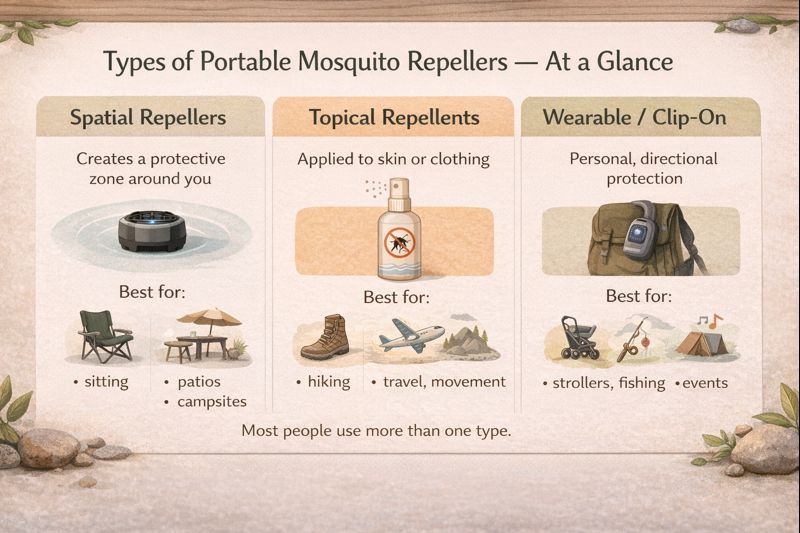
In real life, Portable Mosquito Repellers usually fall into these buckets:
- Spatial repellers (create a bite-reduced “bubble” around you)
- Topical repellents (go on your skin—sprays, lotions)
- Wearable help (like clip-on fan units—hit or miss, but sometimes handy)
The best choice depends on whether you want:
- protection for one person, or a small group
- something for moving (hiking, fishing) or sitting (camp chair life)
The “why me?” mosquito science in plain English
Mosquitoes don’t bite you because you’re sweet (emotionally, yes—chemically, no).
They find people using a mix of:
- carbon dioxide (your breath—yep, rude)
- body heat
- skin scent (sweat, bacteria, soaps, perfumes)
- dark clothing and movement (they’re visual little gremlins too)
So if you feel like you’re always the favorite… you’re not imagining it.
The 3-layer approach that actually works
Here’s the easiest way to think about mosquito defense:
- Reduce attraction (skip heavy fragrance, manage sweat if you can)
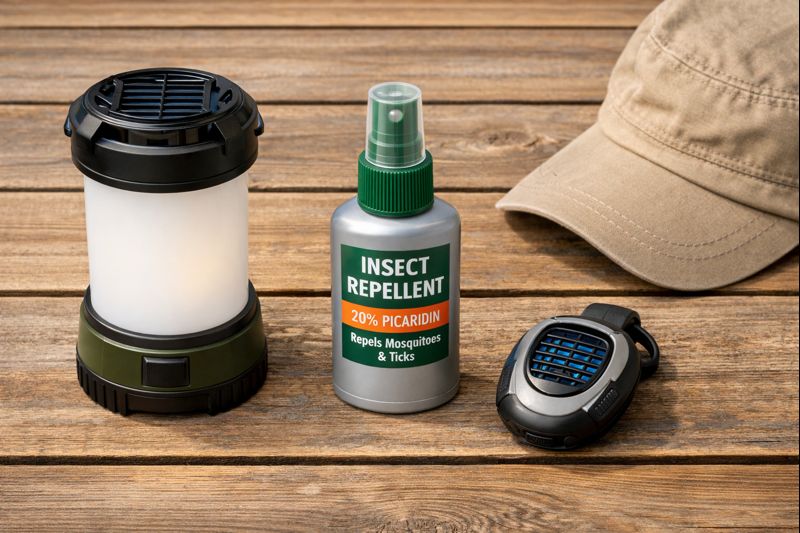
- Repel (portable devices or skin-applied repellent)
- Block (clothing, nets, screens)
A Portable Mosquito Repeller works best when it’s part of a team, not a lonely hero.
Types of portable mosquito repellers and when to use each
Spatial repellers (the “bubble” approach)
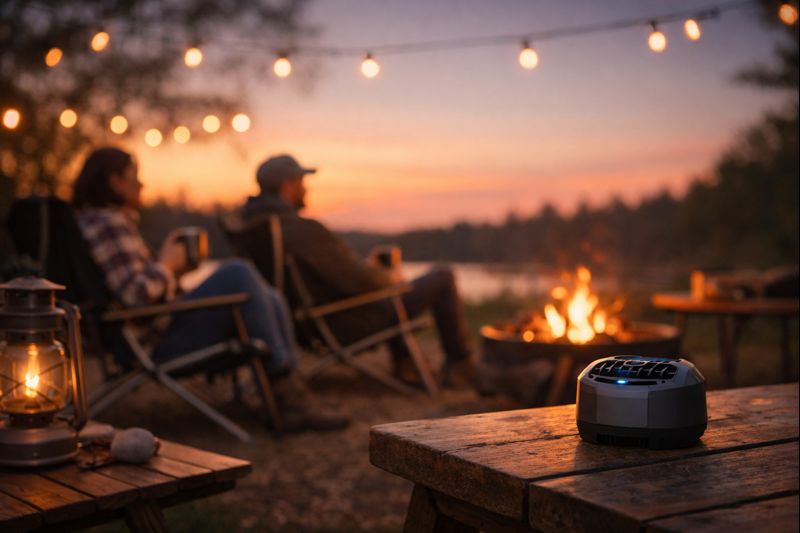
These sit near you and release repellent into the air to reduce bites in a small zone.
Best for: patios, campsites, picnics, outdoor dinners
Not ideal for: windy conditions or walking nonstop
Topical repellents (the “wear it” approach)
Sprays or lotions (often with picaridin or DEET) that protect wherever they’re applied.
Best for: travel, hikes, humid evenings, “I’m moving around” days
Not ideal for: people who hate the feeling/smell (though picaridin is usually nicer)
Clip-on fan units (the “personal air shield” vibe)
These blow repellent from a cartridge toward you.
Best for: stroller walks, fishing, events
Not ideal for: big groups or strong wind
What doesn’t work (or works way less than you want)
Let’s save you a regret-purchase.
- Ultrasonic mosquito repellers: the science support is weak, and real-world results are often disappointing.
- Random “all-natural” stickers/bracelets: some smell nice. That’s… about it.
- One device for an entire backyard: unless it’s a larger system, that’s usually wishful thinking.
If a product promises “100% protection everywhere,” side-eye it lovingly and back away.
How to choose the right repeller for your lifestyle
Ask yourself these three questions:
- Am I mostly sitting or moving?
Sitting = spatial repeller. Moving = topical repellent. - How many people need coverage?
One person can do fine with spray or a personal device. A group needs a zone. - What’s my tolerance level?
- Hate scents/feel? Try picaridin (often lighter).
- Hate applying anything? Try a spatial repeller.
And if you’re thinking, “Okay but I want easy,” you’re not alone. Easy is the whole point.
Setting up a spatial repeller so it actually helps
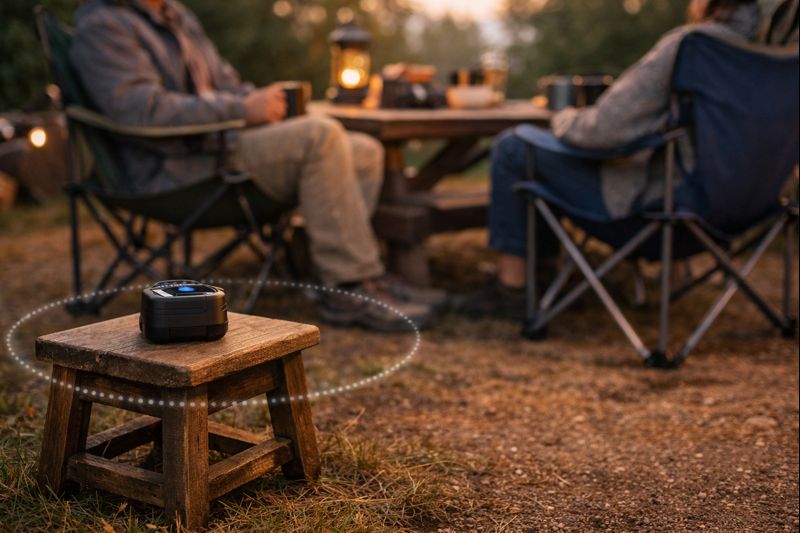
Spatial repellers aren’t magic. Placement matters.
Quick setup tips:
- Put it near where your legs/feet are (mosquitoes love ankles)
- Give it 10–15 minutes to build a protective zone
- Avoid placing it where wind will blow it away instantly
- If you’re in a bigger area, consider two units (one at each end)
Think of it like a tiny “nope cloud.” You want the cloud near you, not drifting into the woods.
Safety notes (kids, pets, and sensitive skin)
If you’re protecting:
- Babies/toddlers: blocking (nets, clothing) + careful repellent choice matters
- Sensitive skin folks: patch test topical products, and consider picaridin
- Pets: avoid letting pets chew devices/mats; some ingredients are not pet-friendly if ingested
Also: if you’re traveling somewhere with mosquito-borne disease risk, lean toward evidence-based repellents and coverage (more on research below).
The comfort factor nobody talks about: warmth + fewer bites = better nights
A repeller helps… but comfort finishes the job.
Because once you stop swatting, you notice the chill. Or the damp air. Or how your “camp chair posture” is slowly turning into a pretzel.
If you’re building a calmer campsite setup, pair your repeller with cozy layers—especially for those long sit-and-talk nights. I like this guide on camping blankets that actually feel cozy (not crunchy) for ideas that make evenings warmer and more relaxing.
🔹 5 portable picks with clear use cases
Below are five Portable Mosquito Repellers (and repellent options) with strong buyer intent—useful for camping, patios, travel, and everyday outdoor life.
1) Thermacell Mosquito Portable Repeller (MR450 line)
Why it’s popular: It’s the classic “set it near you and relax” option for a small bite-reduced zone.
Standout features:
- Creates a localized protection zone (often marketed around ~15 ft)
- Compact and outdoor-friendly
- Great for seated activities (camp chairs, decks, fishing spots)
Best for: campers, porch sitters, lake days, anyone who hates spraying their skin
2) Thermacell Patio Shield Mosquito Repeller (lantern-style)
Why it’s popular: A more “set it and forget it” vibe—great when you’re mostly staying put.
Standout features:
- Stationary coverage for patios/picnic tables/campsites
- Simple operation (more comfort, less fuss)
- Nice for group hangs where everyone stays near the center
Best for: backyard dinners, car camping, outdoor game nights
3) Thermacell Mosquito Portable Repeller (Includes 12-Hour Refill)
Why it’s popular: A straightforward kit-style buy—good “starter” option when you want the whole setup in one package.
Standout features:
- Starter-friendly bundle approach
- Easy to pack with your cooking gear or camp bin
- Handy for short trips and weekend hangs
Best for: first-time buyers who want a simple, grab-and-go kit
4) Ranger Ready Repellents Picaridin Insect Repellent Spray (Scent Zero)
Why it’s popular: Picaridin is widely used as a DEET alternative, and this one is built for people who want strong protection without the “bug spray perfume.”
Standout features:
- 20% picaridin
- Fine mist application
- Designed for longer wear time (useful when you’re moving)
Best for: hikers, travelers, sweaty summer walks, “mosquitoes love me” people
5) Repel Tick Defense Aerosol (easy coverage for clothes + exposed skin)
Why it’s popular: Sometimes you want fast, broad coverage—especially for trips where you’re in brushy areas or moving through bugs nonstop.
Standout features:
- Aerosol application (quick coverage)
- Useful for group trips where multiple people need a passable option
- Good “backup” item in your car/camp kit
Best for: camping weekends, lake houses, outdoor events, emergency restock
🧪 Research-backed: what credible sources say about repellents
If you like knowing there’s real evidence behind your choices (same), here are two solid references—one on topical repellents, one on spatial repellents.
DEET vs picaridin (topical repellents)
A travel-medicine review looked at lab and field tests comparing DEET and picaridin for mosquito-bite protection duration. It focuses on whether picaridin’s protection time is similar to (or better than) DEET at comparable concentrations.
Spatial repellents (creating a protective “zone”)
An expert review covers spatial repellents (the “bubble” approach), including active ingredients like transfluthrin and how different formats perform against common mosquito species. It also discusses practical considerations like resistance and real-world deployment.
Quick public-health grounding (why this matters)
Mosquito-borne diseases remain a major global health issue, with hundreds of thousands of deaths linked to vector-borne diseases each year.
For basic bite-prevention guidance (especially for travel and higher-risk areas), the CDC emphasizes protective clothing, repellents, and reducing exposure.
A simple packing checklist for mosquito season (so you don’t overthink it)
Here’s the low-stress kit:
- Portable Mosquito Repeller (device or spray—choose your style)
- Backup refill/cartridge (future-you will be grateful)
- Light layers (long sleeves + socks = underrated protection)
- After-bite relief (itch stick, hydrocortisone, or your go-to)
- Small fan (even a little breeze helps)
- A “sit zone” plan (chairs + repeller placement before sunset)
FAQs: Portable mosquito repellers (quick answers)
Do portable mosquito repellers work in windy conditions?
They can still help, but wind weakens the “protective zone.” If it’s breezy, use a topical repellent too, and place the device as close to your seating area as safely possible.
Which is better for camping: a spatial repeller or bug spray?
For car camping and sitting around camp, spatial repellents feel amazing. For hiking, cooking, and moving around, bug spray (especially picaridin or DEET) usually wins. Many people use both.
Are portable mosquito repellers safe around kids?
That really comes down to the repeller type and the ingredients used. For little kids, prioritize physical barriers (nets, clothing) and choose age-appropriate repellents. Keep devices/mats out of reach and follow label instructions.
Do ultrasonic mosquito repellers actually repel mosquitoes?
In real-world use, results are often poor. If you want reliable protection, go with evidence-backed options like topical repellents (picaridin/DEET) or proven spatial repellents.
How long does a portable mosquito repeller take to start working?
Many zone-style devices need a short warm-up—often around 10–15 minutes—to build a helpful bubble. Start it before you sit down with dinner.
Conclusion: your evenings can be yours again
Here’s the honest truth: mosquitoes might always exist… but they don’t have to run your night.
If you take one thing from this, let it be this: choose Portable Mosquito Repellers based on how you actually live—moving vs sitting, solo vs group, quick trips vs long hangs. Then stack your protection (repel + block + smart setup), and suddenly the outdoors feels fun again.
So go ahead—light the camp stove, pull out the chairs, wrap up in something cozy, and let your evening be peaceful for once.