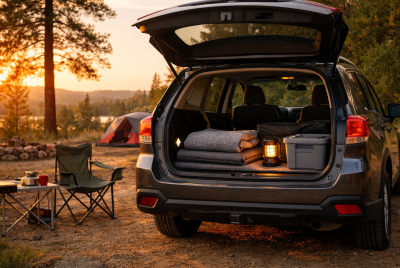
5 Hammock Accessories That Elevate Comfort & Privacy

We may earn a commission for purchases made using our links. Please see our disclosure to learn more.
You know that blissful “ahhh” when you finally sink into your hammock? Now imagine it warmer, drier, quieter, and way more private. That’s the magic of dialing in your hammock accessories. In this friendly guide, we’ll walk through the gear that actually changes your experience—so you sleep better, stay cozier, and feel tucked away even in a busy campground. We’ll cover the essentials, share practical tips, and help you choose what’s worth carrying for your style of lounging or camping.
Heads-up: I reference real products below. If you use affiliate links on your site, add your standard disclosure.
Why hammock accessories matter (comfort + control)
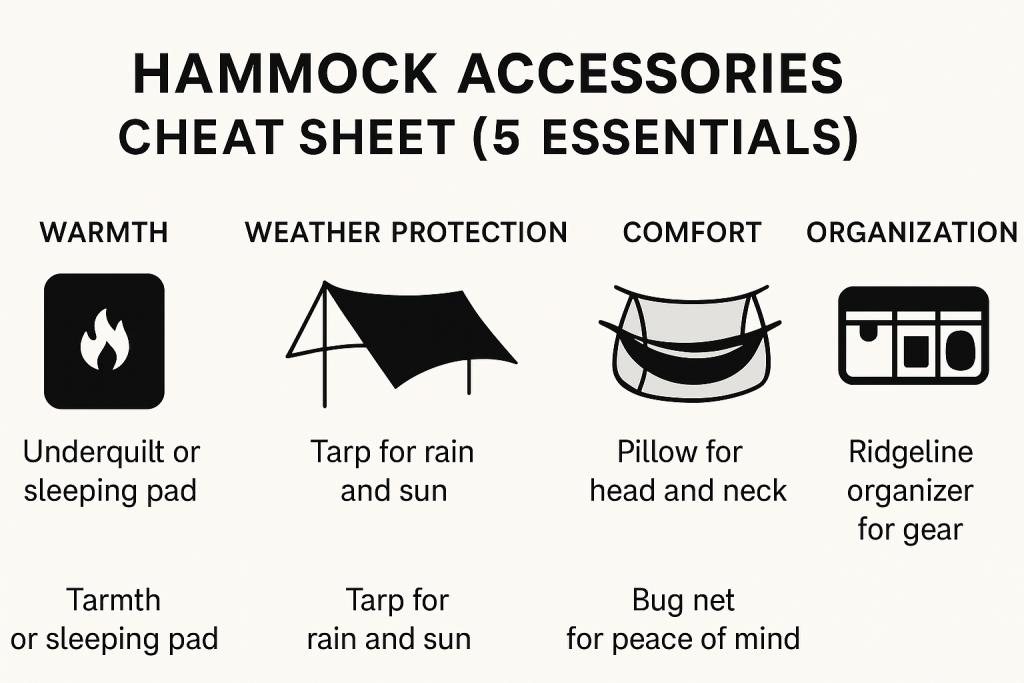
Hammocks are wonderfully simple—but the right add-ons fix the usual pain points: cold backs, surprise rain, bugs, saggy hangs, and gear chaos. Accessories give you control over warmth, weather, privacy, and organization—so your setup works in more places and seasons.
Tree-friendly suspension straps (your must-have)
Start here. Wide, tree-friendly straps protect bark and make setup fast on uneven distances. Look for:
- Width: 1″ (25 mm) or more spreads pressure.
- Multiple attachment points: Easy, knotless adjustments.
- Low stretch: Keeps your lay consistent overnight.
Pair straps with climbing-rated carabiners for reliability.
Adjustable ridgeline (the secret to the perfect “sag”)
An adjustable ridgeline sets consistent hammock “smile” and keeps your lay comfy no matter the tree spacing. Bonus: it’s a place to hang a gear loft or light. Aim for ~83% of hammock length as a starting point.
Bug nets (sanity savers in mosquito season)
No one wins against buzzing at 2 a.m. A full-coverage, 360° hammock bug net with fine mesh keeps out mosquitoes and no-see-ums, and it zips easily from inside. Combine with a light permethrin treatment on straps for extra peace of mind.
Rain tarps & privacy flys (your wall against weather… and neighbors)
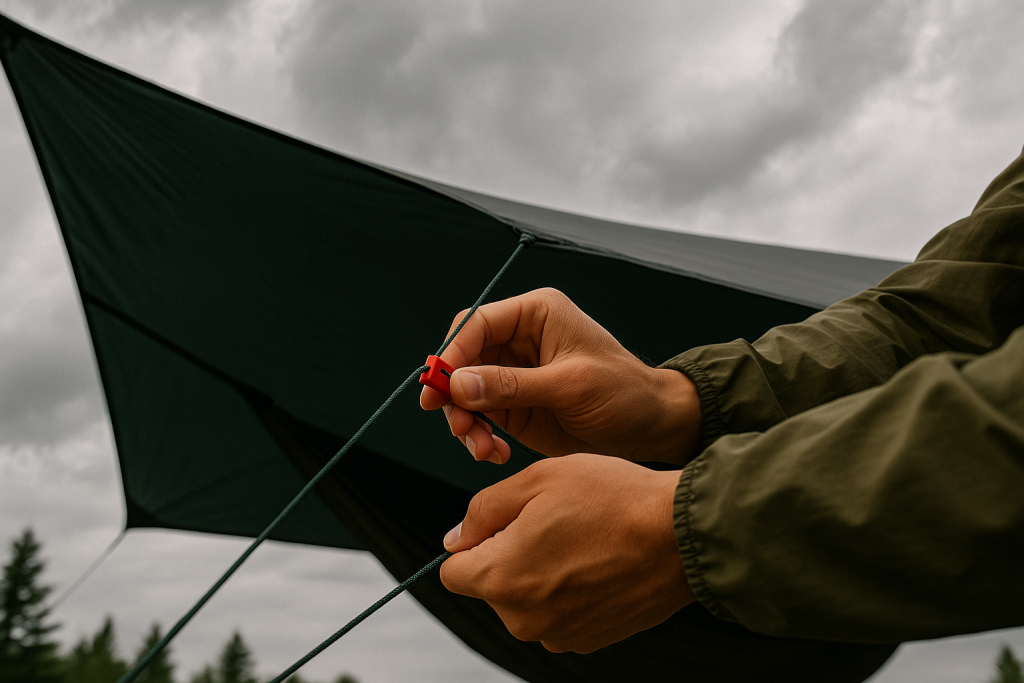
A good rain fly/tarp is your living room: it blocks wind and rain, adds shade, and—if you pitch it low—creates real privacy.
- Hex tarps: Great balance of coverage and weight.
- Doors/“winter” tarps: Add end flaps for storm protection and campsite privacy.
- Pitch tips: Aim one side low for wind, leave the other higher for airflow.
Underquilts (warmth without the fuss)
Cold butt syndrome is real because compressed insulation under you doesn’t trap heat. A hammock underquilt hangs under the hammock so it can loft fully and keep your backside warm. Look for: temperature rating, suspension adjusters at head/foot, and draft collars for windy nights. REI’s expert advice agrees: underquilts beat pads for dedicated hammock camping warmth.
Sleeping pads for hammocks (a versatile backup)
If you already own a pad, use it. Hammock-shaped pads with side “wings” help keep the pad from squirting out from under you and insulate your shoulders—handy for shoulder seasons or ground camping if trees are scarce.
Top covers & winter socks (quiet, cozy bubble)
A breathable top cover or “winter sock” slides over your hammock and bug net, cutting drafts and adding a few degrees of warmth—like a windbreaker for your sleep system. Vent it slightly to prevent condensation.
Gear organization (ridgeline organizers & pockets)
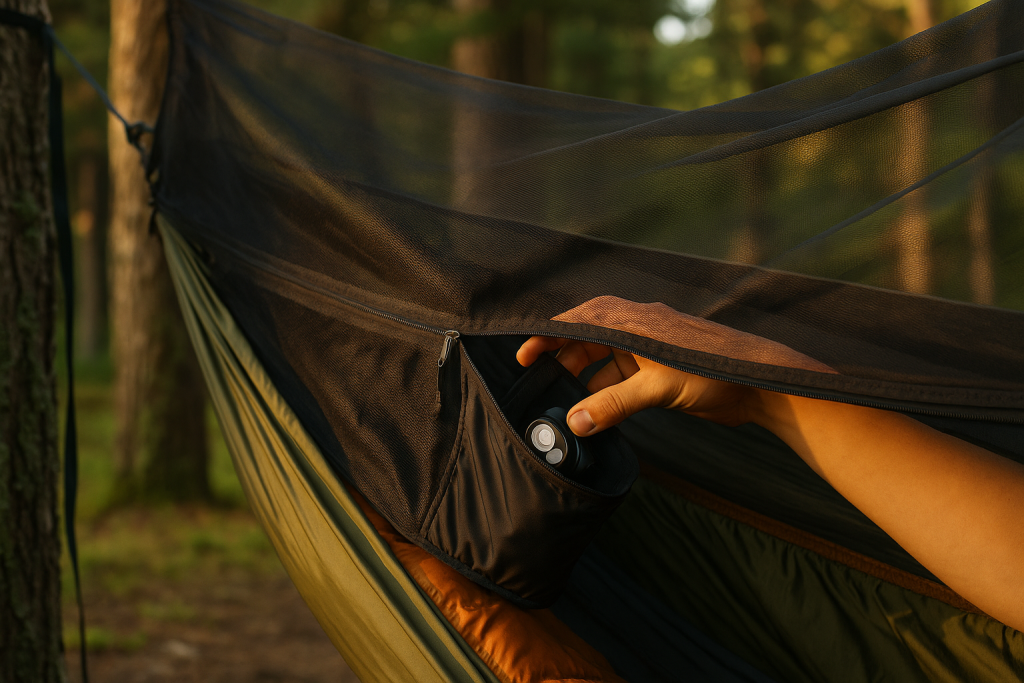
A small organizer on your ridgeline = no more headlamp disappearing into the quilt abyss. Ridgeline pockets, peak bags, and mini-carabiners keep essentials where your sleepy hands can actually find them.
Lighting & safety (soft glows > harsh beams)
A tiny LED lantern on the ridgeline or string lights under the tarp give calm, diffuse light. Keep a headlamp nearby for trips out. Reflective guylines make midnight exits less… athletic.
Comfort extras (pillows, sit pads, and micro-blankets)
- Inflatable pillow or a stuffed jacket behind the neck.
- Sit pad under your calves to fine-tune lay angle.
- Micro-blanket around shoulders for instant cozy.
Tiny upgrades, big comfort.
Quick setup helpers (whoopie slings, carabiners, line locks)
Speed matters in rain or at dusk. Whoopie slings (adjustable rope), line locks on guy lines, and a couple of spare carabiners make dialing tarp tension and hammock height almost thoughtless.
Packability & storage (dry bags and compression)
A lightweight dry bag keeps quilts and clothing happy in wet climates. Compression sacks save pack volume—but don’t over-compress down for long periods.
Leave No Trace & tree care (be the good camper)
Use wide straps, avoid fragile trees, and remove microtrash (cut line ends, plastic tags). Bonus karma: offer a spare strap to a neighbor using cord on bark.
🔹 Amazon product picks: 5 hammock accessories that deliver
Below are five real, well-reviewed items many hangers love. (Names only—link them with your own affiliate settings.)
1) Kammok Python 10′ Tree-Friendly Hammock Straps
What it is: Super-adjustable, knotless straps with tons of connection points and low stretch.
Features: 10 ft per strap; multiple loops; tree-friendly design.
Pros: Fast setup, durable, lifetime warranty from Kammok on soft-goods.
Cons: Heavier than ultralight Dyneema options.
Best for: Beginners to seasoned campers who want foolproof, tree-safe suspension.
Review snapshot: Praised for easy adjustments and rock-solid hold; occasional notes on bulk vs. minimalist lines.
2) ENO ProFly Rain Tarp
What it is: Popular hex tarp for weather protection without a weight penalty.
Features: Polyurethane-treated ripstop; six guy points.
Pros: Reliable coverage, simple pitch, 2-year ENO warranty.
Cons: Not as expansive as winter tarps with doors.
Best for: 3-season trips where you want quick privacy and dependable rain protection.
Review snapshot: Loved for durable fabric and easy setup; some wish for integrated doors in stormy climates.
3) Wise Owl Outfitters SnugNet Hammock Bug Net
What it is: 360° bug net that fits most hammocks.
Features: Superfine mesh; long ridgeline; zip entry.
Pros: Good value; universal fit; breathable.
Cons: Warranty terms vary by retailer; often framed as a satisfaction guarantee.
Best for: Anyone heading into mosquito country who wants full coverage on a budget.
Review snapshot: Applauded for keeping no-see-ums out; a few mention zipper care and packing bulk.
4) Klymit Hammock V Sleeping Pad (Insulated)
What it is: Hammock-shaped inflatable pad with side rails/wings.
Features: Klymalite insulation; non-slip zones; hammock-friendly shape.
Pros: Versatile—works in a hammock and on the ground; Limited Lifetime Guarantee on pads.
Cons: Pads can shift; underquilts feel comfier for dedicated hangers.
Best for: New hammock campers or anyone who switches between tent and trees.
Review snapshot: Appreciated for warmth/shape; occasional comments about mastering inflation and position.
5) OneTigris Night Protector Ultralight Hammock Underquilt (3–4 Season)
What it is: Full-length synthetic underquilt that blocks wind and traps warmth.
Features: ~28 oz; shaped for hammocks; adjustable suspension.
Pros: Solid warmth-to-price; straightforward setup.
Cons: 1-year warranty from the brand; packs larger than premium down quilts.
Best for: Budget-friendly insulation for cool nights and shoulder seasons.
Review snapshot: Consistently praised for warmth and value; bulk noted by some.
Quick comparison table
| Model | Key Spec(s) | Warranty | Approx Price/Tier | Best For |
| Kammok Python 10′ Straps | 10 ft straps, multi-loops, tree-friendly | Lifetime (soft goods) | Mid | Fast, knotless setup & tree care |
| ENO ProFly Rain Tarp | PU-treated ripstop, 6 guy points | 2 years | Mid | Reliable rain & privacy fly |
| Wise Owl SnugNet Bug Net | 360° fine mesh, zipper entry | Varies (often satisfaction style) | Budget | Full bug protection on a budget |
| Klymit Hammock V Pad | Insulated, hammock-shaped, non-slip | Limited Lifetime (pads) | Mid | Versatility: hammock or ground |
| OneTigris Night Protector UQ | Full-length synthetic quilt | 1 year | Budget | Warmth & wind block for cool nights |
Research-backed comfort: why this gear helps you sleep
- Gentle rocking can help you doze faster and sleep deeper. Controlled studies show rhythmic rocking shortened sleep onset and increased deep non-REM sleep in adults—exactly the kind of motion a well-hung hammock delivers. See findings summarized by Science News and in peer-reviewed work in Frontiers in Neuroscience.
- Staying warm and stable preserves sleep architecture. Expert guidance notes that underquilts keep insulation lofted under you—reducing cold stress that can fragment sleep. (REI Expert Advice explains why underquilts outperform compressed pads beneath a hammock.)
Want a cozier morning too? Keep your rhythms steady and get natural light early—helpful for circadian consistency and better rest, according to sleep and light-exposure research.
Choose your kit by season (simple framework)
- Summer: straps, bug net, airy tarp pitched high, ultralight blanket.
- Shoulder season: add underquilt or insulated pad, tarp pitched lower.
- Cold/windy: beefier tarp with doors, full-length underquilt, top cover/winter sock, warm hat and dry sleep socks.
- Wet climates: fast-deploy tarp, extra guy lines, dedicated dry bag for quilts.
A weekend checklist you can trust
- Tree-friendly straps + carabiners
- Adjustable ridgeline + organizer pocket
- Bug net (if needed)
- Tarp with guylines + stakes
- Underquilt or hammock-shaped pad
- Pillow, sit pad, headlamp, small repair kit (tape + spare line)
- Dry bag for sleep system
- Snack plan—try these smart camping food ideas to keep energy up between naps and star-gazing.
Your top questions—answered
How do I stop getting cold in a hammock?
Insulate the bottom of your setup. An underquilt is the most hammock-specific solution; a hammock-shaped pad also works (and doubles for ground use). Pitch your tarp lower on windy nights.
What size tarp should I get for privacy?
A hex tarp sized to extend ~6–12 inches past each end of your hammock works well; add doors (or a winter tarp) for storm coverage and real campsite privacy.
Do I still need an extra bug net when my hammock already has one attached?
If yours is integrated and in good shape, you’re set. If not, a 360° add-on bug net gives flexible coverage and can be removed in bug-free seasons.
Are straps better than ropes?
Yes—for the tree and for you. Wide straps protect bark, and multiple loops make adjustment easy without knots.
What’s the fastest upgrade if I can only buy one thing?
Straps if you’re brand new. If you’re already hanging comfortably, the tarp (privacy/weather) or underquilt (warmth) delivers the biggest night-and-day change.
Final take
Hammocks feel magical on their own—but the right accessories make them reliable. Start with tree-friendly straps and a good tarp. Add a bug net and underquilt as your trips get longer or colder. Keep a tidy ridgeline and a soft light, and you’ll build a cozy, private little cocoon you can hang almost anywhere.
If this helped, save it for your next trip—and share it with a friend who still thinks hammock camping is only for summer. You’ll prove them wrong at the next campfire nap. Happy hanging!