Top-Rated Camping Blankets for Cozy Nights Outside
We may earn a commission for purchases made using our links. Please see our disclosure to learn more.
Let’s be honest: few things ruin a camping trip faster than spending the night shivering in your sleeping bag, counting the hours till sunrise instead of stars.
That’s where camping blankets quietly become the real MVPs of your gear. They’re the cozy layer between “this is magical” and “why did I think sleeping outside was a good idea?”
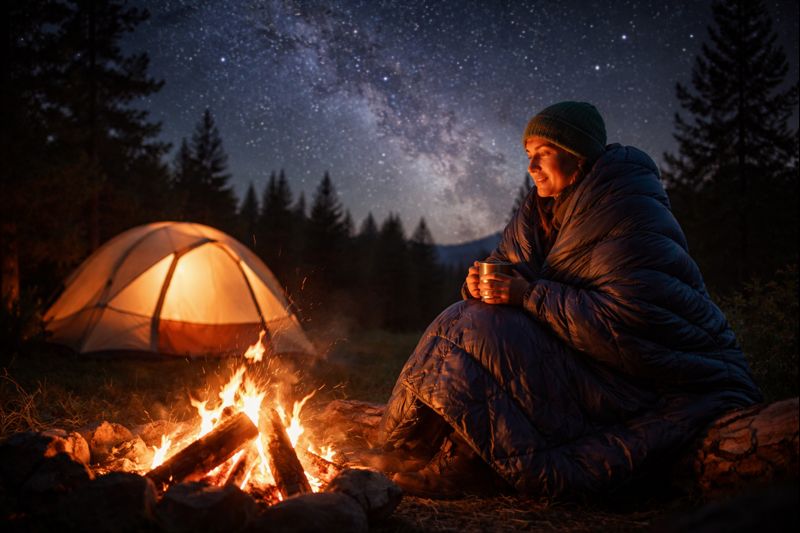
Grab a warm drink, imagine a crackling campfire, and let’s build your perfect cozy camp setup.
Why Camping Blankets Matter More Than You Think
A lot of people treat camping blankets like an “extra”—nice to have, but not essential.
In reality, they’re a temperature control tool.
- They fill gaps where your sleeping bag struggles (like drafts or cold shoulders).
- They adapt to changing temps (wrap around you at the fire, layer on top, or use as a picnic/outdoor blanket).
- They’re perfect for people who feel restricted in sleeping bags and prefer a “camp quilt” vibe instead.
Think of your camping blanket as your outdoor comfort dial. Dial it in right, and your whole camp experience feels calmer, cozier, and way more fun.
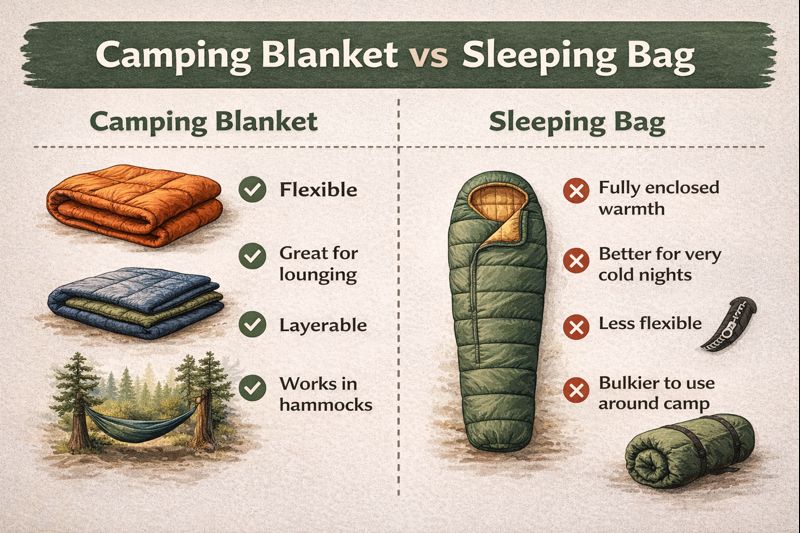
Camping Blankets vs Sleeping Bags: Do You Need Both?
Quick answer: usually yes, but they do different jobs.
- Sleeping bag = primary insulated cocoon, shaped to trap heat efficiently.
- Camping blanket = flexible, modular layer you can use in camp, in the car, in a hammock, or over your bag.
You might lean more on blankets if:
- You’re a side sleeper who feels trapped in mummy bags.
- You love van life, car camping, or glamping, where you’re not weight-obsessed.
- You camp in mild to cool weather, where a camping quilt + pad combo is enough.
Use both in colder conditions: think bag + insulated camping blanket layered on top for extra warmth.
Key Features to Look For in Camping Blankets
When you’re comparing camping blankets, think beyond “does it look cozy?” and focus on:
- Insulation type (down, synthetic, wool, fleece)
- Temperature suitability (roughly matched to your coldest expected nights)
- Water resistance (shell fabric + treatment)
- Size & coverage (can it wrap fully around you?)
- Packability & weight (critical for backpacking blankets)
- Durability (ripstop outer fabric, stitching quality, edge binding)
- Versatility (snaps, poncho option, hammock-friendly, stadium use)
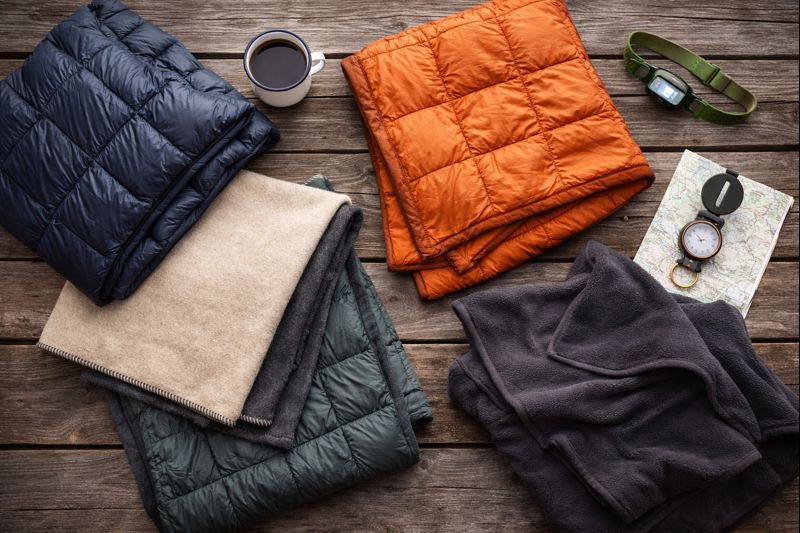
Insulation Types: Down, Synthetic, Wool & Fleece
Your camping blanket’s “personality” is mostly defined by its insulation.
Down Camping Blankets
- Pros: Super warm for the weight, compresses very small, great for backpacking.
- Cons: Loses warmth when wet, usually more expensive, needs more care.
Outdoor experts note that down offers superior warmth-to-weight but performs poorly when soaked, whereas synthetic insulation keeps more of its warmth when damp.
Synthetic Camping Blankets
- Pros: Handles moisture better, dries faster, generally cheaper, great for damp climates.
- Cons: Slightly bulkier and heavier than down for the same warmth.
Wool Camping Blankets
- Pros: Naturally warm, insulates even when damp, fire-resistant, durable, classic feel.
- Cons: Heavier and bulkier; more for car camping, basecamps, and cabins than ultralight missions.
Fleece & Hybrid Blankets
- Cozy, soft, affordable, and great as extra layers. Often used as a mid-layer blanket inside a tent, over a sleeping pad, or around camp.
Ask yourself: Will I be in cold and damp conditions, or mostly dry chill?
- Cold + damp? Lean synthetic or wool.
- Cold but dry? Down can shine.
Matching Camping Blankets to Weather & Temperature
Most camping blankets don’t have strict temperature ratings like sleeping bags, but you can make smart choices by:
- Checking brand guidelines (often they suggest comfort ranges).
- Looking at fill power (down) and gsm / fill weight (synthetic/wool).
- Considering how cold you personally run (cold sleepers need more insulation).
As a rough idea:
- Mild nights (55–65°F / 13–18°C): Lightweight puffy blanket or fleece.
- Cool nights (40–55°F / 4–13°C): Insulated camping blanket + base layers.
- Cold nights (under 40°F / 4°C): Layer a camping blanket over a proper sleeping bag.
And always remember: it’s easier to vent heat than to magically create warmth you didn’t pack.
Size, Weight & Packability: What Actually Matters
You don’t need to memorize specs, but watch for:
- Dimensions: Can you wrap it like a shawl? Does it cover from shoulders to feet?
- Weight:
- Under ~1.5 lb = great for backpacking or minimalist travel.
- 2–4 lb = ideal for car camping, van life, couch snuggles.
- Stuff sack size: If it packs down to a water bottle-sized bundle, it’s very packable.
For backpacking blankets, a packed size that fits easily inside your pack (not hanging off in a sad sausage) is a game-changer.
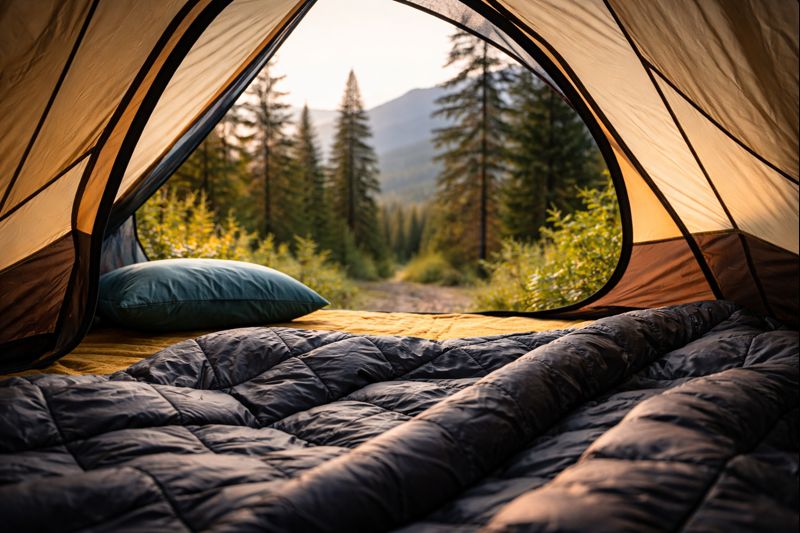
Water Resistance & Durability in the Wild
A water-resistant shell on camping blankets is underrated until you spill hot chocolate or sit on damp ground.
Look for:
- Ripstop nylon or polyester outer shell
- DWR (Durable Water Repellent) finishes to bead light moisture
- Double or reinforced stitching on edges and quilting lines
Remember: water-resistant ≠ waterproof. You still don’t want to leave your blanket in a puddle, but a good shell will shrug off condensation, light drizzles, and accidental spills.
Best Camping Blankets for Different Camping Styles
Different trips, different “perfect blanket.”
- Car camping: Go big, go warm. Wool or thick puffy blankets are perfect.
- Backpacking: Lightweight down or synthetic quilt-style camping blankets.
- Family camping: Durable, easy-to-wash synthetic or fleece-backed blankets.
- Stadium / festival / beach: Puffy, water-resistant outdoor blankets with snap closures you can wear as a poncho.
- Emergency kits / bushcraft: Wool camping blankets and fire-retardant blends.
If you camp in multiple ways, one good puffy synthetic blanket + one wool blanket can cover most scenarios.
How to Layer Camping Blankets for Maximum Warmth
Think in layers, just like clothing:
- Closest to your body: Base layers + maybe a thin fleece.
- Primary insulation: Sleeping bag or main insulated camping blanket.
- Top layer: A second camping blanket (down, synthetic, or wool) to trap more heat.
Research on bedding insulation shows that adding insulation layers around the body helps maintain a stable bed temperature and improves thermal comfort, even in very cool environments.
Practical tips:
- Tuck edges under your sleeping pad to block cold drafts.
- Layer a wool blanket over a puffy blanket for a “soft armor” against cold.
- Use snaps or clips (if included) to keep layers from sliding off during the night.
Care, Cleaning & Storage Tips
If you want your camping blanket to last more than a season, show it a little love:
- Down / synthetic puffy blankets:
- Wash on gentle with technical detergent.
- Pop it in the dryer on low heat with a few dryer balls to help fluff the insulation back up.
- Wool blankets:
- Spot clean when possible, air out regularly.
- Follow care label; some can be machine washed cold, others prefer hand-wash.
- Storage:
- Don’t keep them compressed long-term—store loosely folded.
- Let them dry fully before packing to avoid mildew.
Treat your blanket well, and it’ll repay you with many warm nights and fewer “why am I freezing” moments.
Research Spotlight: Why Warm Camping Blankets Improve Sleep
This isn’t just about comfort; it’s about sleep quality, which directly affects your mood, energy, and safety the next day.
A 2025 overview on bedding insulation and sleep quality reports that the thermal environment around your body in bed—including blankets—plays a major role in how deeply and continuously you sleep. When bedding insulation is adequate, people maintain a more stable, comfortable temperature and sleep better overall.
Another 2024 paper in Scientific Reports on passive, low-energy sleep strategies notes that increased bedding insulation can offset cold room temperatures down to around 3°C (37°F) without harming sleep quality, as long as the bed environment itself remains thermally stable.
Top-Rated Camping Blankets
Here are five well-loved camping blankets on Amazon (US) that hit that sweet spot of warmth, reviews, and usability.
1. Rumpl Original Puffy Blanket
A modern classic in the camping blanket world.
- What it is: A warm, water-resistant camping blanket with 100% recycled synthetic insulation and a durable shell.
- Best for: Car campers, van lifers, festival-goers, and anyone who wants a fun, colorful, do-everything outdoor blanket.
- Why it works: Great balance of warmth, packability, and durability; easy to shake off dirt and pet hair.
2. Horizon Hound Down Camping Blanket
A packable down camping blanket that works like a mini quilt.
- What it is: Lightweight down blanket with ripstop nylon shell and a compact stuff sack.
- Best for: Backpackers and minimalist travelers who want real warmth without carrying a giant comforter.
- Why it works: Combines the coziness of down with a design you can use as a throw, camp quilt, or poncho-style wrap.
3. Woolly Mammoth Woolen Company Wool Blanket
That classic, heritage-style wool camping blanket.
- What it is: 66″ x 90″ wool camping blanket (around 80% merino wool), double-stitched for durability.
- Best for: Car camping, overlanding, cabins, bushcraft, emergency kits.
- Why it works: Wool still insulates when damp, feels substantial, and can double as a rugged all-purpose camp layer.
4. VEVOR Wool Camping Blanket
A big, warm wool-blend camping blanket with stadium and survival vibes.
- What it is: An 80% wool blend stadium blanket designed for outdoor events, camping, and survival kits, with flame-retardant benefits.
- Best for: Cold-weather car camping, sports events, backup warmth in your vehicle, and bushcraft setups.
- Why it works: High wool content for warmth, pre-washed to reduce odor and lint, sized generously for full-body coverage.
5. OneTigris Down Camping Blanket
A smart hybrid between a puffy blanket and a wearable quilt.
- What it is: A down camping blanket with a 20D nylon shell and snap-buttons so you can convert it into a cozy poncho.
- Best for: Campers who love gear that does multiple jobs—blanket, cloak, hammock top quilt, couch throw.
- Why it works: Wearable design + lightweight insulation = a super versatile piece of outdoor gear.
Related Gear to Pair with Camping Blankets
Camping blankets are even better when you pair them with the right comfort items:
- A solid sleeping pad (insulates you from cold ground)
- A supportive camp pillow
- A comfy camp chair or hammock for fireside lounging
If you love hanging between the trees, you can turn your blanket into a mini cocoon by pairing it with hammock-friendly add-ons like straps, underquilts, and organizers—check out this handy guide to hammock accessories for more ideas that play nicely with your camping blanket setup.
FAQs About Camping Blankets
1. Are camping blankets really worth it if I already have a sleeping bag?
Yes—especially if you camp in cooler weather. A camping blanket lets you boost warmth, block drafts, and stay cozy around the fire without dragging your bag outside. It’s also more flexible for lounging in camp or using in the car.
2. Which kind of camping blanket keeps you the warmest?
For pure warmth, down and high-wool-content blankets are very hard to beat. Down is king for warmth-to-weight (great for backpacking), while wool is heavier but still insulates when damp and feels incredibly solid for cold car camping and cabins.
3. Is it okay to camp with just a blanket instead of a sleeping bag?
In mild conditions, yes—camping quilts and insulated blankets can replace a sleeping bag if you use a good sleeping pad and dress warmly. In colder temps, most people are happier with a sleeping bag plus a camping blanket layered on top.
4. How do I wash and care for a camping blanket?
- Puffy (down/synthetic): Gentle wash with technical detergent, tumble dry low, use dryer balls to restore loft.
- Wool: Spot clean, air out, and follow the label; many can be washed on cold, but avoid high heat.
Always dry completely before storing, and don’t leave blankets compressed for months.
5. What size camping blanket should I buy?
For adults, aim for at least around 50″ x 70″ or larger so you can wrap up fully. If you’re tall or like to cocoon, choose oversized options (60″ x 80″ or more). For kids, smaller packable blankets are fine as long as they reach from shoulders to toes.
Final Thoughts: Build Your Own Cozy Camp Ritual
Here’s the real magic of camping blankets:
They don’t just keep you warm—they change how camp feels.
Suddenly, stargazing lasts longer. Late-night card games by the lantern don’t end because everyone’s freezing. Morning coffee in the chill feels intentional, not rushed.
If you’ve ever climbed into your tent and thought, “I hope I’m warm enough tonight,” it might be time to invest in a camping blanket that has your back (and feet).
Pick the one that fits your camping style, your climate, and your comfort level—and then let it become part of your little camping rituals: wrapped around your shoulders at sunrise, under your legs by the fire, layered on top of your sleeping bag when the wind picks up.
Your future, well-rested, toasty self will thank you.