Best Air Mat for Camping: Top Picks for Comfort & Sleep
We may earn a commission for purchases made using our links. Please see our disclosure to learn more.
If you’ve ever crawled into your tent, closed your eyes… and immediately felt every rock like it was personally offended by your existence—yeah. Same.
Finding the best air mat for camping isn’t about being “fancy.” It’s about waking up feeling like a human, not a folded lawn chair. In this guide, I’ll help you pick the right mat for your kind of trip—backpacking, car camping, cold nights, hot nights, side-sleeper struggles, all of it.
Affiliate disclosure: This post may contain affiliate links, which means I may earn a small commission at no extra cost to you.
A quick “which one should you buy?” cheat sheet
Let’s make this easy:
If you’re backpacking (and counting grams)
Go for an ultralight inflatable sleeping pad with a higher R-value than you think you need. Cold ground is sneaky.
If you’re a side sleeper (hips + shoulders always complain)
Look for thicker mats and designs that reduce “hip sink.” Think: supportive baffles, not a wobbly balloon.
If you’re car camping (comfort wins)
A self-inflating sleeping mat or thicker foam/air hybrid feels closer to a real mattress. Your spine will send a thank-you note.
If you camp in colder seasons
Prioritize insulation (R-value) before you chase thickness. Warmth is comfort.
What makes an air mat “the best” for camping, really?
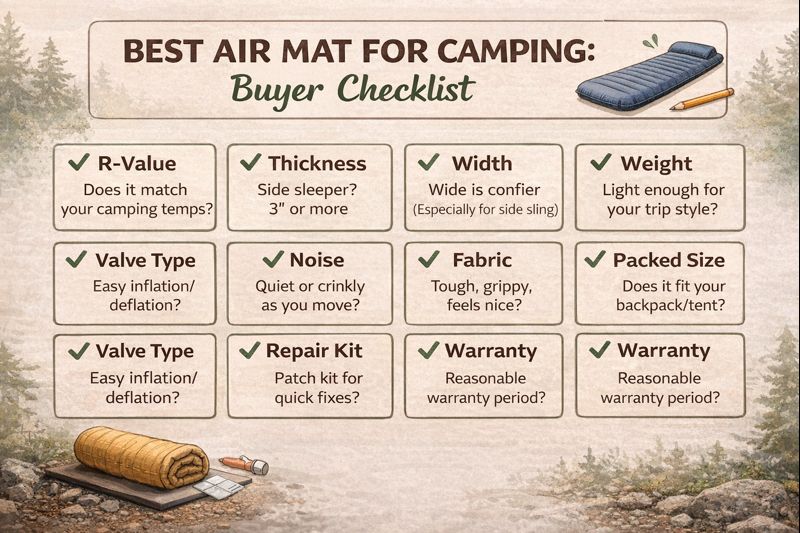
A good camping mat is basically your “sleep foundation.” The best one for you usually nails these:
1) Warmth (yes, even when it’s not “that cold”)
Ground steals heat. Even mild nights can feel icy from below.
2) Support (not just softness)
Soft-but-unsupportive mats are like sleeping on a pool float: fun for 10 minutes, chaos by midnight.
3) Reliability
The best air mat for camping is the one that doesn’t leave you doing midnight patch work with a headlamp in your mouth.
Warmth matters: understanding R-value (without the math headache)
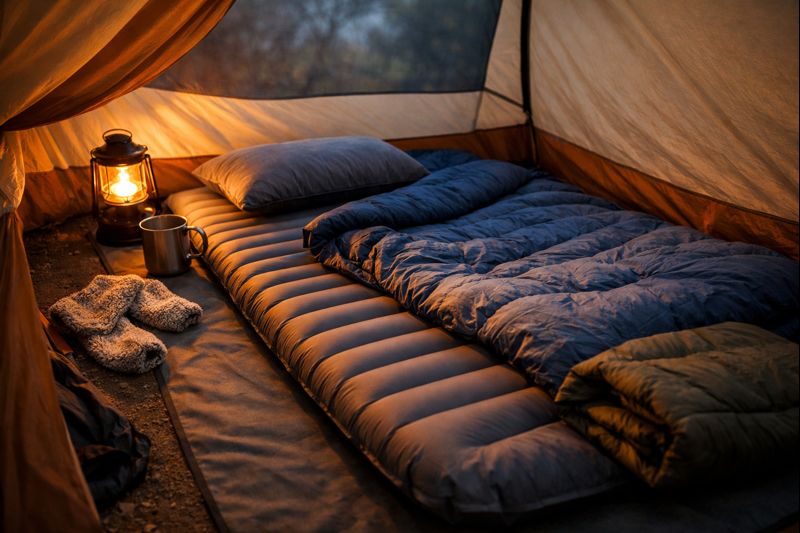
R-value is basically how well your pad resists heat loss into the ground.
The simple way to think about it
Higher R-value = more insulation = warmer sleep.
When you should bump your R-value up
If you’re a cold sleeper, camping on damp ground, sleeping near water, or camping outside peak summer—go warmer than you think.
Comfort and support: thickness, baffles, and “hip sink”
Here’s the truth: thickness helps, but shape and structure matter just as much.
Why baffle design changes everything
Some mats keep air evenly distributed so you don’t roll into a “valley” all night.
Side sleepers: your winning combo
- 3″+ thickness plus
- supportive construction (not overly bouncy)
- enough width so your arm doesn’t fall off the edge at 2 a.m.
Size and shape: single, wide, double, mummy vs rectangle
This part is weirdly personal—like choosing jeans.
Mummy shape
Lighter, packable, great for backpacking… but can feel cramped.
Rectangular
More wiggle room. Better if you toss and turn.
Wide/Long sizes
If you’re broad-shouldered, tall, or just hate feeling “boxed in,” wide versions are a game-changer.
Double mats
Perfect for couples or parents camping with little kids who somehow rotate 360° in their sleep.
Packed size and weight: backpacking vs car camping
Your trip style makes this choice for you.
Backpacking reality check
Every ounce matters. You want:
- compact packed size
- fast inflation
- a good warmth-to-weight ratio
Car camping freedom
Bring the comfy beast. Bigger valves, thicker foam, more cushion—yes please.
Durability: materials, denier, and puncture reality
You don’t need to memorize fabric science… but you do want a mat that can take a little attitude from the outdoors.
What usually helps durability
- tougher face fabric (often higher “D/denier”)
- solid welds/seams
- a repair kit that isn’t useless
The underrated trick
Use a groundsheet or footprint. It’s like putting your phone in a case—suddenly you’re not living in fear.
Inflation and valves: fast setup, fewer swear words
Inflation is where a “great mat” can become a “why do I own this” mat.
Options you’ll see
- breath inflation (fine… until altitude or exhaustion shows up)
- pump sack (faster, less moisture inside)
- built-in pump (luxury, usually heavier)
- electric pump (car camping vibes)
Pro tip
Moisture from breath can build up inside over time. If you can, use a pump sack or pump—especially in cold climates.
Noise, grip, and fabric feel: sleep-friendly details
Some mats sound like you’re sleeping on a snack bag. Not ideal.
If you’re a light sleeper
Look for softer, quieter fabrics and designs that don’t crinkle when you shift.
If you slide around a lot
Some mats grip the sleeping bag better. If yours doesn’t:
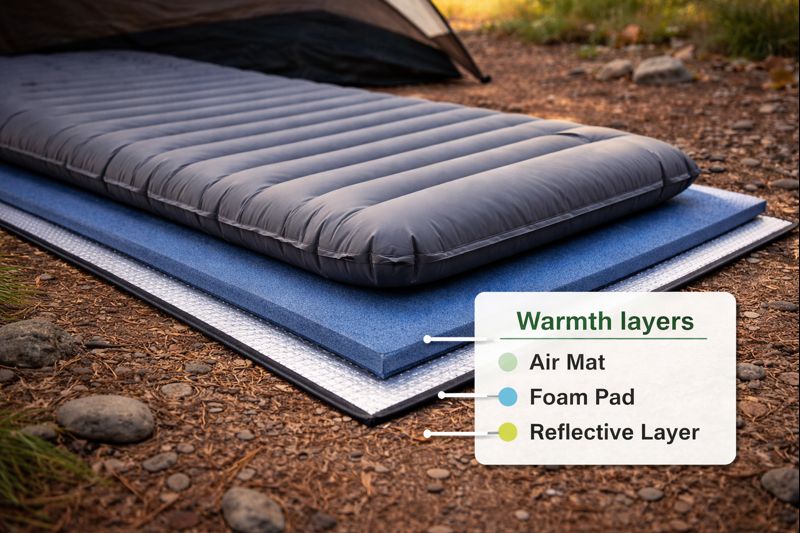
- add a thin foam pad under it
- use a textured blanket
- or lightly tack it in place with your setup
Match the mat to your camping style
Different trips = different “best.”
Weekend campground trips
Comfort-first pads shine here. You’re not carrying it far, so enjoy the thickness.
Minimalist backpacking
Choose warmth + weight + pack size, then optimize comfort with smart setup.
Family camping
Durability and ease matter. Kids + gear = more chaos. Go sturdy.
Tropical/humid camping vs dry/cold camping
Humid camping often means damp ground (heat loss + clammy feeling). Dry cold camping means insulation matters even more. Your climate should absolutely influence your pick.
Small upgrades that make any mat feel better
Before you buy a new one, try these:
Add a thin foam layer
This can reduce sliding, add warmth, and protect against punctures.
Dial in your inflation
Most people overinflate. Slightly softer often feels better—especially for side sleepers—as long as you don’t bottom out.
Pillow strategy
A good pillow (or a bundled jacket in a pillowcase) can fix “neck regret” fast.
Care, cleaning, and quick repairs in the field
The best air mat for camping stays great longer if you treat it like gear, not a disposable floatie.
Cleaning
Wipe with mild soap + water. Let it dry fully before storage.
Storage
Store unrolled (or loosely rolled) when possible—especially for self-inflating styles.
Field repair mindset
Always pack:
- patch kit
- alcohol wipes (or similar)
- a little patience
Product picks: 5 contenders for the best air mat for camping
Before you choose, it helps to picture your whole sleep setup. If you want ideas that make your pad work even better (tent placement, layers, cozy upgrades), grab a few from camping setup ideas that make sleep comfier and simpler.
1) Big Agnes Rapide SL Insulated Sleeping Pad
Why it’s here: A strong all-around insulated sleeping pad that balances comfort and packability.
Features:
- Insulated build for cooler nights
- Built for backpacking/hiking use
- Packs down smaller than comfort-first car pads
Best for:
- Backpackers who still want real comfort
- Side sleepers who hate thin pads
2) Exped MegaMat Duo Queen (Self-Inflating)
Why it’s here: This is the “I want to sleep like I’m at home” pick—especially for couples.
Features:
- Thick foam + air for plush support
- High insulation spec (great for cold ground)
- Designed for car camping comfort
Best for:
- Car campers
- Couples
- Anyone who wakes up sore on thinner mats
3) Therm-a-Rest NeoAir XLite NXT (Ultralight)
Why it’s here: A classic backpacking sleeping pad style: warm, light, and packable.
Features:
- Ultralight design
- Built for serious packability
- Strong warmth-to-weight reputation
Best for:
- Backpackers who want a premium ultralight setup
- Hikers doing longer trips where ounces matter
4) Klymit Insulated Static V Luxe Inflatable Sleeping Pad
Why it’s here: A roomy, comfort-forward inflatable that works well for broader sleepers.
Features:
- Wider “luxe” sleeping surface
- Body-mapping style chamber design
- Insulation for cooler nights
Best for:
- Side sleepers who need width
- Campers who want comfort without a massive packed size
5) Sleepingo Ultralight Sleeping Mat (Inflatable)
Why it’s here: A budget-friendly lightweight camping mat option that’s easy to pack and easy to like.
Features:
- Ultralight and compact
- Simple, no-fuss design
- Good entry option for backpacking
Best for:
- Beginners building their first kit
- Summer campers who want something light and affordable
Research-backed credibility: what studies and experts say
Let’s back up the “this matters” part with real evidence—without making it weirdly academic.
1) R-value guidance for choosing warmth (REI, 2025)
REI’s sleeping pad guide lays out clear R-value ranges by season, and even gives a super practical rule of thumb: a pad with R-value 2.0 is about twice as warm as R-value 1.0, and stacked pads add their R-values. That’s a simple way to avoid buying a pad that feels fine in the store… then freezes you at night.
2) Sleep surface firmness affects sleep quality (Hu, 2025)
A 2025 study found that mattress firmness can significantly influence sleep quality, with medium firmness showing better outcomes for people in a moderate BMI range. Translate that to camping: if your mat is too soft (or poorly supported), your body works harder all night to stabilize—hello, tossing, turning, and waking up cranky.
FAQs about the best air mat for camping
Is the best air mat for camping the same as an air mattress?
Not always. Many campers use “air mat” to mean an inflatable sleeping pad (lighter, more packable). Air mattresses are usually thicker and better for car camping, but heavier and bulkier.
What R-value should I look for in a camping sleeping pad?
For warm summer trips, lower insulation can work. For shoulder seasons or cold sleepers, choose higher R-values so the ground doesn’t steal your heat.
What’s the best air mat for camping if I’m a side sleeper?
Look for more thickness and better support (baffle design matters). Wide options also help because side sleeping takes space.
How do I stop my inflatable sleeping pad from sliding around?
Use a groundsheet, add a thin foam layer under it, or slightly reduce inflation so the pad “settles” instead of skating across the tent floor.
How long do camping air mats usually last?
With normal use and basic care (cleaning, drying, proper storage), a solid mat can last for years. Punctures happen—but good mats are usually repairable.
If you only take one thing from this: your camping sleep isn’t “extra.” It’s the thing that makes the whole trip feel good.
Pick the mat that fits your trips (backpacking vs car camping), match the warmth to your climate, and don’t be afraid to choose comfort. When you sleep better, you hike better, laugh more, and wake up actually excited for coffee—like camping was meant to feel.