Best Camping Lighter: How to Choose a Reliable Fire Starter
We may earn a commission for purchases made using our links. Please see our disclosure to learn more.
A stubborn camp stove or damp bundle of tinder can turn a peaceful evening into twenty minutes of clicking, shielding, and muttering at the wind. The right camping lighter should make ignition simpler without becoming another fragile gadget that needs constant attention. Yet the best choice depends on where you camp, what you light, and whether you prefer fuel, electricity, or a basic disposable flame.
This guide compares lighter types, weather performance, reach, maintenance, travel restrictions, and five well-matched products. You will learn which features matter for backpacking, family campgrounds, cold-weather trips, and occasional weekend use—plus why even a dependable lighter should never be your only way to start a fire.
What Makes a Camping Lighter Different?
A household lighter works in still air. A camping lighter may face gusts, damp hands, cold mornings, deep fire rings, and hot stove burners. Outdoor designs answer those problems with protected flames, electric arcs, longer necks, safety locks, or sealed housings.
Still, “outdoor” does not guarantee reliability. Define the job—stove, tinder, charcoal, or emergency backup—then choose the simplest design that handles it comfortably.
Which Camping Lighter Type Fits Your Trip?
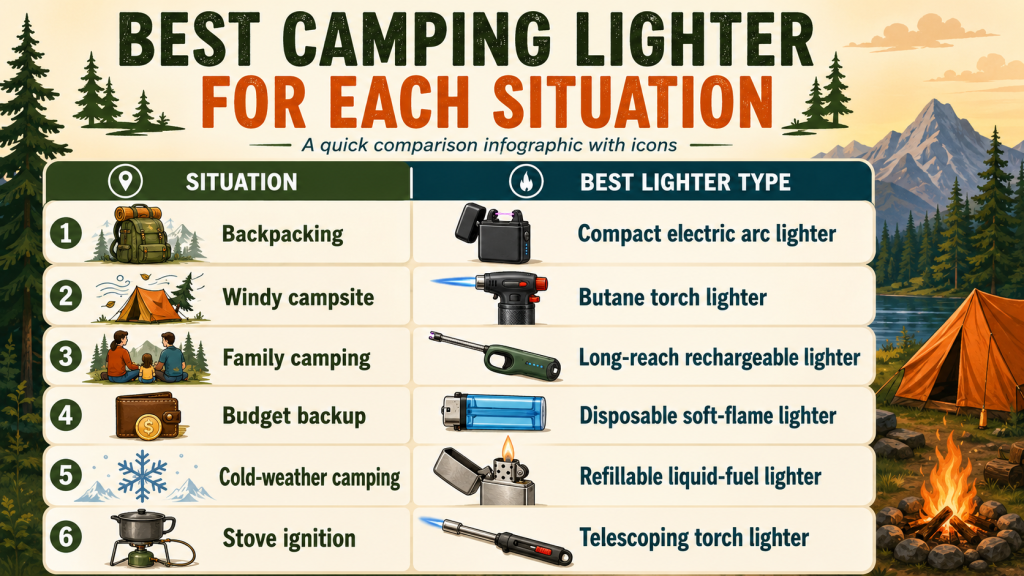
Soft-flame lighters are inexpensive and easy to replace. Refillable liquid-fuel models are durable but need fuel and occasional service. Torch lighters handle breezes better, although they consume fuel quickly and can struggle in cold or high conditions.
Electric arcs resist wind without combustible fuel, but their small gap favors paper and fibrous tinder. Review this camping gear list for beginners so you also pack tinder, water, stove fuel, and a backup.
Flame, Arc, or Torch: The Real Trade-Offs
A visible flame reaches uneven tinder easily, but gusts can bend or extinguish it. An electric arc resists wind; however, material must sit near its electrodes, and soot can foul the tips.
A torch drives concentrated heat into recessed burners or damp tinder, yet demands care near tents, dry grass, children, and clothing. One straightforward camping lighter plus a different backup is often more resilient than an all-in-one gadget.
How Wind, Rain, Cold, and Altitude Change Performance
Butane pressure drops in cold weather, so a summer-ready torch may hesitate on a frosty morning. SOTO also warns that its Pocket Torch XT may not ignite reliably above 5,000 feet.
Electric models avoid fuel-pressure problems, but cold can reduce battery output. A TekFire stopped working after an Outdoor Life freezer test. “Splash-resistant” means droplets, not soaking.
Fuel and Charging: What You Will Maintain
Every camping lighter needs upkeep. Disposable models need replacement; liquid-fuel models require refilling and service; torches need compatible butane; arc models need charging and clean electrodes.
Choose the routine you will remember. Rechargeable models fit campers carrying a power bank, while refillable models suit regular gear checks. Test any lighter at home after storage, not beside a cold stove after sunset.
Safety Features Worth Paying Attention To
Look for a guarded button, covered or retractable tip, automatic shutoff, and lock against pack activation. Long reach also keeps hands farther from flare-ups and fire pits.
No mechanism makes a lighter childproof. Store it beyond children’s reach; inspect for cracks, fuel odors, damaged ports, or loose controls; and keep it away from leaking fuel or tinder pressing against the ignition.
Size, Reach, and One-Handed Use
Tiny models save weight, but small wheels frustrate gloved or wet fingers. A larger push button may justify extra bulk.
Reach matters around grills, fireplaces, and stacked kindling. A telescoping burner or long neck protects your hand, while a pocket model carries more easily. Try the camping lighter with either hand; its controls should feel deliberate, not fiddly.
Best Camping Lighter Picks for Different Campers
These choices cover different priorities rather than five near-identical products. Specifications and availability can change, so confirm the current model before ordering.
| Product | Ignition style | Best match | Main consideration |
| BIC Maxi Pocket Lighters | Soft flame | Budget backup | Vulnerable to strong wind |
| SOTO Pocket Torch | Butane torch | Stoves and deep tinder | Fuel and altitude limits |
| UST TekFire LED | Electric arc | Compact emergency kit | Requires charging |
| SUPRUS Electric Lighter | Long-reach arc | Family and car camping | Tip needs suitable tinder |
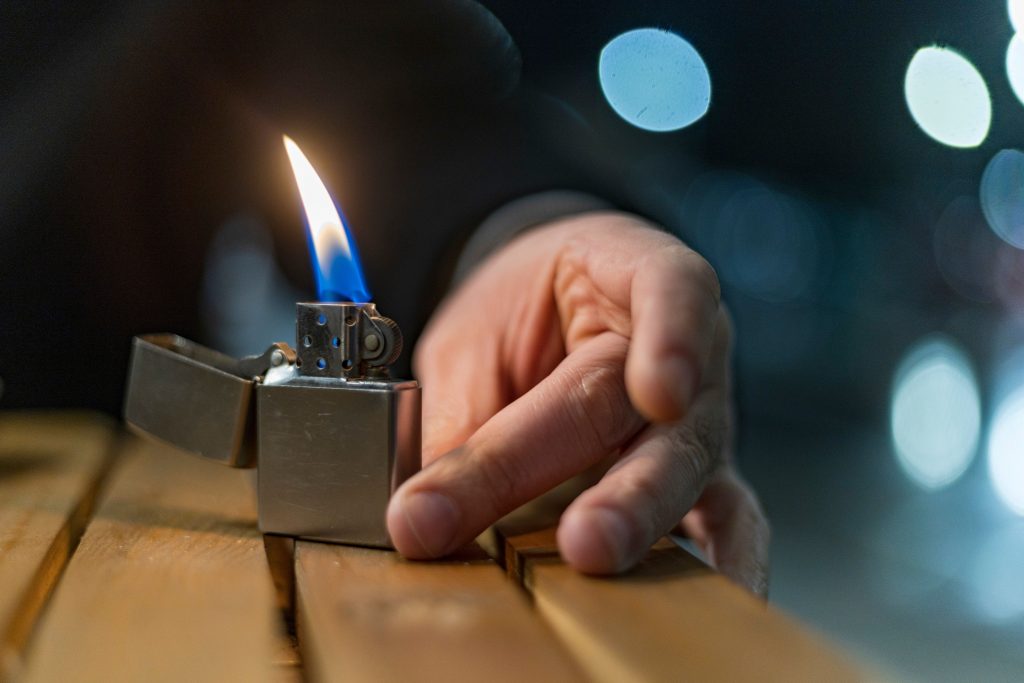
| Zippo Classic Brushed Chrome | Liquid-fuel flame | Refillable traditionalists | Fuel can evaporate |
BIC Maxi Pocket Lighters, Dependable and Long-Lasting, Assorted Colors, 10-Pack (Assortment of Colors Will Vary)
Best for: Budget-minded campers who want simple backups
These pocket lighters provide familiar one-handed ignition and make it easy to store duplicates in separate dry locations. Their low complexity is the practical strength: no cable, refill canister, or special technique. However, the exposed soft flame struggles in gusts, and the disposable format creates more waste than a serviceable refillable model.
SOTO Pocket Torch Lighters for Camping – Extended Refillable Torch Lighter, Telescoping Burner Head, Electronic Ignition, Strong Wind-Resistant Butane Lighter for Candles, Grill, BBQ – Shipped Empty
Best for: Campers lighting stoves, grills, or recessed tinder
SOTO combines a concentrated butane flame with a telescoping burner head, keeping your hand farther from the ignition point. It accepts compatible butane sources and ships without fuel. The focused flame handles breezes better than a basic lighter, but cold conditions, fuel use, and the stated high-altitude limitation deserve consideration.
UST TekFire LED Fuel-Free Lighter with Convenient, Lightweight, Rugged Construction and Emergency Paracord Lanyard for Camping, Backpacking, Hiking and Outdoor Survival
Best for: Backpackers building a compact weather-ready kit
This rechargeable arc lighter includes an LED, safety catch, 10-second timeout, and ParaTinder lanyard with an ignitable inner strand. It needs no butane or altitude adjustment, which simplifies packing. Still, the narrow arc works best with fine tinder, and cold-weather battery performance makes a second ignition method essential.
SUPRUS Lighter Electric Candle USB Type C Rechargeable Lighter with Upgraded LED Battery Display Safety Switch Flameless Plasma Windproof for Cooking BBQs Fireworks
Best for: Car campers who value reach and easy battery checks
The SUPRUS uses a long body, electric arc, safety switch, USB-C charging, and LED battery display. Its extended shape reaches into fire pits or grills without placing your hand directly above the tinder. However, it occupies more pack space than a pocket lighter, and the arc works most efficiently on narrow, dry material.
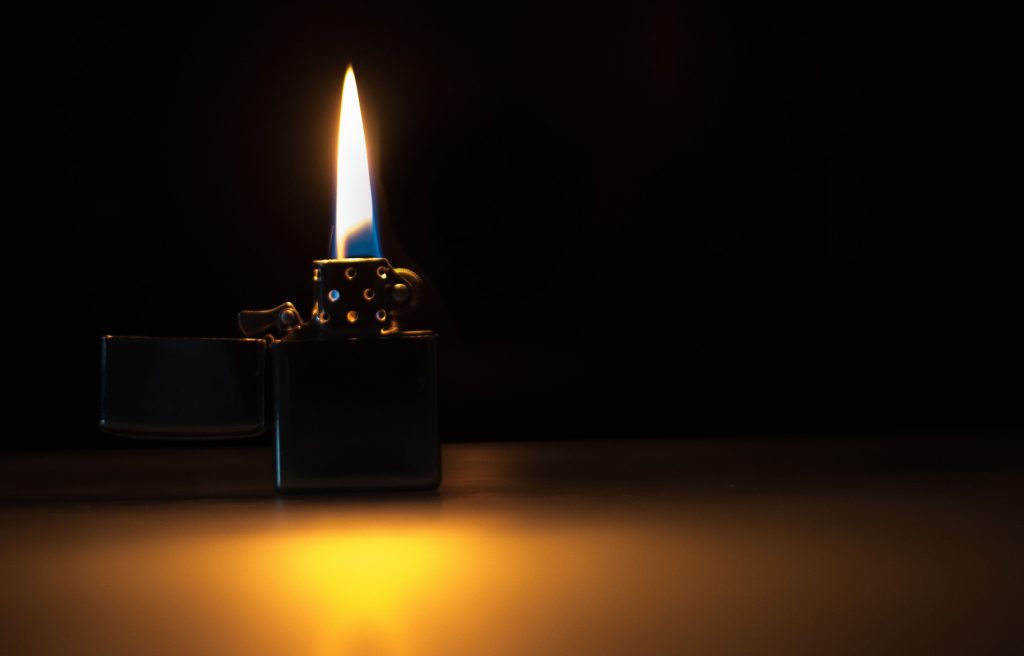
Zippo Classic Brushed Chrome Pocket Lighter – Windproof & Refillable Flip-Top Metal Lighter – Everyday Use Pocket Lighters – Luxury Lighters Made in USA
Best for: Campers who prefer a durable, repairable classic
This all-metal lighter uses replaceable flints and wicks and can be refilled instead of discarded. Its chimney-style design protects the flame better than a basic exposed lighter, while the hinged case feels sturdy in a gear pouch. The trade-off is upkeep: it ships empty, needs liquid fuel, and may lose fuel during long storage.
Why You Still Need a Backup Fire Starter
Batteries drain, valves clog, fuel evaporates, and small tools disappear. Carry prepared tinder and a second method—perhaps stormproof matches or a ferrocerium rod—in another location.
Use a different failure system: two arc lighters share battery risk, while two butane torches share cold-weather limits. A backup never overrides restrictions; when fires are prohibited, use a legal stove or no-cook meal.
Research-Backed Camping Lighter Safety and Travel Rules
The FAA PackSafe rules for lighters allow one absorbed-liquid or butane lighter in carry-on baggage or on a person, while torch-style lighters are prohibited in both carry-on and checked bags. Battery-powered arc lighters belong in carry-on baggage only, must be protected from activation, and cannot be charged during flight.
The U.S. Consumer Product Safety Commission’s lighter guidance explains that multipurpose lighters require child-resistant mechanisms, but that feature never replaces inaccessible storage. A 2026 CPSC recall covered about 13,000 torch lighters lacking the required mechanism, supporting a quick recall check before buying unfamiliar brands (CPSC, 2026).
Finally, Leave No Trace campfire guidance recommends using a stove when practical, keeping legal fires small, and extinguishing them completely. The National Park Service likewise advises checking local rules, keeping water nearby, and drowning and stirring embers until cool.
No controlled study ranks every camping lighter across all climates. Official rules, manufacturer limits, and independent field tests should guide—not guarantee—your choice.
How to Use a Camping Lighter Without Wasting Fuel
Arrange dry tinder with airflow and place kindling within reach before ignition. Apply heat only until a stable flame forms.
Shield a soft flame while keeping clothing clear, use the lowest effective torch setting, and expose thin fibers for an arc. After several failures, improve the tinder or wind protection; extra fuel cannot fix wet material or poor airflow.
Common Buying Mistakes to Avoid
Do not treat “windproof” as absolute. Wind direction, temperature, fuel level, and technique still matter. Check altitude limits and airline rules before choosing a torch for mountains or travel.
Consider ergonomics too: stiff locks annoy gloved hands, and tiny arc gaps may not suit wood curls. Put dependable ignition, compatible fuel, comfortable controls, storage, and a separate backup ahead of novelty features.
How to Store and Maintain Your Lighter
Let the camping lighter cool before packing, protect it from activation, and keep it away from extreme heat. Never leave one on a hot dashboard.
Inspect wicks and flints, refill butane models according to their manuals, and check for leaks. Clean arc electrodes only while the unit is off. Before each trip, test the primary lighter and pack the backup separately.
Camping Lighter FAQs
Is a torch lighter better than a regular lighter for camping?
A torch usually handles breezes and recessed stove burners better because it creates a focused flame. However, it uses more fuel, may struggle in cold or high-altitude conditions, and faces stricter air-travel rules. A regular pocket lighter remains a practical low-cost backup for mild weather and prepared tinder.
Do electric arc lighters work well for lighting campfires?
Yes, when paired with fine, dry tinder that fits close to the electrodes. They resist wind because they do not rely on a conventional flame. Still, they are less convenient for thick kindling, require charging, and can lose battery output in cold weather, so carry another ignition method.
What is the best camping lighter for cold weather?
There is no universal winner. Butane pressure drops in cold conditions, while rechargeable batteries can also lose output. A maintained liquid-fuel lighter may remain useful, but it still needs dry tinder and wind protection. For winter trips, carry two different ignition systems and keep both warm and dry.
Can I travel on an airplane with a camping lighter?
It depends on the design. Current FAA guidance permits limited ordinary absorbed-liquid or butane lighters in carry-on baggage or on your person, while torch lighters are prohibited. Arc lighters with lithium batteries must remain in carry-on baggage and be protected from activation. Recheck airline and destination rules before departure.
How many lighters should I take camping?
Carry at least two ignition methods that do not share the same weakness. For example, pair one refillable or disposable lighter with stormproof matches in a separate waterproof container. Group size, trip length, weather, and remoteness may justify more backups, but prepared tinder matters more than a pile of identical lighters.
Final Camping Lighter Recommendation
Choose a camping lighter by matching its limitations to your trip. The BIC Maxi is a sensible inexpensive backup, while the SOTO Pocket Torch offers useful reach and concentrated heat for developed campgrounds and stove lighting. Backpackers who already carry power may prefer the compact UST TekFire, provided they also pack a non-electric backup.
Prioritize controllable ignition, comfortable operation, compatible fuel or charging, and realistic weather performance. Test the lighter before leaving home, store it securely, and follow local fire restrictions. The strongest setup is not the fanciest single tool; it is one suitable primary lighter, prepared tinder, and a second ignition method that can succeed when the first one cannot.