Rocking Camping Chairs: Are They Worth It?
We may earn a commission for purchases made using our links. Please see our disclosure to learn more.
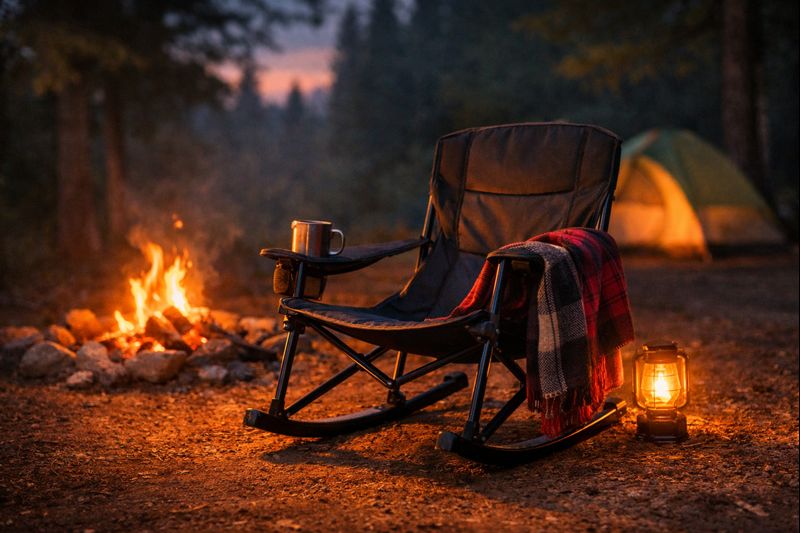
Picture this: the fire’s doing its little crackle-pop concert, your food’s finally not burning, and you sit down… only to realize your “camp chair” feels like a folding taco made of regret.
That’s exactly the moment rocking camping chairs start making a lot of sense.
They’re not just a “nice-to-have” — for a lot of people, they’re the difference between actually relaxing and spending the whole night doing that subtle constant wiggle trying to get comfortable. In this guide, I’ll help you figure out whether a rocking camp chair fits your style, what features matter, and which models are worth looking at.
Affiliate note: If you buy through product links in this post, I may earn a small commission at no extra cost to you.
What rocking camping chairs actually are (and why they feel so good)
A rocking camping chair is basically a folding outdoor chair with a built-in rocking mechanism (often spring-action or a curved base system) that lets you sway smoothly on flat ground.
Why that matters: movement is comfort. Static chairs lock you into one position. Rocking chairs let you shift weight without thinking — like you’re “resetting” your body every few seconds.
If you’re the type who can’t sit still during a long campfire story… congratulations, your nervous system may already be shopping for a rocker.
The best reasons people buy them (aka: who they’re perfect for)
Rocking camping chairs tend to be a home run if you:
- Car camp (space isn’t as tight as backpacking)
- Love long firepit hangs
- Deal with stiff hips/back after sitting still
- Want a chair that feels “lounge-y,” not “sideline bleachers”
They also shine for:
- Parents soothing little kids at camp
- Festival folks who basically live in their chair for 10 hours
- Anyone who wants that “front porch vibe” in the woods
Who should skip them (no shame, just reality)
You might want to pass if you:
- Backpack or hike-in camp (most rockers aren’t ultralight)
- Need a chair for steep, uneven terrain
- Hate “movement” when you sit (some people really do!)
- Camp on super soft sand (rocking can dig in)
A regular lightweight folding chair may fit better if you’re prioritizing pack size over comfort.
Rocking chair vs regular camp chair vs hammock-style chair
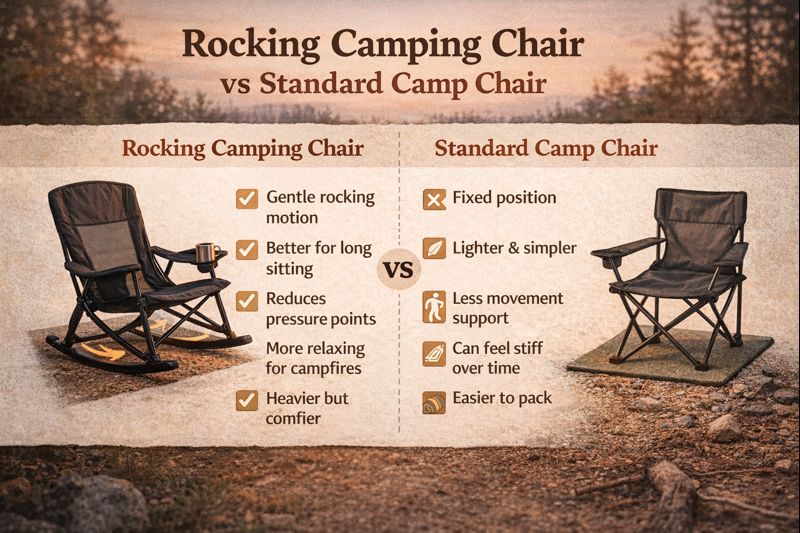
Regular camp chair: lighter, simpler, cheaper. Comfort depends on padding and shape.
Rocking camping chair: heavier, comfier, more “stay a while.”
Hammock-style (swaying) chair: amazing lounge feel, but sometimes bulkier and trickier to set up.
If your goal is: “I want to sit down and instantly relax,” rocking usually wins.
The 10-second comfort test before you buy
If you can try one in-person (even in your backyard after delivery), do this:
- Sit down and lean back normally (don’t pose like a product model).
- Rock gently. Notice: smooth or jerky?
- Check pressure points: thighs, tailbone, shoulder blades.
- Put your feet flat — do you feel stable?
If you feel like you’re “perching,” it’s not the chair. It’s a trap.
Seat height and fit: will it feel easy to get out of?
This is the sneaky thing people forget.
- Low-profile rocking chairs feel amazing for lounging… but if your knees complain, standing up can feel like a mini workout.
- Taller seats feel more “normal chair” and are easier for many bodies.
If you’re tall, look for higher back support. If you’re broad-shouldered, look for wider seat width. Your body deserves a chair that fits you, not the “average product photo human.”
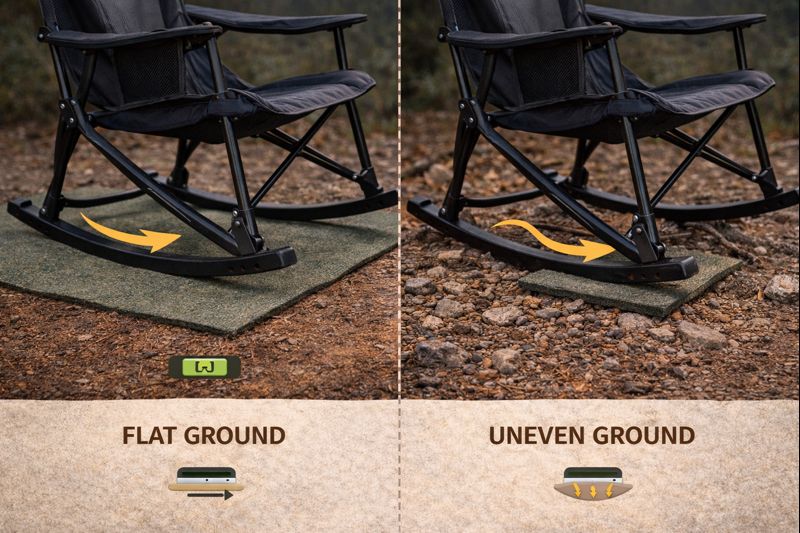
Stability on uneven ground (the real campsite test)
Rocking chairs love flat-ish ground: packed dirt, grass, gravel pads, concrete, decks.
If you camp where the ground is bumpy or sloped:
- Choose a rocker known for stability
- Set it up where the legs/base are level
- Consider a small mat under it (also keeps dust down)
Because nothing kills a vibe faster than feeling like you might tip backward while holding a hot drink.
Pack size: car camping, tailgating, festivals, beach days
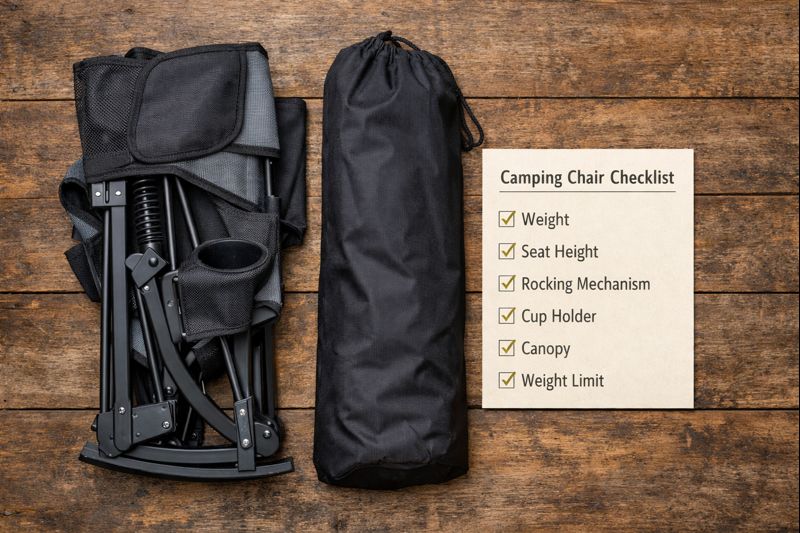
Most rocking camping chairs fold, but they’re usually:
- Bulkier than standard chairs
- Heavier, because the mechanism adds structure
For car camping? Totally fine.
For “I’m hauling this two miles”? Not fun.
A good rule: if you’re already packing a cooler and a lantern, you’ll survive bringing the rocker.
Materials that actually matter (frame + fabric + hardware)
Here’s what makes a rocker feel solid over time:
- Powder-coated steel frame: durable and common
- Ripstop or heavy polyester fabric: holds tension better
- Reinforced seams: helps prevent the “sag seat” problem
- Smooth rocking mechanism: the “cheap squeak” is real
If you can, scan reviews for words like “squeaks,” “pins,” “rivets,” and “wobbly.” Those are the red flags.
Features worth paying for (and what’s mostly fluff)
Worth it:
- Padded armrests (you’ll notice after 30 minutes)
- High back support for taller folks
- Cup holder that’s actually usable
- Carry strap/bag that doesn’t rip instantly
- Canopy if you camp in direct sun
Usually fluff:
- Overcomplicated pockets that sag
- “Ultra tactical” add-ons you’ll never use
- Weird detachable parts you’ll lose by trip #2
Setup and breakdown: the “will I hate this later?” question
Most rocking camping chairs pop open like regular folding chairs. The difference is: they can feel slightly stiffer because of the rocking frame.
If you want the lowest friction experience, look for chairs marketed as quick-fold or easy-carry. Your future self (cold hands, dark campsite) will appreciate it.
Keeping your rocker in good shape (sand, rain, smoke, storage)
If you want it to last:
- Shake out grit — sand and tiny rocks love mechanisms
- Dry it fully before storage (mildew is undefeated)
- Don’t leave it next to the fire all night (smoke + embers)
- Store it indoors if possible, not permanently in the trunk
Think of it like a good pair of boots: treat it decently and it’ll show up for you.
Safety notes (kids, tipping, fire pits)
A few real-world reminders:
- Rocking chairs + toddlers = supervised only (they climb everything)
- Don’t rock hard on sloped ground
- Keep it far enough from open flames that fabric won’t catch a stray spark
Rocking is relaxing. Becoming a viral “camp fail” clip is not.
5 best rocking camping chairs.
1) GCI Outdoor FirePit Rocker (Low Profile)
Quick vibe: the classic “campfire lounger.”
Standout features: low-to-the-ground feel, sturdy build, smooth rock.
Best for: car camping, fire pits, tailgates, “I’m staying right here” nights.
2) GCI Outdoor RoadTrip Rocker
Quick vibe: a lighter, easier-carry rocker that still feels cozy.
Standout features: more portable feel, solid rock, easy setup.
Best for: campers who want rocking comfort without the extra bulk.
3) GCI Outdoor SunShade Rocker (Canopy)
Quick vibe: rocking + shade = unfair advantage.
Standout features: canopy for sun protection, stable feel, great for bright campsites.
Best for: beach days, desert camping, kids’ sports sidelines, summer trips.
4) GCI Outdoor Pod Rocker with SunShade
Quick vibe: your “camp lounge chair” era.
Standout features: bigger, roomier feel; shade; a more “nest-like” sit.
Best for: long hangs, bigger/taller bodies, anyone who wants extra room.
5) GCI Outdoor Kickback Rocker (Amazon listing varies)
Quick vibe: more upright, casual rocking chair feel.
Standout features: simple rocker format, good for quick sits and short hangs.
Best for: patios + camping crossover, tailgates, “I want a rocker but not a throne.”
One more thing that makes any chair instantly better: fewer bites. If you camp in buggy areas, pair your setup with portable mosquito repellers that help keep your campsite comfortable.
What research says about rocking and why it feels calming
Rocking isn’t just “fun chair physics.” Your body reads gentle motion as soothing — kind of like how a hammock or a rocking cradle can quiet your brain down.
A well-cited example: researchers have studied gentle rocking during rest and found it can influence sleep-related brain activity and relaxation signals — including a study published in Current Biology (2019) that used slow, controlled rocking and reported measurable changes in sleep dynamics.
There’s also a broader conversation in sleep/relaxation research about rocking devices and vestibular stimulation (your balance system) and how rhythmic motion may support calmer rest states (reviewed in Sleep and Circadian Rhythms, 2023).
Translation in normal-people language: a good rocking camping chair makes it easier to do the thing you came outside for — unclench.
FAQs + a quick pep talk before you buy
Are rocking camping chairs good for your back?
They can be, mainly because rocking encourages small posture shifts instead of locking you into one stiff position. If you have chronic pain, prioritize seat height, support, and stability over “cool features.”
Are rocking camp chairs safe on gravel or dirt?
Usually yes — if the ground is fairly level. On slopes or uneven rocks, stability drops fast. Set up on a flat pad whenever possible.
What’s the best rocking camping chair for tall people?
Look for higher backs, wider seats, and a higher seat height so your knees aren’t up in your chest. “Low profile” can feel cramped if you’re tall.
Can you use a rocking camping chair at the beach?
You can, but sand can swallow rocking bases. If you do it, set it on a mat or a firmer packed area closer to the waterline (where allowed).
Are rocking camping chairs worth the money?
If you regularly sit outside for long stretches — campfires, tailgates, kids’ games, beach days — yes. Comfort is the whole point of camp. The chair is where you live.
Conclusion: If camping is your “reset button,” your chair should feel like part of the reset — not another thing your body has to tolerate. Pick a rocker that fits how you camp (car vs carry), where you sit (flat vs uneven), and what your body likes (low lounge vs normal height). Then lean back, rock a little, and let the night do its job.