Best Camping Food Ideas for Families
We may earn a commission for purchases made using our links. Please see our disclosure to learn more.
You know that moment when the car doors open, the kids bolt toward the trees, and your stomach reminds you no one has eaten since the gas-station snacks? Yep—this is where a simple, realistic plan for camping food ideas turns an “uh-oh” into an easy win. In this guide, you’ll get a friendly, field-tested roadmap: a 3-day meal plan, no-cook shortcuts, one-pot crowd-pleasers, smarter cooler tactics, and a few trusty gear picks. By the end, you’ll feel ready to feed your crew without stress—or sink-full cleanup.
What Makes Great Camping Food?
Great camp meals hit three notes: simple, hearty, and flexible. Think easy camping meals with short ingredient lists, prep you can do at home, and methods that work on a camp stove, grill grate, or fire ring. I like to balance these:
- No-cook options for hot afternoons or late arrivals
- Make-ahead camping meals to reheat when energy is low
- One-pot or foil-pack recipes for minimal cleanup
- Kid-friendly bites that also make adults happy
- Vegetarian, gluten-free, and high-protein choices so everyone’s included
Pro tip: Plan to use fresh, perishable items first, then shelf-stable or freeze-dried later in the trip.
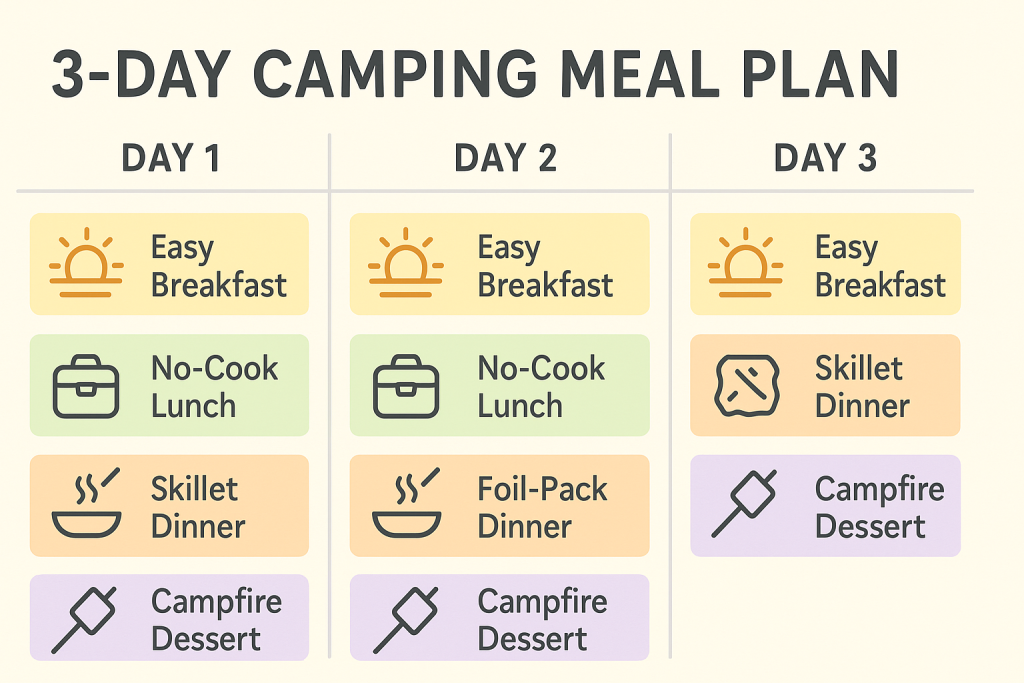
A 3-Day Camping Meal Plan (Template)
Here’s a flexible structure for families. Swap items to fit tastes and dietary needs.
Day 1
- Breakfast: At home before you leave
- Lunch (arrival): Tortilla wraps (rotisserie chicken or hummus + veggies), fruit, chips
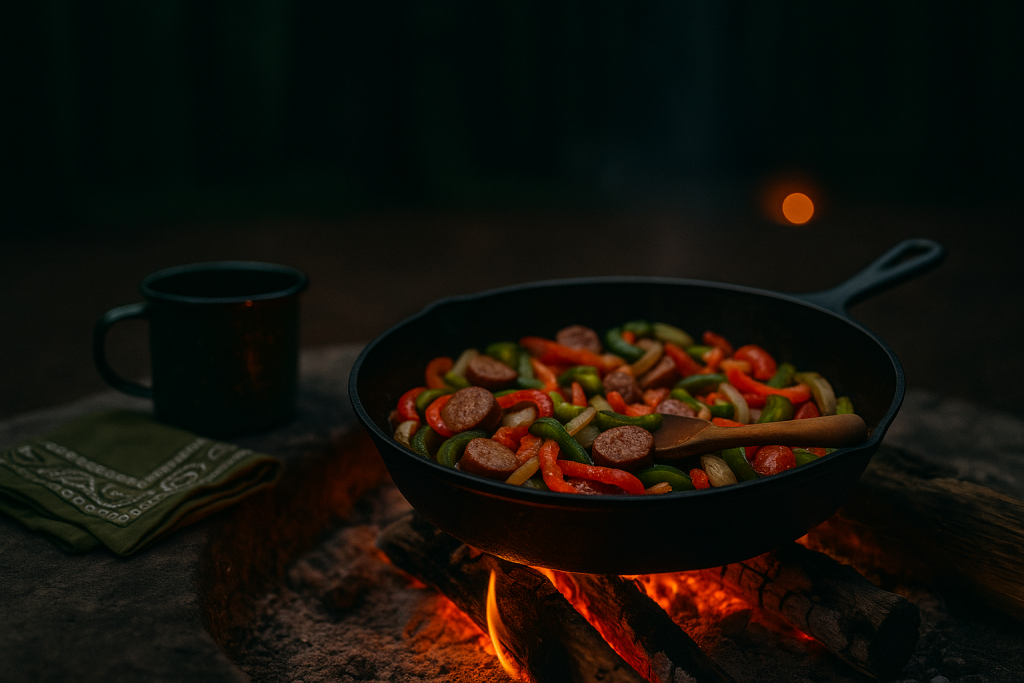
- Dinner: One-pot skillet sausage + peppers + onions over rice; bagged salad
- Dessert: S’mores or chocolate-dipped strawberries
Day 2
- Breakfast: Oat packets or overnight oats + berries; camp coffee
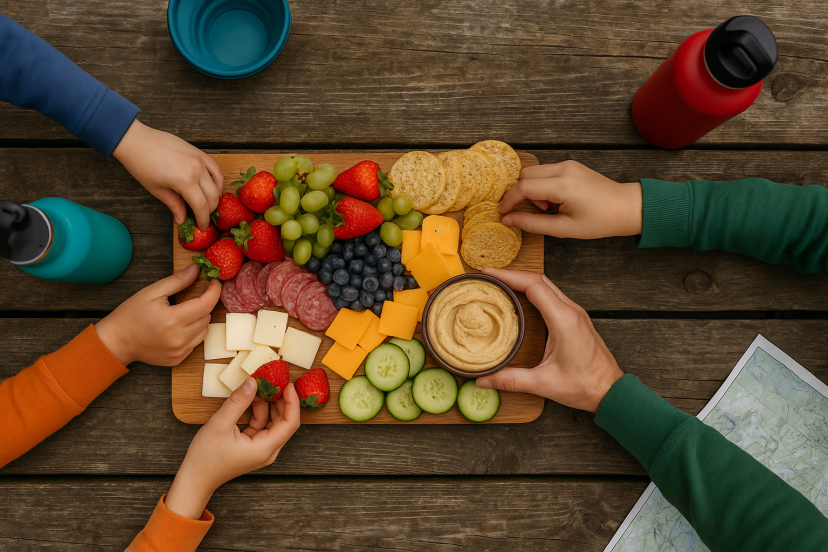
- Lunch: No-cook snack board—cheese, crackers, snap peas, jerky, hummus
- Dinner: Foil-pack fajitas (chicken/tofu + peppers + onions + spices) with warm tortillas
- Dessert: Campfire bananas with peanut butter and a sprinkle of granola
Day 3
- Breakfast: Pancakes (shake-mix bottle) + turkey bacon or plant-based sausage
- Lunch: Make-ahead pasta salad + sliced cucumbers
- Dinner (if staying): Dutch oven chili or lentil stew; cornbread
No-Cook & Make-Ahead Camping Food Ideas
When you roll in late or it’s too hot for the stove, no-cook saves the day.
No-Cook Staples
- Tuna or chickpea salad wraps, veggie sticks, olives
- Caprese skewers with basil + mozz + tomatoes
- Greek pitas: store-bought tzatziki, cucumbers, red onion, olives
- Fruit & nut snack bags; yogurt cups; granola bars
Make-Ahead Heroes
- Baked ziti or enchilada casserole in foil pan (reheat on grate)
- Shredded BBQ chicken or jackfruit (simmer to reheat)
- Breakfast burritos, individually wrapped (foil-reheat, done)
Pack Like a Pro
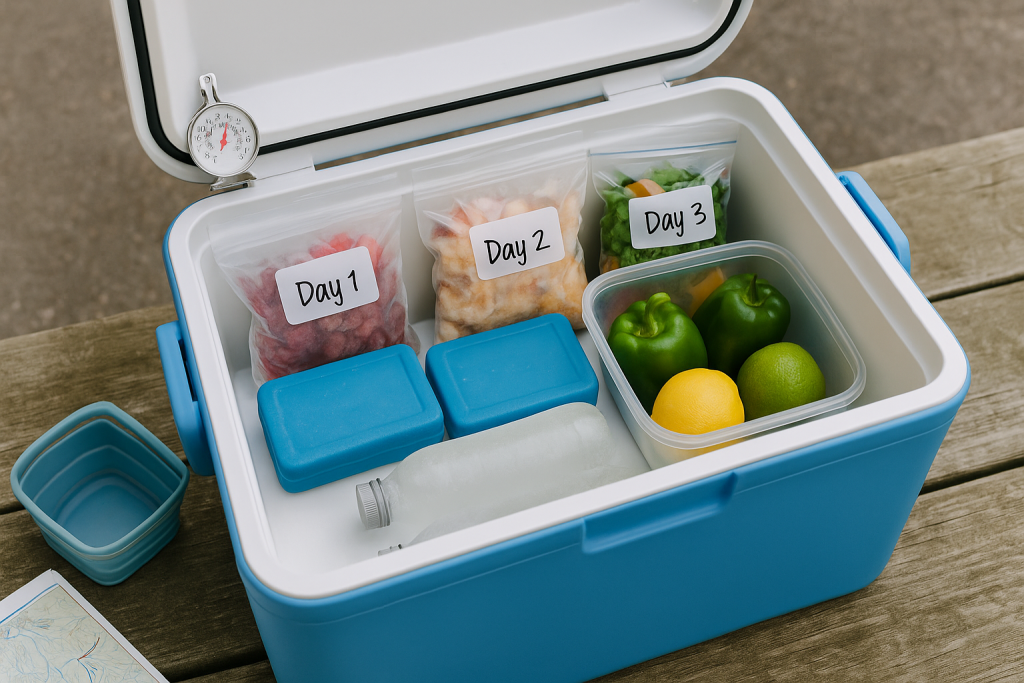
- Label by meal + day. Freeze flat in zip bags to stack easily.
- Keep Friday-night dinner at the top of the cooler for quick access.
One-Pot & Skillet Favorites
One-pot = less stress. Try these easy camping meals:
- Creamy Tuscan gnocchi: shelf-stable gnocchi, sun-dried tomatoes, spinach, cream (or coconut milk).
- Sausage & rice skillet: kielbasa + bell peppers + cajun seasoning + instant rice.
- Chickpea curry: canned chickpeas, curry paste, coconut milk, spinach; serve with naan.
Shortcut Pantry List
- Instant rice, couscous, shelf-stable gnocchi
- Canned beans, curry paste, coconut milk
- Tortillas, jarred salsa, pesto
- Spice blends (taco, garam masala, cajun), salt & pepper
Campfire Classics: Foil Packs & Dutch Oven
Foil-Pack Recipes (a.k.a. foolproof campfire recipes)
- Fajita packs: protein + peppers + onions + taco spice
- Garlic herb potatoes: baby potatoes + oil + herbed salt
- Salmon + lemon + asparagus: cooks in ~12–15 mins over coals
Dutch Oven Ideas
- Chili or lentil stew (prep spice mix at home)
- Chicken & rice with frozen peas
- Berry cobbler (cake mix + butter dots + berries—thank me later)
Heat Management
- Cook over coals, not flames; rotate packs every 5–7 minutes.
- For Dutch ovens, aim for top and bottom heat balance (coals on lid + base).
Quick Breakfast Ideas Kids Actually Eat
- Overnight oats bar: toppings like berries, honey, chia, chocolate chips
- Egg-in-a-bag (omelet mix in silicone bag in simmering water)
- Yogurt parfait cups: granola + fruit
- Breakfast tacos: scrambled eggs, cheese, salsa
Easy Camping Lunches for On-the-Go
- Jar salads (dressing at bottom)
- Cold sesame noodles with shredded carrots + cucumbers
- DIY snacky lunch: crackers, charcuterie or tofu, pickles, fruits
- Hummus boats: cucumber halves scooped and filled
Vegetarian & Gluten-Free Camping Food Ideas
Vegetarian / Vegan
- Lentil sloppy joes, black-bean quesadillas, tofu fajita bowls, veggie curry
Gluten-Free
- Corn tortillas, stuffed baked potatoes, rice bowls, polenta medallions with tomato sauce
Keep It Inclusive
- Pack separate tongs/cutting boards.
- Label condiments if they contain gluten (e.g., some soy sauces).
High-Protein & Ultralight Backpacking Meals
For long hikes, favor backpacking meals with energy-dense ingredients: nut butters, olive oil packets, jerky, couscous, instant mashed potatoes, dehydrated refried beans, and freeze-dried meal pouches. Aim for at least 100–125 calories per ounce on weight-critical trips, and consider 2,500–4,500 calories per person per day depending on terrain and effort (good baselines used by several expert outfitters).
No-Cook Trail Combos
- Tortilla + tuna + mayo packet + relish
- Instant hummus + olive oil + crackers
- Peanut butter + honey + granola in a wrap
Camp Coffee & Breakfast Drinks
- Aero-style press for rich, grit-free coffee (fast and tidy)
- Pour-over cones with #2 filters, collapsible if packing light
- Cowboy coffee (coarse grounds, settle with a splash of cold water)
- Kid-happy cocoa with cinnamon; matcha packets for tea lovers
Cooler Hacks & Food Safety Tips
Think of your cooler like a portable fridge. Keep it packed and shaded. Use frozen water bottles or ice blocks (they last longer than cubes), stash perishables at the bottom, and open it as little as possible. Keep raw meats double-bagged and away from ready-to-eat items. Hold cold foods at 40°F (4°C) or below and return perishable items to the cooler within 1–2 hours (1 hour if temps exceed 32°C/90°F).
Smart Packing & Camp Kitchen Setup
Lay out meals by day and course, then pack coolers by use order (top = first meal). A simple camp kitchen triangle (cook, prep, wash) prevents traffic jams.
If your picnic table is wobbly or space is tight, consider building a lightweight DIY camp table to create a dedicated prep surface—perfect for a safe stove station and a separate wash area. Here’s a practical how-to: DIY camp tables guide.
Camp Kitchen Gear List (Essentials)
- 2-burner stove or integrated canister stove
- Lidded pot + frying pan (or a compact cookset)
- Cutting board, knife with sheath, silicone tongs
- Collapsible washbasin, biodegradable soap, scrubber, quick-dry towel
- Headlamp (for the inevitable after-dark dishes)
🔹 Amazon Picks: Camp Cooking Gear (5 Editor-Vetted Options)
Why these? Each pick reduces friction—faster boil times, nestable cookware, reliable cooling, shelf-stable meals, and coffee that actually tastes great.
1) Jetboil Flash Camping Stove Cooking System
A lightning-fast integrated stove that boils ~1 L in ~100 seconds—amazing for coffee, soup, or rehydrating meals. Great for: families that want quick hot water with minimal fuel.
Features: 1-L FluxRing cup, push-button ignition, color-change heat indicator.
Pros: ultra-fast; compact; efficient fuel use.
Cons: limited simmer control; uses specific canister fuel.
Use cases: morning cocoa assembly line; quick oatmeal on chilly starts.
Review snapshot: Owners rave about the speed; some wish for finer simmer control.
2) GSI Outdoors Pinnacle Ceramic Camper Cookware Set (4-Person)
A durable camp kitchen gear upgrade: hard-anodized pots/frypan with ceramic nonstick plus color-coded bowls/mugs/plates that all nest.
Features: hard-anodized aluminum, ceramic nonstick, welded sink bag.
Pros: complete, compact, easy to clean; serves 2–4.
Cons: pricier than piecemeal; protect nonstick from metal utensils.
Use cases: one-bag solution for family cooking.
Review snapshot: Loved for space savings and quick cleanup; mind utensil choice.
3) Coleman Xtreme Cooler (50-Quart class)
A budget-friendly hard cooler line known for strong capacity and solid ice retention claims—ideal for make-ahead camping meals and beverages.
Features: thick insulation, drain, molded lid cup holders (varies by model).
Pros: value pricing; big capacity.
Cons: bulkier; not bear-resistant; hinges can be basic.
Use cases: family basecamp weekends with separate food/drink coolers.
Review snapshot: Praised for capacity vs. price; ice-life varies with packing.
4) Mountain House Classic Meal Assortment Bucket
Shelf-stable, no-cook (just add hot water) meals with long shelf life; great for late arrivals, stormy nights, or backup.
Features: freeze-dried entrées; 24 servings; lightweight bucket.
Pros: fast, tasty, kid-approved options; long storage.
Cons: higher sodium; cost per serving beats fresh only on convenience.
Use cases: backup dinners, backpacking trips, emergency pantry.
Review snapshot: Fans love the flavors and simplicity; sodium noted.
5) AeroPress Go Travel Coffee Press
Tiny, tough, and beloved for smooth, grit-free camp coffee in ~2 minutes.
Features: compact brewer + travel mug; hot or iced; quick cleanup.
Pros: superb flavor; ultralight; nearly no mess.
Cons: single-serve; needs paper micro-filters (bring extras).
Use cases: early-bird espresso-style cups, “latte” kits with shelf-stable milk.
Review snapshot: Top marks for flavor and portability; single-cup volume is the trade-off.
Comparison at a Glance
| Model | Key Spec(s) | Warranty | Approx Price/Tier | Best For |
| Jetboil Flash Stove | ~100-sec boil; 1-L cup | 1-year limited | Mid | Fast hot water for families |
| GSI Pinnacle Camper Set | Hard-anodized pots + ceramic frypan; nests for 4 | Lifetime (materials/workmanship) | Premium | Full camp kitchen in one kit |
| Coleman Xtreme Cooler (70-qt class) | Large capacity hard cooler | 1-year limited | Budget | Weekend family basecamps |
| Mountain House Classic Bucket | 24 freeze-dried servings | 30-year taste guarantee | Mid | Backup meals & rainy-night dinners |
| AeroPress Go | Compact press; 1-cup brew | 1-year | Budget | Coffee lovers who pack light |
🧪 Research-Backed Guidance for Nutrition & Safety
- Keep cold foods at or below 40°F (4°C) and hot foods at/above 140°F (60°C). Use block ice or frozen bottles, keep coolers shaded, and limit openings. These “danger zone” rules are the cornerstone of safe outdoor eating. See the USDA FSIS guidance on safe temperatures and outdoorfood safety for hiking/camping.
- For weight-critical trips, many expert outfitters suggest ~2,500–4,500 calories per person per day depending on conditions, and targeting 100–125+ calories per ounce to keep food weight reasonable—handy benchmarks for planning backpacking meals. Review REI’s meal planning advice and ultralight calorie-density guidance for context.
FAQs
How do I plan camping food ideas for picky eaters?
Offer “modular” meals: tacos, bowls, or wraps with separate toppings. Keep at least one familiar no-cook option (PB&J, cheese & crackers, fruit) so no one goes hungry.
What are the best no-cook camping food ideas for hot days?
Snack boards (protein + produce + carbs), hummus pitas, tuna wraps, jar salads, and cold sesame noodles travel well and require zero heat.
How can I reduce cleanup with family camping meals?
Choose one-pot or foil-pack recipes, bring a collapsible washbasin, and assign roles: scraper, washer, rinser, dryer. Use silicone spatulas to leave pans nearly clean.
What are good vegetarian or gluten-free camping options?
Try lentil sloppy joes, veggie fajitas, chickpea curry, black-bean quesadillas (corn tortillas), stuffed potatoes, or polenta with tomato sauce. Pack separate utensils to avoid cross-contact.
Do I really need a second cooler?
If space allows, yes—one for frequently opened drinks, another for perishables you want to keep colder, longer. It helps maintain safe temps and reduces rummaging.
Conclusion (You’ve Got This)
Feeding people outside doesn’t have to feel like a juggling act. With a simple plan, a few camping food ideas in your back pocket, and smart cooler habits, you’ll spend less time managing meals and more time staring at the stars. Start with the 3-day template above, pick two quick dinners you know your crew will love, and prep a couple of no-cook backups. You’ll roll into camp confident—and roll out with happy, well-fed campers.