5 Camping Hammocks for Ultimate Relaxation
We may earn a commission for purchases made using our links. Please see our disclosure to learn more.
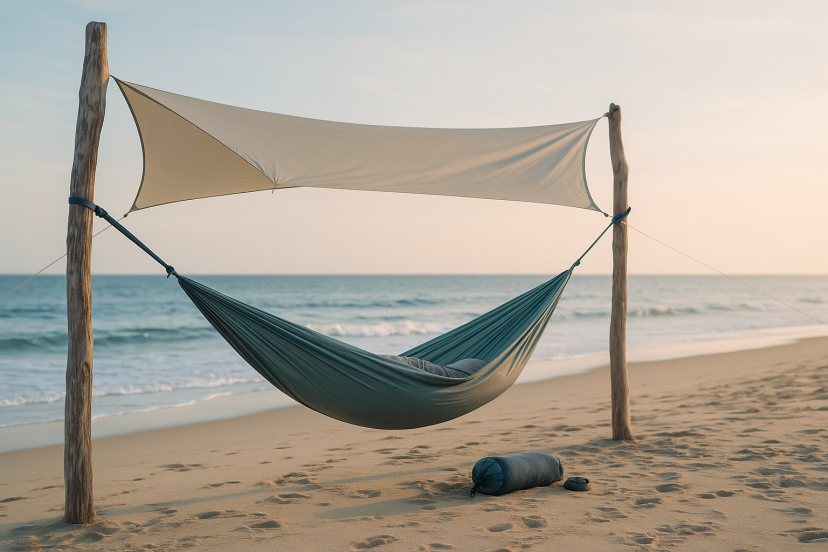
If you’ve ever ended a long hike wishing you could float above the roots and rocks, you’re in the right place. Camping hammocks are the easiest way to turn any patch of trees into a personal lounge—no lumpy ground, no wrestling with tent poles, just gentle sway and sky views. In this guide, I’ll help you pick the perfect hammock, set it up safely, and choose the best accessories. Then we’ll walk through five tried-and-true models to match different budgets and camping styles—with quick specs, pros/cons, and simple “View Product” buttons you can use when you’re ready.
By the end, you’ll know exactly which camping hammock fits your adventures—and how to make it ridiculously comfortable.
Why Camping Hammocks Are Having a Moment
Ground sleeping isn’t always kind. Hammocks lift you off uneven terrain and away from puddles, insects, and mud. They pack small, set up fast, and feel like a micro-vacation at the end of the day. Whether you’re car camping on the coast, backpacking in the mountains, or hanging in a tropical backyard, a good hammock makes rest non-negotiable.
How to Choose the Right Camping Hammock (Quick Guide)
Think of your hammock as a sleep system: the fabric + the straps + (sometimes) a bug net and rainfly + insulation. Here’s how to decide.
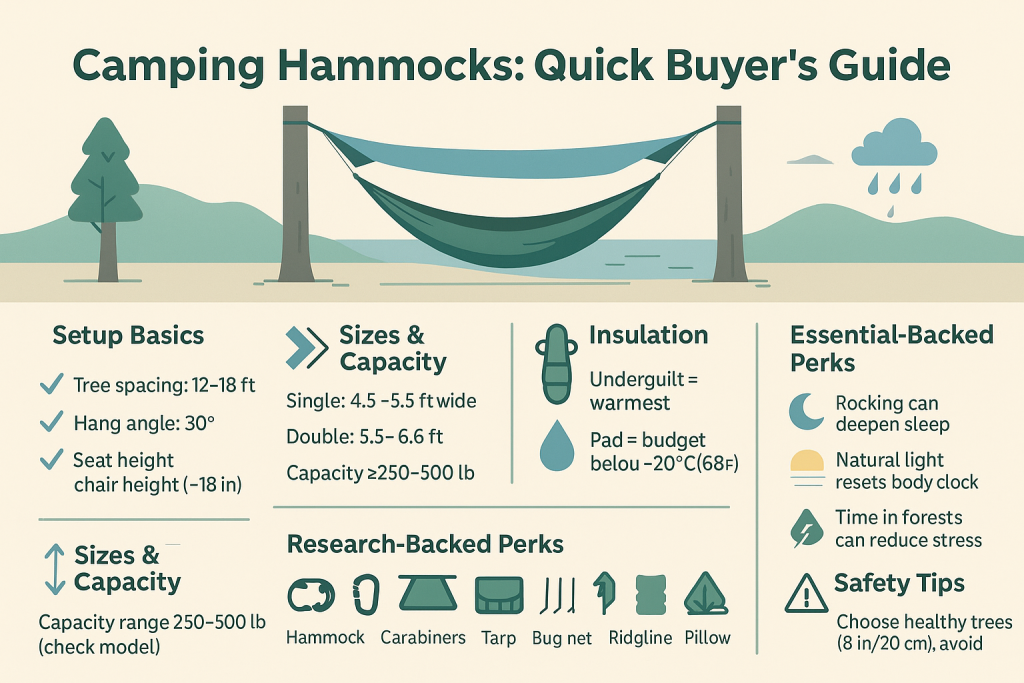
Size: Single vs. Double
- Single: Lighter and narrower—great for one person who wants minimum bulk.
- Double: Wider “cocoon” for diagonal sleeping (more comfortable) and star-gazing with room to shift. Also nice if you want to lounge with a child or pet.
Fabric & Durability
Most camping hammocks use parachute-style nylon. Look for tough stitching and reinforced end channels. If you camp in humid or coastal climates, quick-drying fabric is your friend.
Suspension: Tree-Friendly Straps
Skip ropes. Use wide, tree-friendly straps to protect bark and make adjustments easy. Straps with multiple sewn loops are beginner-proof and save time at camp.
Bug & Weather Protection
- Integrated bug net: Essential in buggy climates (tropics, lakes, wetlands).
- Rainfly/tarp: Turns your hammock into a mini shelter for overnight sleep. Diamond or hex tarps are the go-to.
Comfort & Insulation
Air flows under a hammock, so your back can get chilly—even in mild weather. For true comfort:
- Underquilt (best) or sleeping pad (works in a pinch).
- Top quilt or a sleeping bag unzipped like a blanket.
Safety Basics
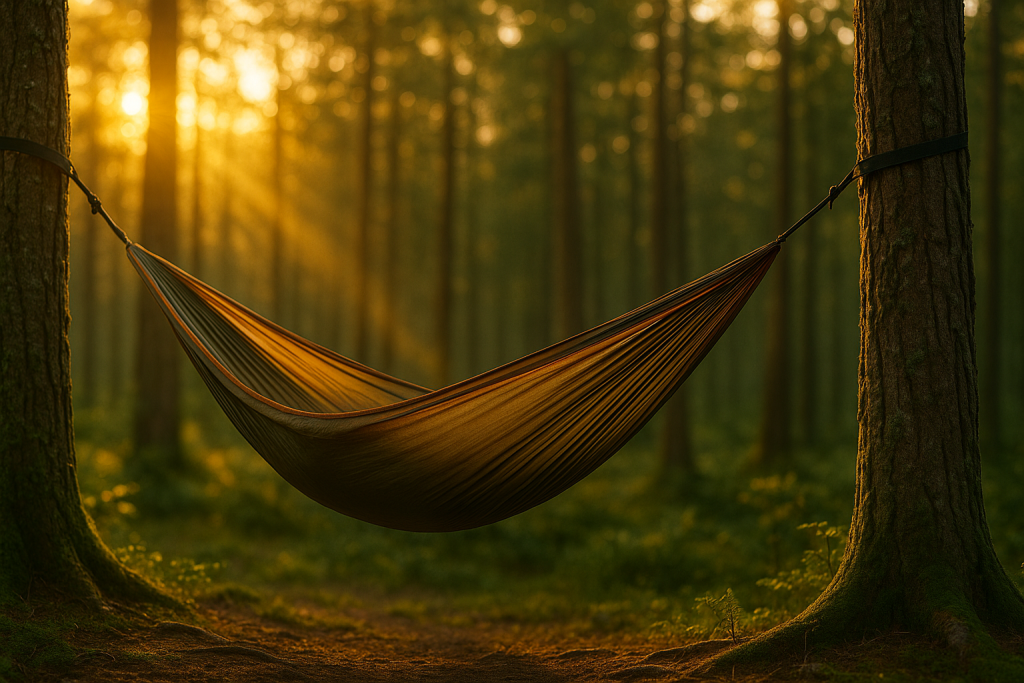
Hang the straps at about head height, aim for a 30° suspension angle, and keep the lowest point roughly chair-height off the ground. Avoid dead branches (“widow-makers”) and saplings that could bend or break.
Must-Have Accessories (That Punch Above Their Weight)
- Tree straps (two per hammock, 10–15 ft each)
- Carabiners (locking or rated for hammocks)
- Bug net (if not integrated)
- Rainfly/tarp + guylines + stakes
- Underquilt or pad
- Ridgeline (keeps sag consistent, handy for lights/organizers)
Setup: From Sack to Nap in 5 Minutes
- Pick your trees: Sturdy, living trees ~12–18 ft apart.
- Wrap straps: About head height; protect bark; use flat contact.
- Clip hammock: Aim for that comfy banana-shaped sag, not tight like a guitar string.
- Lie diagonally: Head a bit to one side, feet to the other—this flattens your lay.
- Add tarp & bug net if you’re sleeping overnight.
Comfort Upgrades for All Seasons
- Warm weather: Bug net + breathable top quilt; use a small pillow or puffy jacket under your neck.
- Shoulder season: Underquilt + light beanie; close tarp sides lower to block wind.
- Tropical: Prioritize airflow; pitch tarp higher; choose breathable fabric.
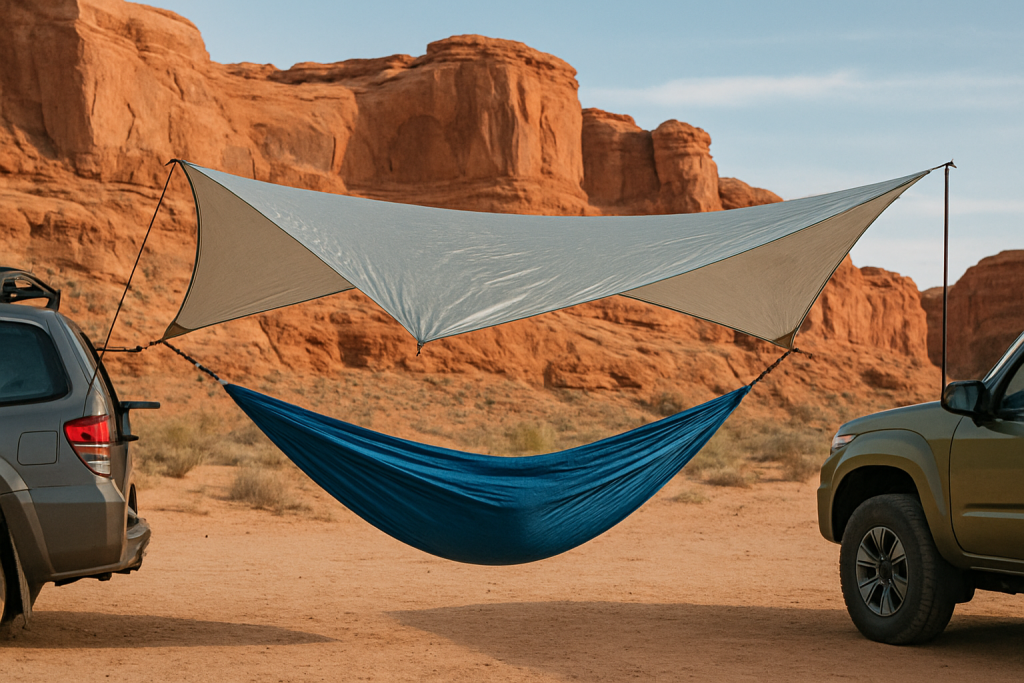
- Desert: Seek shade; use a reflective sun tarp or pitch at dawn/dusk.
Five Picks: The Best Camping Hammocks (Curated)
These five are popular for a reason. I’ve chosen models that span budgets and use-cases—from casual day hangs to full hammock-camping kits.
Wise Owl Outfitters Camping Hammock (Single or Double)
Why it stands out: A crowd-favorite starter hammock that nails value, comfort, and color choices. Comes with straps, so you’re ready to hang.
Key features
- Single or double sizes; packs small; easy setup with included tree straps.
- Durable parachute-style nylon with reinforced stitching.
Pros
- Great price-to-performance
- Beginner-friendly kit (straps included)
- Tons of colorways
Cons
- No integrated bug net (add one if you’ll sleep overnight)
- Not the lightest for ultralight backpackers
Best for
Day hangs, casual overnights in fair weather, gifts for new campers.
Use cases
Beach days in Cebu, backyard naps, weekend campouts with friends.
Get it
ENO DoubleNest Hammock
Why it stands out: An iconic double hammock—roomy, comfy, and backed by a well-known brand.
Key features
- Rated up to 400 lb; packs down small; pairs well with ENO Atlas straps and accessories.
Pros
- Spacious “double” width for a flat diagonal lay
- Premium feel, long-lasting build
- Huge ecosystem of compatible accessories
Cons
- Straps are often sold separately
- Premium price for the name
Best for
Road trips, national park lounging, couples who want extra elbow room.
Use cases
Afternoon nap under pine trees, sunrise coffee on the coast.
Get it
Kootek Camping Hammock (Double)
Why it stands out: Value pick with a generous size and included straps—easy for first-timers, easy on the wallet.
Key features
- 400 lb max capacity; roomy 105″ x 54″ (model dependent); about 1.8 lb; tree straps included.
Pros
- Great bang for your buck
- Quick setup with multi-loop straps
- Comfortable diagonal lay
Cons
- Fabric feel is more utility than luxe
- No integrated bug net
Best for
Students, budget travelers, anyone building a starter kit.
Use cases
Hammock + book + riverside, or a packable lounge for long road days.
Get it
Sunyear Camping Hammock with Mosquito Net
Why it stands out: Integrated no-see-um bug net without breaking the bank—excellent for lakes, jungles, and buggy summers.
Key features
- Single/double sizes; ~500 lb capacity (model dependent); integrated net for bite-free sleep.
Pros
- All-in-one sleep/lounger with built-in net
- Good airflow with the option to flip net under for day use
- Solid value for overnights
Cons
- Slightly heavier than net-less hammocks
- You’ll still need a tarp for rain
Best for
Bug-heavy environments, tropical camping, backyard overnights without a tent.
Use cases
Island campouts, mangrove edges, summer evenings near the lake.
Get it
Hennessy Hammock Expedition Asym Zip (Hammock-Tent System)
Why it stands out: A purpose-built hammock-camping system with an asymmetrical lay, integrated bug net, and included rainfly—sleep anywhere there are trees.
Key features
- Integrated bug net + side-zip entrance; includes rainfly; designed for overnight hammock camping. Manufacturer lists a 250 lb weight limit on the Expedition Zip model.
Pros
- “All-in” system (no scrambling for separate shelter parts)
- Comfortable asym lay for flatter sleeping
- Proven brand among hammock campers
Cons
- Learning curve vs. simple loungers
- Weight limit is lower than some doubles
Best for
Backpackers and minimalist campers who want a true tent replacement.
Use cases
Forest loops in the PNW, rainy season treks, multi-night trips where comfort matters.
Get it
Side-by-Side Comparison (Quick Picks)
| Hammock | Weight Limit* | Bug Net | What It’s Best For |
| Wise Owl (Single/Double) | up to ~500 lb | No | First hammock, day lounging, budget kit |
| ENO DoubleNest | ~400 lb | No | Roomy lounging, road trips, brand ecosystem |
| Kootek Double | ~400 lb | No | Value + included straps |
| Sunyear w/ Net | ~500 lb | Yes | Buggy climates, tropical nights |
| Hennessy Expedition Zip | ~250 lb | Yes (plus rainfly) | Full hammock-camping shelter |
*Weight limits per manufacturer product pages; actual figures vary by specific model and size.
Real-World Scenarios (And Tiny Challenges for You)
- Backpacking in the mountains: Try a diagonal lay and adjust your ridgeline until your back feels neutral. Mini challenge: find the strap height that keeps your sit height, well, “chair-like.”
- Tropical island camp: Pair an integrated bug net with a high-pitched tarp for airflow. Mini challenge: practice flipping the net out of the way for daylight lounging.
- Family camp in a city park: Use tree-friendly straps on thick, healthy trees. Mini challenge: teach a kiddo how to spot dead limbs before hanging.
- Cold-weather hang: Add an underquilt and a beanie—tiny tweaks, huge warmth. Mini challenge: test pad vs. underquilt and note which one keeps your shoulders toastier.
🧪 Research-Backed Benefits of Hammock Camping
- Gentle rocking can deepen sleep and support memory consolidation. In healthy adults, whole-night rocking increased deep sleep and stabilized sleep maintenance—exactly what you want after a long day outdoors.
- A weekend under natural light helps realign your body clock. Field research found that camping with a natural light-dark cycle shifted circadian timing earlier (goodbye, late-night toss-and-turn).
- Bonus: Time in forests is linked to lower stress markers like cortisol and heart rate—hammock time in the trees isn’t just a vibe; it’s physiology.
FAQs
Are camping hammocks good for overnight sleeping?
Yes—if you set them up correctly. Use a diagonal lay, add insulation (underquilt or pad), and pitch a rainfly if weather threatens. Integrated bug nets are a must in buggy areas.
Do I need a special sleeping bag for a hammock?
Not necessarily. Many campers unzip a regular bag like a blanket. For maximum comfort, pair a top quilt with an underquilt to prevent heat loss underneath.
Can a double hammock hold two people overnight?
For lounging—sure. For truly sleeping, most people prefer having a double all to themselves for the extra diagonal space and reduced midnight squishing. Check the weight rating for your specific model.
How high should I hang my hammock?
Aim for straps at about head height with a 30° angle on the suspension. The lowest point should sit around chair height so it’s easy to get in and out.
Is hammock camping safe for trees?
Yes—use wide, tree-friendly straps and sturdy, living trees. Avoid thin saplings and dead branches. Many parks now require straps specifically to protect bark.
Internal Link You’ll Find Useful
- Need a comfy seat for campfire time? Pair your hammock with these heavy-duty camping chairs for a complete, kick-back setup.
Conclusion
If you crave effortless comfort and a pack-light setup, camping hammocks are hard to beat. For simple, affordable hanging, start with Wise Owl or Kootek. Want a premium, roomy lounger? ENO DoubleNest is a classic. If the mosquitoes are relentless, go with the Sunyear with net. Ready to ditch the tent entirely? The Hennessy Expedition Zip delivers a true hammock-camping shelter.
Remember: pick tree-friendly straps, practice your hang angle, and bring the right insulation for the season. Do that, and your “I’ll just rest for a minute” will turn into the best sleep of the trip.