Big Camping Tents: How to Choose the Right One for Your Group
We may earn a commission for purchases made using our links. Please see our disclosure to learn more.
A tent that looks enormous in product photos can feel crowded once the air mattresses, backpacks, and people move in. That makes shopping for big camping tents trickier than simply choosing the highest sleeping capacity. A ten-person label might describe how many sleeping pads fit, not how comfortably a family can spend a rainy afternoon inside.
A well-chosen large tent gives everyone somewhere to sleep, change clothes, and keep essentials organized without turning the campsite into a maze of gear. But extra floor space brings trade-offs: more weight, longer setup, and a larger patch of suitable ground. This guide explains how to size a tent realistically, compare different designs, plan for the weather, and pick a model that makes sense for your trips.
How Much Room Do Big Camping Tents Really Offer?
Large family tents generally prioritize livable space over portability. Capacity numbers describe close-fitting sleeping arrangements, not comfort guarantees.
An eight-person tent could be ideal for four campers using airbeds and storing duffels indoors. Eight adults might feel cramped. Compare floor dimensions and wall shape rather than relying on a photograph or occupancy label. A tall center peak helps, although sloping walls can leave less standing room than expected.
Match Tent Capacity to Your Group and Sleeping Gear
Count overnight campers, then sketch their bedding positions. A queen airbed takes much more usable floor space than a narrow sleeping pad, and cots need clearance around their legs.
Add space for nighttime trips to the door, a dry place for clothes, and any pets sleeping inside. For a family of four, a six- or eight-person model is often a more comfortable choice than a four-person tent. Consider whether children need a separate sleeping area. Measure mattresses first.
Cabin, Dome, and Multiroom Designs Compared
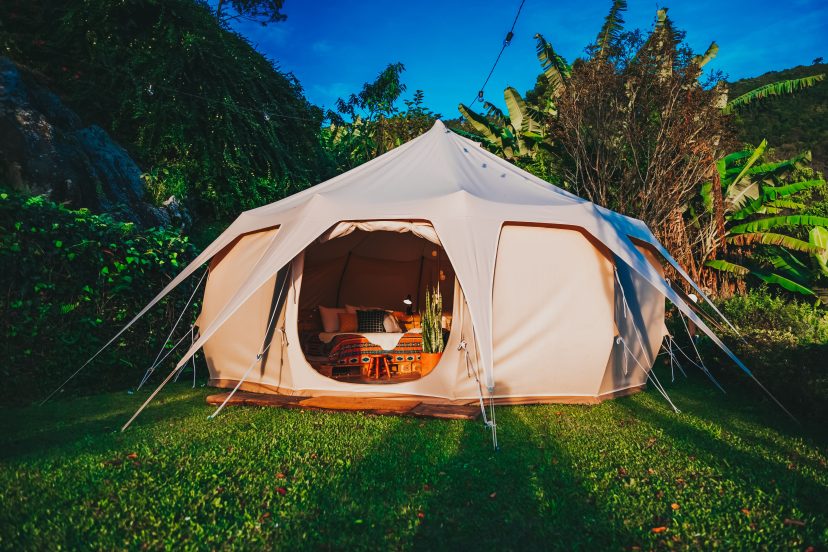
Cabin tents have relatively upright walls, which makes changing clothes and arranging cots easier. Their tall sides catch wind, so anchoring matters. Extended dome tents generally have more sloping fabric and sometimes pack smaller, but the usable standing area is reduced.
Multiroom models use dividers to create separate zones for sleeping, changing, or organizing luggage. Fabric dividers won’t block sound. Screen rooms are different: they add a ventilated place to sit away from insects, but they might not provide a fully weatherproof sleeping area. Match the layout to how you’ll use it.
Measure Your Campsite Before Choosing a Tent
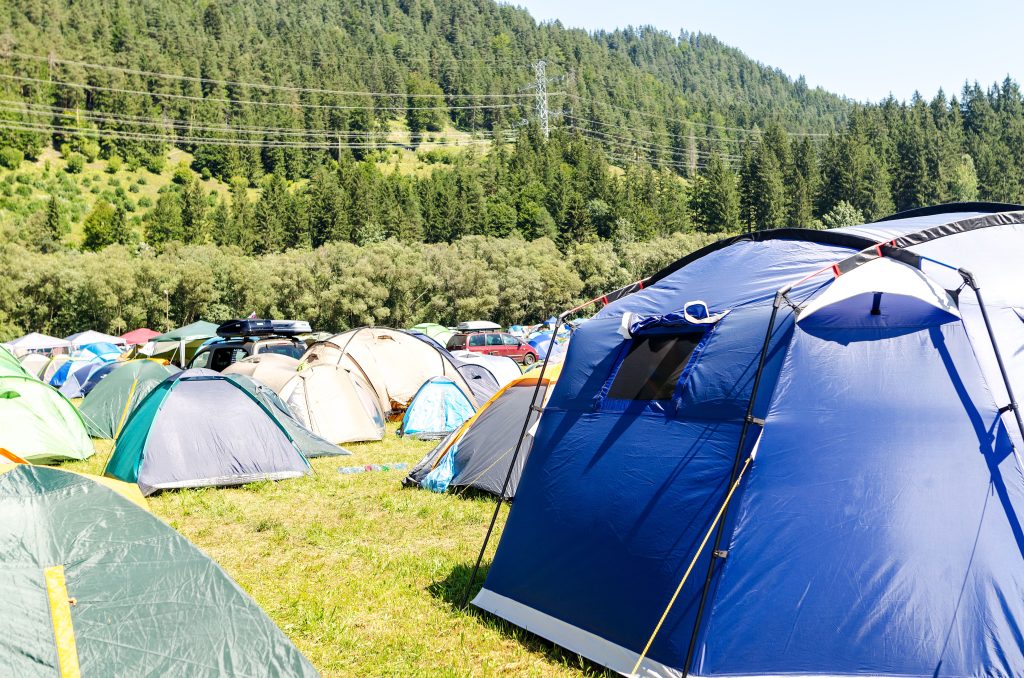
A tent’s floor dimensions are only the starting point. You also need room for the rainfly, guy lines, stakes, and a clear path to enter without tripping. Even a roomy pad may be too small.
Before reserving a site, check its tent-pad dimensions and any rules about maximum tent size. Look for ground that is level, drains well, and is free of sharp debris. Avoid placing the tent in a depression where water can collect. Leave a clear route to the entrance.
Decide Between Instant and Traditional Setup
Instant tents use preattached poles or hubs to reduce assembly steps. They’re handy when children are eager to settle in. Still, the advertised setup time may assume two adults and calm conditions; anchoring the tent and fitting its fly take additional time.
Traditional pole tents usually involve more sorting, threading, and clipping. Their poles may pack shorter and be easier to replace. If one person handles setup, practice before leaving home and avoid assuming that a larger tent will be easy to raise alone.
Check Rainfly Coverage and Wet-Weather Details
A rainfly protects the tent body, but coverage varies. Some large cabins have a short roof fly that leaves much of the sidewall exposed, while other designs extend the fly lower and create covered storage space. Check diagrams for actual coverage.
Look for protected seams, a raised bathtub-style floor, functional door awnings, and a way to tension the fly without pressing it against the inner tent. No fabric rating guarantees storm protection. Strong wind, pooling water, damaged coatings, and poor site selection can defeat otherwise sensible weather features. Practice before rainy trips.
Plan for Ventilation and Condensation
More people in one shelter means more moisture from breathing and damp clothing. When humid air reaches cooler tent surfaces, droplets can form even if rain never enters. Ventilation matters beyond hot weather.
Look for high mesh panels paired with lower vents or windows that can remain protected beneath the rainfly. Keep the vents open when conditions allow, and make sure bedding is not pushed up against the tent walls. Check that mesh doors close independently. Never use a fuel-burning stove or heater inside a tent; carbon monoxide and fire are serious hazards.
Look at Doors, Dividers, and Everyday Comfort
Two entrances can make a big difference when several people share a shelter. Someone getting up early needn’t climb over everyone else’s mattress. A wide doorway also makes moving bedding easier.
Look for headlamp pockets, lantern loops, and a spot for muddy shoes. If you’re preparing for a trip with kids or pets, CampNestle’s family camping essentials guide can help you plan the rest of the kit around your shelter. Keep cooking equipment outside, regardless of how roomy the interior feels.
Compare Packed Size, Weight, and Storage
A huge tent is less convenient if its bag barely fits across your car’s trunk. Check packed length as well as total weight: instant frames can remain surprisingly long when folded. A long carry makes that bulk more noticeable.
Damp fabric needs drying space, and bulky frames complicate apartment storage. If you camp only occasionally, a slightly smaller model that’s manageable to carry and store may be the more useful purchase.
Set Up a Large Tent Without Common Mistakes
Lay out the tent before extending poles so you can orient doors away from obvious obstacles. Clear stones and sticks, then stake the corners according to the manufacturer’s sequence. A second adult can steady large frames.
Attach and tension the rainfly, secure every required guy line, and keep lines visible around walking routes. Practice at home with your camping partners.
Clean, Dry, and Maintain Your Tent
After each trip, shake out grit, wipe away dirt with a soft cloth and appropriate mild cleaner, and dry the shelter completely before storage. Trapped moisture encourages mildew and coating damage.
Inspect pole joints, zippers, seam tape, guy lines, and the floor before the next outing. Replace worn stakes and patch holes according to manufacturer guidance. Keep it loosely stored in a cool, dry area to help preserve the materials.
Safety Guidance That Matters for Large Tents
Camping safety isn’t determined by tent size. The National Park Service’s campsite guidance recommends level ground away from flood-prone low spots, dead trees, and fire areas. It also reminds campers that guy lines can create tripping hazards.
The National Weather Service’s outdoor lightning guidance is especially clear: a tent does not protect you from lightning. If thunder approaches, move to a substantial building or an enclosed hard-topped vehicle, and wait at least 30 minutes after the last thunder before returning.
For sizing, REI’s tent selection guidance explains that extra space is useful for pets, bedding, and gear, but larger tents can be harder to pitch and may not fit every campsite. The practical lesson is to prioritize a suitable site and realistic capacity over the biggest number on the package.
Five Big Camping Tents Worth Considering
These models suit different approaches to car camping. Their manufacturer-rated capacities describe maximum sleeping arrangements, so compare the floor plan with your actual bedding before committing.
CORE 9 Person Instant Cabin Tent (40008)
Best for: Families wanting quick setup and separate sleeping zones.
The 14-by-9-foot floor, 78-inch peak, two doors, and removable divider make this a versatile family base. Preattached poles simplify pitching, while adjustable vents help manage airflow. CORE describes four campers plus gear as a more comfortable fit than nine people. Its heavy, long packed frame is the main compromise, particularly if parking is far away.
Coleman Skydome XL 8-Person Camping Tent
Best for: Groups prioritizing quick pitching and an easy-access doorway.
This XL design has nearly vertical walls, a wide door, and room for three queen airbeds according to Coleman. Preattached poles support a relatively simple two-person setup, and the included rainfly adds weather protection. The trade-off is limited interior separation: campers wanting genuine privacy may prefer a model with a room divider.
Coleman WeatherMaster 10-Person Tent
Best for: Larger groups who want a flexible shared sleeping area.
Coleman’s WeatherMaster offers a 17-by-9-foot floor, hinged door, room divider, and angled windows for ventilation. Those details can ease traffic when several people share the tent. It uses a traditional pole assembly rather than an instant frame, so plan for a more involved pitch and make sure your campsite can accommodate its length.
CORE 9 Person Extended Dome Tent (40004)
Best for: Campers seeking a roomier tent with a shorter packed bag.
The 16-by-9-foot design uses traditional fiberglass poles and packs considerably shorter than CORE’s instant cabin. It offers adjustable ground ventilation, a mesh ceiling, and space for three queen airbeds in the manufacturer’s layout. Its sloped walls and single door are less convenient for moving around than those of an upright cabin.
Coleman Montana 8-Person Tent
Best for: Families who value an easy-to-use entrance and straightforward layout.
The Montana has a hinged door, extended entry awning, included rainfly, and a 16-by-7-foot floor. Its angled windows offer ventilation options in light rain, while storage pockets keep small items accessible. Expect a traditional setup, not an instant pitch, and note that the narrow floor shape may limit how you position larger beds.
Frequently Asked Questions About Big Camping Tents
Is an eight-person tent big enough for a family of four?
Usually, yes. An eight-person tent often provides a comfortable starting point for four campers with bedding, clothing, and a little indoor gear storage. But the actual fit depends on floor dimensions, wall slope, and whether you’re using cots or wide airbeds. Measure those items first instead of trusting capacity alone.
Are big camping tents suitable for heavy rain?
Some handle ordinary rain well when pitched and anchored correctly, but size alone says nothing about weather resistance. Look for adequate fly coverage, protected seams, a sound floor, and reliable guy-out points. Check the forecast and site drainage. During severe thunderstorms, leave the tent for proper shelter rather than relying on its fabric.
Can one person set up a ten-person tent?
It depends on the specific frame, the camper’s reach, and the weather. Some experienced campers can manage large tents alone, but many advertised quick-pitch times assume two people. A tall cabin is especially awkward to lift in wind. Check the manual and practice at home before depending on solo setup.
Is a single large tent better than using two smaller tents?
One large tent keeps a family together and centralizes gear, while two smaller tents offer more privacy and flexibility on uneven ground. Separate tents can also suit different sleep schedules. The decision depends on who is camping and the site’s rules, since some campgrounds restrict the number of shelters per pitch.
Do I need a footprint under a large tent?
A footprint isn’t always required, but it can reduce abrasion on rocky or gritty ground. Use the manufacturer’s matching footprint or trim a groundsheet so it stays completely beneath the tent floor. Material sticking out around the edges can collect rain and direct water underneath. A footprint cannot repair a leaking or damaged tent floor.
Conclusion: Choose Space You Can Actually Use
The best big camping tents aren’t necessarily the ones with the highest occupancy numbers. They’re the ones that fit your mattresses, leave clear walking space, work on your campsite, and can be pitched by the people traveling with you. Pay attention to the floor plan, wall shape, rainfly coverage, and packed dimensions before comparing extras.
For a family that values quick setup and flexible zones, the CORE 9 Person Instant Cabin Tent is a sensible starting point. The Coleman WeatherMaster gives bigger groups a different option with a divided interior, while the CORE Extended Dome may appeal to campers with less storage space. Make your final choice using actual bed measurements and your next campground’s tent-pad dimensions, not the maximum occupancy printed on the box.