Top 10 Portable Water Filters
We may earn a commission for purchases made using our links. Please see our disclosure to learn more.
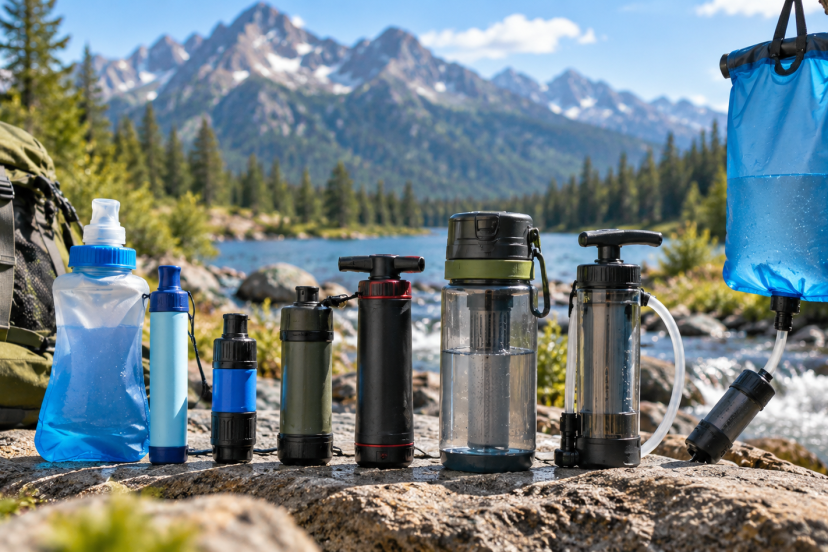
Portable Water Filters give hikers, campers, travelers, and emergency-preparedness users a way to treat water when taps are unavailable or questionable. Capabilities vary sharply between filters and purifiers, so choosing the treatment method matters. We compared Amazon.com availability, manufacturer specifications, portability, flow, maintenance, and value. These picks cover solo hiking, ultralight backpacking, group camps, international travel, and powered basecamp use, helping you match a filter to your trip and water risks.
Portable Water Filters Comparison Table
| Product | Best for | Key feature | Main limitation | Price category | Overall recommendation |
| Sawyer Squeeze SP129 | Versatility | 0.1-micron filter | Needs backflushing | Mid-range | Excellent all-rounder |
| LifeStraw Personal | Budget backup | Direct-source straw | No storage | Budget | Simple emergency pick |
| Sawyer MINI SP103 | Compact kits | 2-ounce filter | Slower for volume | Budget | Great backup |
| LifeStraw Peak 650 ml | Beginners | Collapsible bottle | Small reservoir | Mid-range | Easy trail system |
| Katadyn BeFree 1L | Fast hiking | 2 L/min claimed flow | Soft flask needs care | Mid-range | Excellent lightweight choice |
| MSR TrailShot | Quick access | One-handed pumping | No reservoir | Mid-range | Strong day-hike option |
| Katadyn Hiker Pro | Pump users | Carbon plus microfilter | Bulkier | Premium | Dependable camp pump |
| GRAYL GeoPress 24 oz | Purification | Virus-capable purifier | Heavy and costly | Premium | Best travel purifier |
| Survivor Filter PRO X | Electric filtering | Powered three-stage system | Needs power | Premium | Useful basecamp system |
| Waterdrop Gravity 1.5 gal | Groups | Gravity-fed bag | Needs hanging | Mid-range | Convenient camp choice |
1. Sawyer Products SP129 Squeeze Water Filtration System — Best for Overall Versatility
Overview: The Squeeze is a lightweight hollow-fiber system for backpackers wanting multiple drinking methods without a pump.
Key Features: 0.1-micron absolute filter; two 32-ounce pouches; 28 mm bottle compatibility; hydration-pack adapter; backwashing.
Pros: Flexible setup, compact filter.
Cons: Pouches require squeezing; flow drops when dirty.
Best For: Backpackers wanting one filter for bottles, pouches, or reservoirs.
Verdict: Low weight and broad compatibility make it the strongest overall pick.

2. LifeStraw Personal Water Filter — Best for Budget Emergency Backup
Overview: This straw filter lets you drink directly from freshwater without bottles, pumps, or batteries.
Key Features: 0.2-micron membrane; 1.6-ounce body; manufacturer-rated 4,000-liter life; bacteria, parasite, and microplastic filtration.
Pros: Light, inexpensive, simple.
Cons: Does not store water; not designed to remove viruses.
Best For: Emergency kits, day hikers, and budget campers.
Verdict: Easy packing and operation make it a practical backup rather than a full camp system.

3. Sawyer Products SP103 MINI Water Filtration System — Best for Compact Kits
Overview: The MINI puts Sawyer’s bottle-compatible filtration into a two-ounce package for minimalist packs.
Key Features: 0.1-micron absolute filtration; 28 mm bottle compatibility; included pouch; straw use; backwashable design.
Pros: Tiny, versatile, lightweight.
Cons: Lower throughput is less convenient for groups.
Best For: Ultralight hikers and travelers prioritizing packed size.
Verdict: Bottle, pouch, and direct-drink flexibility makes the MINI an excellent backup.

4. LifeStraw Peak Squeeze Filter Bottle 650 ml — Best for Beginners
Overview: This collapsible bottle combines storage and filtration, reducing pieces a new hiker must manage.
Key Features: 650 ml bottle; removable membrane filter; squeeze or straw use; backwash accessory; 2,000-liter claimed filter life.
Pros: Intuitive, packable, versatile.
Cons: Limited capacity for dry stretches.
Best For: Beginners wanting a simple fill, filter, and drink routine.
Verdict: The integrated format is easier to learn than multi-hose systems.

5. Katadyn BeFree 1L Water Filter — Best for Fast Hiking
Overview: BeFree pairs a collapsible one-liter flask with Katadyn’s EZ-Clean membrane for fast-moving hikers.
Key Features: 0.1-micron membrane; manufacturer-rated 2 L/min flow; 1,000-liter capacity; 63-gram listed weight; shake-cleanable filter.
Pros: Fast claimed flow, low weight, simple cleaning.
Cons: Soft flask needs careful handling.
Best For: Trail runners and fastpackers.
Verdict: Its flow-to-weight ratio and swish cleaning suit fast movement.

6. MSR TrailShot Ultralight Backpacking and Camping Squeeze Water Filter — Best for Quick Trail Access
Overview: TrailShot uses a squeeze-pump body and intake hose for source drinking or bottle filling.
Key Features: 0.2-micron hollow fiber; 5-ounce weight; 1 L/min rated flow; 2,000-liter cartridge life; field-cleanable construction.
Pros: Quick deployment, one-handed use, direct-source drinking.
Cons: No integrated storage; does not remove viruses.
Best For: Day hikers and runners near frequent streams.
Verdict: It excels when fast drinking without filling a pouch matters.

7. Katadyn Hiker Pro Transparent Hand Pump Water Filter — Best for Traditional Pumping
Overview: Hiker Pro is a hand-pump microfilter for campers who prefer hose-fed pumping.
Key Features: 1 L/min rated output; glass-fiber filter; activated carbon granulate; 1,150-liter claimed capacity; field-cleanable protector.
Pros: Controlled pumping, taste-reducing carbon, useful intake hose.
Cons: Heavier and more complex than squeeze filters.
Best For: Campers who prefer a classic pump.
Verdict: Its hose reaches shallow or awkward water where filling a squeeze pouch can be frustrating.

8. GRAYL GeoPress 24 oz Water Purifier Bottle — Best for Premium Travel Protection
Overview: GeoPress is a press-style purifier offering broader microbiological protection than ordinary backcountry microfilters.
Key Features: 24-ounce capacity; replaceable cartridge; manufacturer-rated 8–10-second press; 250-liter cartridge life; virus, bacteria, and protozoa treatment claims.
Pros: Broad treatment scope, self-contained bottle, quick purification.
Cons: Heavy, expensive, recurring cartridge cost.
Best For: International travel where virus risk warrants purification.
Verdict: Its broader treatment scope justifies the premium when a standard hollow-fiber filter is insufficient.

9. Survivor Filter PRO X Electric Portable Water Filter — Best for Powered Basecamps
Overview: PRO X automates three-stage filtration for repeated bottle filling at camp.
Key Features: 0.1-micron prefilter; carbon stage; 0.01-micron ultrafilter; 500 ml/min claimed flow; external power or two-AA operation.
Pros: Electric pumping, multi-stage treatment, replaceable components.
Cons: Heavier; power adds planning.
Best For: Families, vehicle camps, and preparedness kits.
Verdict: Powered operation reduces manual effort for repeated batches.

10. Waterdrop Gravity Water Filter Straw with 1.5-Gallon Bag — Best for Groups
Overview: Waterdrop combines a hanging dirty-water bag with a filter straw, letting gravity work during camp tasks.
Key Features: 1.5-gallon bag; 0.1-micron ultrafiltration membrane; multi-stage filtration; gravity operation; detachable components.
Pros: Useful group capacity, hands-off filtering, no batteries.
Cons: Requires hanging space and setup time.
Best For: Families and group camps needing larger batches.
Verdict: It is easier than repeatedly squeezing small bottles when several people need treated water.

How to Choose the Best Portable Water Filters
Start with treatment scope. Most hollow-fiber backpacking filters target bacteria, protozoa, and sediment, but many do not remove viruses or dissolved chemicals. For international travel, disaster conditions, or sewage risk, check local guidance and consider a true purifier or additional disinfection.
Match flow and capacity to your group. A straw can suit one hiker; gravity or powered systems make more sense for families and camp kitchens. Bottle and soft-flask filters sit between those extremes.
Consider water access. Squeeze bottles work well when pools are deep enough to fill them. Intake hoses can reach shallow sources. Gravity systems need a hanging point.
Also plan how you will collect water without cross-contaminating clean containers; keeping dirty and clean sides separate makes trail routines easier and helps prevent accidental handling mistakes outdoors.
Maintenance affects performance. Hollow-fiber filters may require backwashing, shaking, or cartridge replacement. Protect a wetted filter from freezing because internal ice can damage fibers. Follow the manufacturer’s cleaning, storage, and integrity-check instructions.
Finally, balance packed size with convenience. Ultralight hikers may accept frequent filtering to save weight; car campers can carry larger systems. If you are assembling your first setup, CampNestle’s camping gear list for beginners helps you pair water treatment with other essentials you will actually carry.
Frequently Asked Questions About Portable Water Filters
Do portable water filters remove viruses?
Not always. Many hiking microfilters target bacteria and protozoa, not viruses. Check the stated treatment scope and use an appropriate purifier or added disinfection where viruses are a concern.
Can I filter any river or lake water?
No. Choose the cleanest available source and avoid water with chemical contamination, harmful algal blooms, or obvious sewage. Capabilities depend on the filter and contaminant.
How often should I clean a portable filter?
Follow its manual. Reduced flow often signals cleaning, but methods differ: some filters backflush, some shake clean, and others use replaceable cartridges.
Can a wet filter freeze?
Yes. Freezing can damage hollow-fiber media invisibly. After first use, protect susceptible filters from freezing and follow the manufacturer’s storage guidance.
Which filter style is easiest for beginners?
An integrated squeeze bottle such as LifeStraw Peak or Katadyn BeFree keeps setup simple. A direct-drink straw is simpler for backup but less convenient for carrying treated water.
Final Verdict
Among these Portable Water Filters, Sawyer Squeeze SP129 is the best overall for its low weight, bottle compatibility, pouch use, and field maintenance. LifeStraw Personal is the best budget option for simple backup treatment. GRAYL GeoPress is the best premium option when broader purification, including manufacturer-claimed virus protection, matters. LifeStraw Peak 650 ml is best for beginners because its bottle and filter work as one system. Survivor Filter PRO X is the best specialized option for powered basecamp filtration.
Compare specifications, confirm bottle or reservoir compatibility, review warranty details, and check Amazon.com product information before purchasing.